american wine

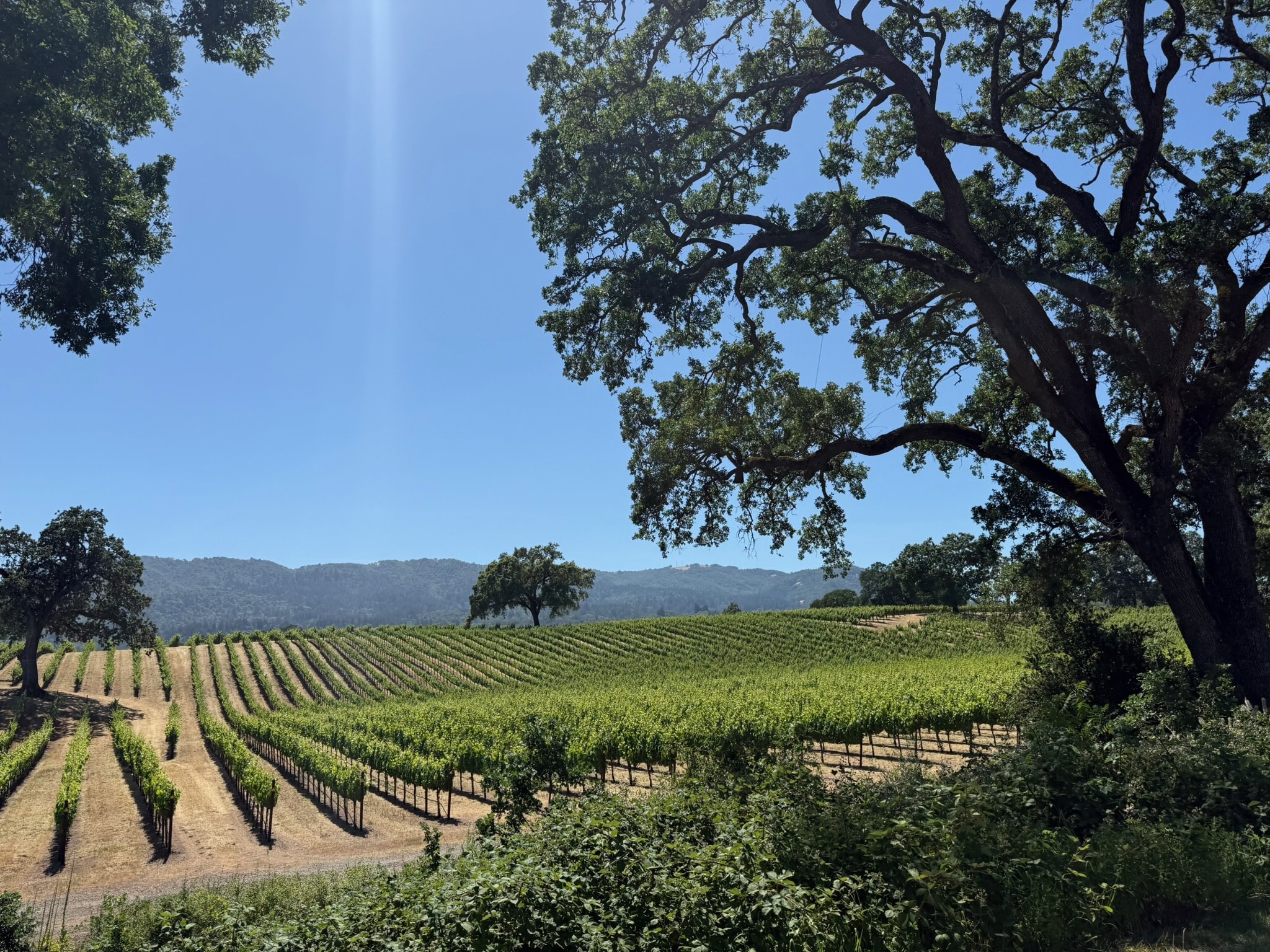
View from the Prochnow Vineyard porch.

Texas Wine Country – United States

Longhorn bulls, cacti, farms the size of small countries – these are just some of the things that come to mind when we think of Texas. Maybe some of you have also heard of the famous Texan BBQs and the beer that goes with it. The question is, is there any room for wine here? After all, it’s hot, it’s a desert and overall it just doesn’t feel quite right. At least that’s what I thought as I drove down a state road from Austin toward a winery I had found completely by accident while playing around with Google Maps and planning a one-day trip outside the city.

For this Texan unWined adventure, I recruited a few colleagues during our business trip to Austin. We wanted to see the real Texas, not just its big-city version. And visiting a winery is the obvious choice when you travel with me! To my surprise and delight everyone eagerly agreed and one colleague even offered to drive. I wasn’t planning to talk him out of that idea…

After 30 minutes driving west from Austin, we saw the first fence banners singing praises to Donald Trump and that’s when we knew we were in real Texas. Then we saw huge stretches of fenced land, herds of cattle and cars that to us Europeans looked more like monster trucks than vehicles used for grocery runs.

Our first stop was a roadside burger joint, followed by a climb up Enchanted Rock. Both places are definitely worth recommending! Afterwards, we set our sights on my winery. But after driving only a few kilometers, we saw a sign inviting us to another vineyard. Thirsty (for wine and for adventure both), we decided to stop right away. Luckily, this new place turned out to be an absolute treasure.

And so, kind of by accident, we ended up at Prochnow Vineyard. After passing through the entrance gate, we were immediately greeted by a very picturesque view: driveway studded by old trees, gentle hills, grape fields and a beautiful historic wooden house with a characteristic porch. Inside, we were welcomed by an elderly couple. As it soon turned out, they were the owners and winemakers. We were their only guests at the time and thanks to this we spent the next hour and a half in an intimate setting, experiencing the famous Southern hospitality firsthand.

The visit started with the usual surprise of: “what three Poles and an Englishman were doing at a winery deep in Texas?”. But the owners quickly recovered from the initial shock and family stories about their lives and their winemaking project soon followed. The winery is clearly their retirement plan, although the children also get involved a bit. The Prochnow family has German roots, just like many people in the area (the historic Fredericksburg is not that far).

We opted for a testing option including five wines. But in the end, we ended up trying everything on and off the menu, including homemade sangria and sweet wine. The idyllic feeling of drinking this incredible wine on the porch that followed, at perfect temperature and with a stunning view is truly hard to put into words. We were all equally moved by these intoxicating impressions and circumstances. As if that wasn’t enough, the owner, Ross, decided he would take us for a ride around the entire property on his mini “train” (you must see it in person). We saw his family home while hearing the stories centered around it. Ross also showed us the trees under which his daughter got married. As a farewell touch, we were given freshly baked homemade cookies… What more can I add?!

I am fully aware that the blissful state we were in might have influenced my ability to objectively rate the Prochnow family’s wines. But well, wine is also the place and its people.  I managed to note down six wines. Even that was very hard to do, because I wanted to immerse myself completely in that beautiful moment. One clear and surprising observation was how incredibly fresh these wines were. With such high temperatures (the harvest takes place at the end of July), I expected big, full flavors rather than the nuance, freshness and elegance I had found.

And here are the wines from Prochnow Vineyard:

Picpoul Blanc – intense yellow color. Pleasant fruity nose. Very fresh on the palate, with strong acidity, but still a fairly developed body. ( 32$)

Roussanne – similarly intense color, but completely different flavor notes. Still pleasantly fresh, but without the striking acidity. Dominated by flowers, pear and honey. (30$)

Sangiovese Rosé – again, surprisingly fresh. Even though the wine is technically a rosé, the color is more rusty. Citrus and wild strawberries dominated. (35$)

Cabernet Sauvignon – three years in used oak barrels. Despite its full body and ripe flavors, the wine is quite pleasant to drink on its own without food pairing. Ripe blackberries and cherries clearly come to the forefront. (35$)

Tannat – here we’re dealing with distinctly pronounced tannins. There is also more plum, preserves and black fruit jam flavors. (38$)

Oma’s Sweet – a very successful muscat. Great balance of sweetness and acidity. Floral notes, dried apricots and peaches. (30$)

Prochnow Vineyard is just one of great many places in Texas Wine Country. On the way to the next winery, we found ourselves on a several-kilometer-long stretch literally surrounded by vines on both sides. As it turned out (I was ignorant about it), Texas is the third largest wine producer in the United States, so the sight of vast grape plantations shouldn’t be surprising at all. Because of that, I’ll try to return to the topic of Texan wines in future posts. See you next time!

Texas Wine Country – United States Read More »

Most Golden Gate w SF.

A Quick Trip to Sonoma Valley – California, USA

I’m back again after a longer break, but this time I’m returning from a significantly more distant location. On the surface, it seems the same — but somehow also quite different. That was my main reflection after a quick, one-day trip to Sonoma Valley in California. Most of the leading wine regions in Europe are conceptually quite homogeneous in terms of their basic operating style. So, I expected the same to be true foe California, but there I noticed significant differences in wine production methods—even within the same region.

For a change, I opted for an organized tour to Sonoma, to avoid the time-consuming research, car rental, etc. After all, I only had one day and my base was San Francisco. The wine tour I selected ($200, not including tips, of course!) included a very international group of participants (Kenya, Canada, Australia, Mexico, and the USA). In the city, we were loaded into a small van and, under the guidance of our British expat guide, we hit the road. The tour featured three wineries: Peter Cellars, Séamus Winery, and B. R. Cohn Winery. I’ll share my overall impressions from the day, and then we’ll get into the wines themselves.

Just like in Europe, in the States you can choose from a wide range of wine producers. Their stories, challenges and aspirations are often quite similar. Many start as small garage operations, grow into successful family businesses and some even evolve into large corporate ventures. They all face the same ongoing battle with an increasingly unpredictable climate. In California, the biggest threat is the recurring wildfires. As a result of changing weather, there’s been a noticeable increase in the planting of hot climate grape varieties — even in areas that historically have been cooler. Despite truly excellent American marketing and storytelling skills, wine here in California (like everywhere else in the world) can be both very poor and very, very good.

Several noticeable differences, apparently quite typical for America, immediately stood out to me — even despite the intense tour schedule and the general lack of spittoons. Producers, almost in unison, explained to us that their wine contains no chemical additives or enhancers. It seemed to be a generally accepted truth that most wine is mass-produced through dreadful processes where quality is the last concern. The only goal is to reach the low price points required by chain stores and supermarkets. Of course, we can also say plenty of negative things about mass-produced wines from Castilla La Mancha or Prosecco, but still I think that the quality gap here is on an entirely different level.

Another striking aspect is that the primary modus operandi of Californian wineries, regardless of perceived quality or price point, is buying grapes from other estates. There’s a clear split between winemakers and grape growers. Again, yes, this happens in Europe too, but I don’t think it is the dominant model—especially not among the kinds of wineries I visit typically. In the Old World, it’s more the exception than the rule.

The last thing is price. The mid-tier bottle in California essentially starts at $50–70, and bottles of similar quality in nearby Napa Valley can easily cost around $150. At the same time, producers are genuinely surprised that wine in the U.S. is still perceived as a prestige product, reserved for the upper class or special occasions. Gee, I wonder why? Entry-level wines contain the entire periodic table, and the mid-tier costs as much as dining out. I’m not entirely sure what causes these discrepancies. But it must be profitable somehow—after all, there are enough buyers. Anyway, I’m glad that on our home continent, you can drink a decent entry-level wine for €10, and really good bottles can be found for €30–40.

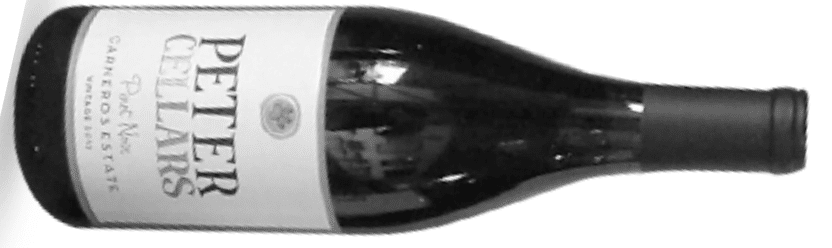
It’s time for the wines! First, Peter Cellars. My favorite here was the 2019 Merlot, with strong notes of blackberry, soft tannins and well-balanced use of oak. The difference between the two vintages of Pinot Noir was also interesting. The 2021 was a simple, fruit-forward wine without complexity. In contrast, the 2020 immediately greeted us with a different bouquet—I picked up characteristic forest floor and woodsy aromas. The same happened on the palate, where vanilla notes joined the fruit and were very well integrated. Finally, a beautifully structured wine! The 2018 Cabernet Sauvignon was over-oaked and lacked balance.

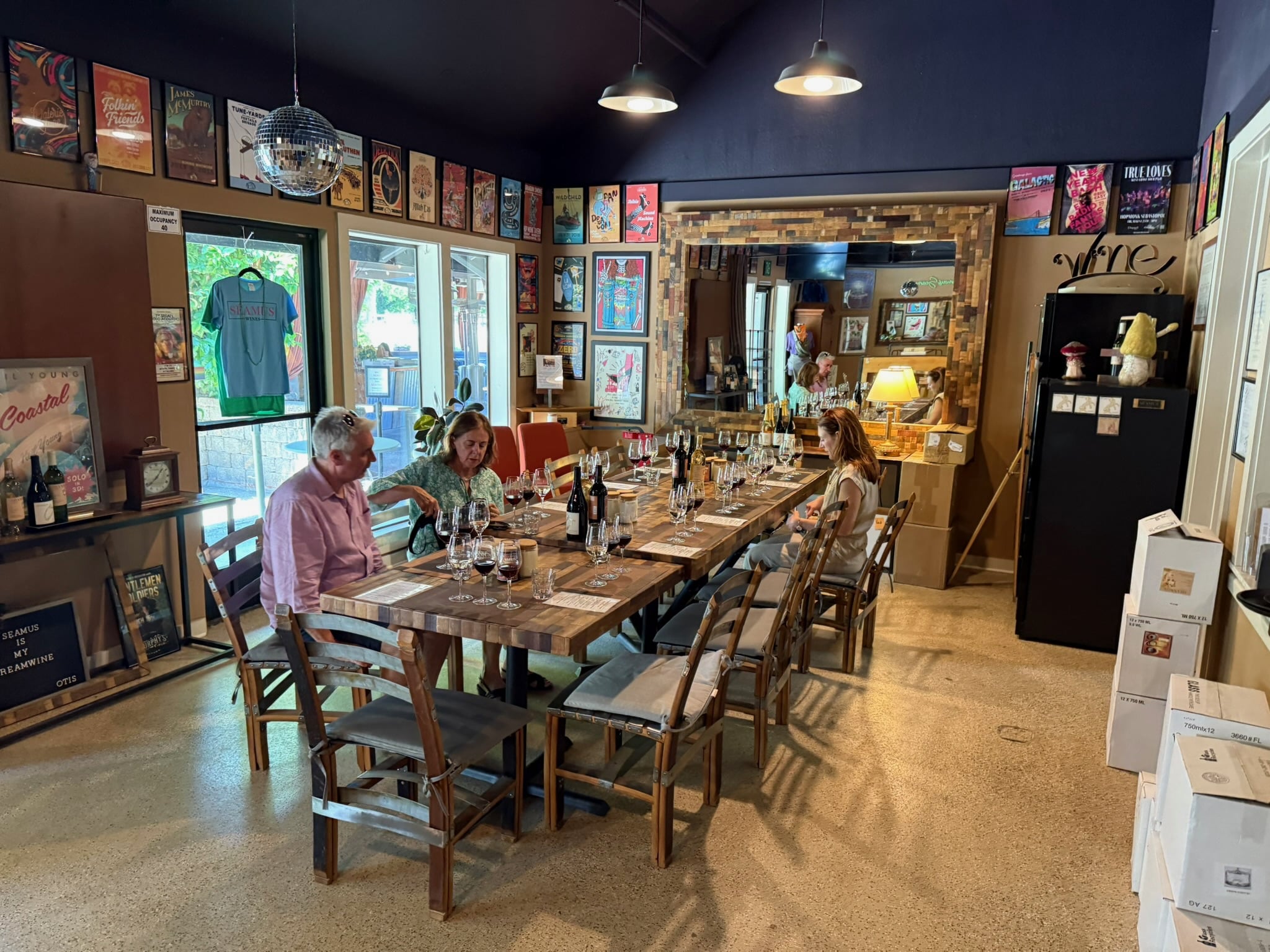
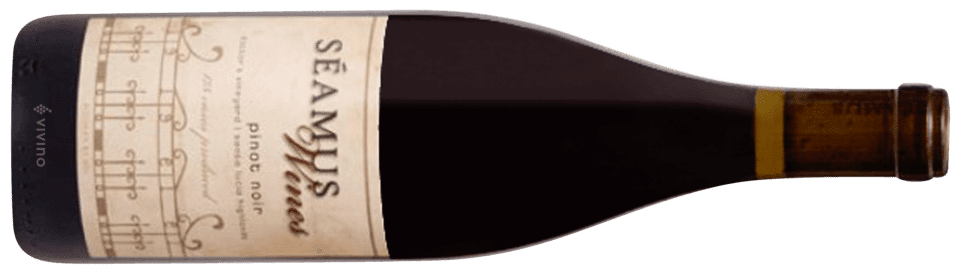
In Séamus Winery we were “treated” to a Sauvignon Blanc, a red cuvée (50/50 Grenache and Cab Sav) and a 2015 Pinot Noir. Practically everyone in the group left their glasses unfinished. Only one person bought a single bottle. All the wines were a complete disaster. Their house style seemed to be: inconsistent aromas and taste, lack of balance, overripe and odd flavors. My tasting notes include such gems as: aggressive tannins, overcooked compote, heavy mud and dirty wood. I don’t think it’s worth writing about them any more.

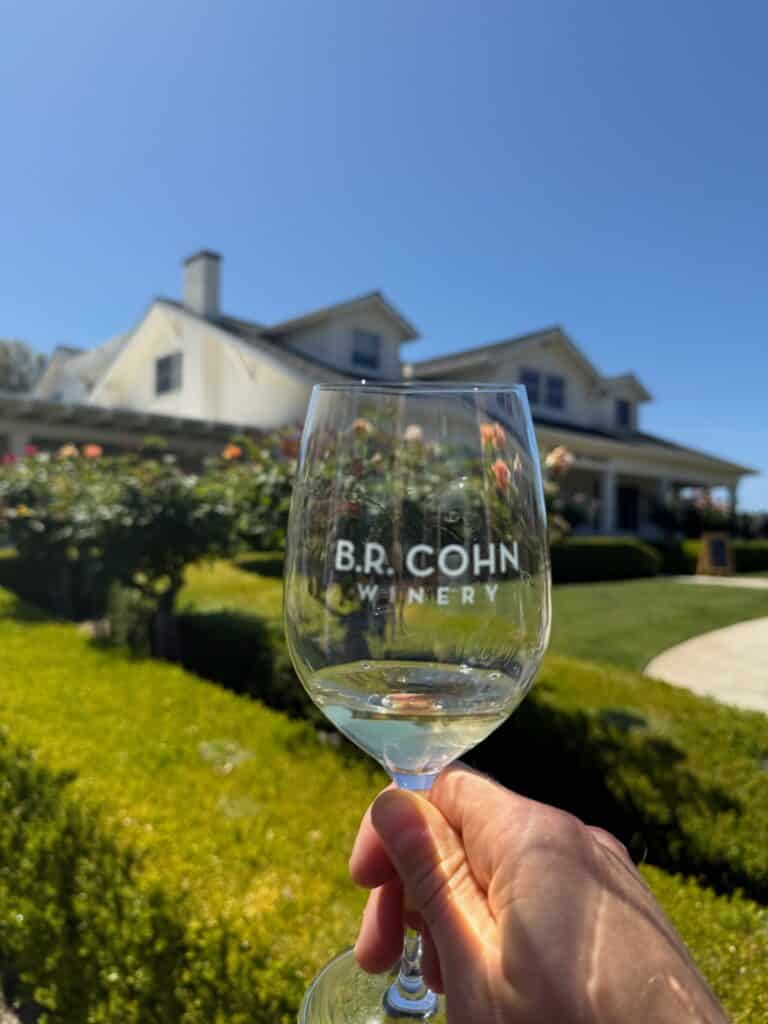
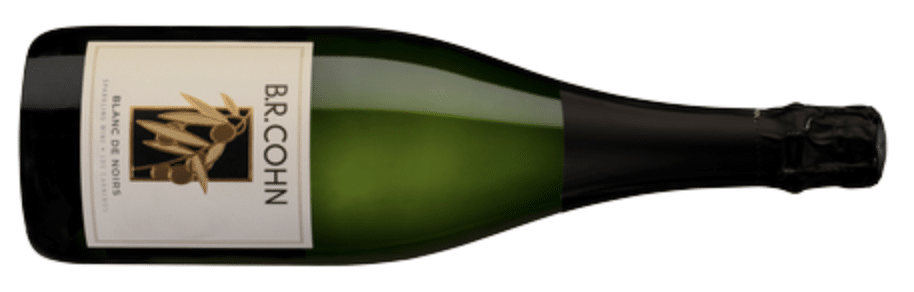
The last stop, B. R. Cohn Winery had pretty decent wines. However, I had a little trouble judging them properly because they were all stored and poured outdoors in 35°C heat. The red wine had been pre-poured and left on the table in full sun for an hour. We were essentially drinking mulled wine in summer, which naturally had a negative impact on the experience. I bought a bottle of Pinot Noir, so I’ll revisit it at home under better conditions. Despite the terrible serving, the quality of the wines was still noticeable. The wine I got to know best was a sparkling wine, purchased by a Canadian woman in our group celebrating her birthday. The bubbles were well-balanced, moving from fresh citrus notes to flavors of brioche and nuts. Smooth and well-integrated.

This was a quick visit to Sonoma, full of impressions—but rather social ones and not so much wine-related. It does beg a question: can you ever discover a true wine gem on an organized tour? After my intriguing experiences in Virginia, and now California, I’m excited to see what awaits me in Texas, which is my next destination. I’m sure that the American wine world still has plenty of surprises in store for me.

A Quick Trip to Sonoma Valley – California, USA Read More »

Black bear from free domain.

Virginia, USA – wine in the black bear country

If only I paid more attention to what I was reading. ‘’Virginia is the third largest wine producing state in the US. Most of its wine is only available directly in the local wineries. It’s a really unique opportunity to check out the wine from the region, because it’s hard to come by outside of the state.” – I was earnestly trying to convince my friends during our trip to Washington DC and New York. In my head, a perfect day trip plan to unWined had been hatched already. The second fact turned out to be correct, but although Virginia places in the top ten with regard to wine production in the USA, it’s still a far cry from leading California or Washington State. Luckily, either my doubtful wine facts or just a convenient excuse to escape a boiling city during a scorching day have done their magic and everybody was on board with the idea. We jumped in a mini SUV (the smallest option in a rental place full of Monster Truck-like cars) and shortly after we were on our way to explore Virginian ‘’spring’’.

Certainly, it would be a stretch to compare Virginia to the likes of Tuscany or Bordeaux, but in fact it has a long wine-growing tradition dating back to 1607. Four centuries ago settlers from Europe brought with them the first vine plants and the local viticulture started. One of the esteemed Founding Fathers, Virginia-born Thomas Jefferson, helped to kickstart wine production in the region. Unfortunately, up untill the 1980s the industry struggled, mainly due to extreme weather events and vine diseases. The situation improved since international vine varieties were introduced, accompanied by some modern growing techniques. The interest of some big names like Donald Trump, who has a winery there, helped to put the area on the wine map as well. 60% of the wine produced in Virginia is sold directly at the vineyard door. Although it’s technically “most” of the wine, for some reason my dubious research had led me to believe it was closer to 80%. Chardonnay, Vidal Blanc, Viognier, Cabernet Franc, Cabernet Sauvignon and Merlot are the most popular varieties grown here. This should be interesting!

The added bonus was a scenic route we decided to take through Shenandoah National Park and its Skyline Drive. We were really excited to have a chance to spot a black bear, one of the Park’s inhabitants, and of course enjoy the panoramic views of the nearby Blue Ridge Mountains. Our destination was Monticello AVA – one of seven appellations in Virginia (more info about the American appellation system here). Shockingly, bears were nowhere to be seen at this quite busy car route in the middle of the day. The views – nice, but nothing special to write home about. Despite that, we were having a great time driving slowly through the hills with Take me Home, Country Roads on the speakers. John Denver might be reminiscing about the neighbouring state of West Virginia in that song, but that day was definitely not about keeping to hard facts! After close to two hours we arrived at our first stop, Hark Vineyards.

This winery is a small family business, beautifully situated in the middle of the Virginian countryside. On our way there, we passed a lot of typical, big, plywood American houses on large plots of land. No fences anywhere. All very neat and lushy green – a picture of a lovely May day. The tasting venue was quite informal: outdoor tables and benches overlooking precise rows of vines, a small wine kiosk for the staff and mobile toilets. Definitely, a cosy, small scale operation. We felt very rustic indeed, when we saw bewildered faces of the staff who couldn’t believe we were visiting all the way from Poland. They immediately started to “discreetly” chat behind the counter: “But why would they come here”? – we overheard them asking incredulously. When we said we are from Warsaw, I hoped they knew we did not mean a town in Indiana…Cultural observations aside, it was time to try some wine! The tasting menu comprised 7 wines with a typical in the region skew to white wines. Little tasting jugs turned out to be not so little, so we could really indulge. Sadly, the wines we tasted weren’t very compelling, but at least we could enjoy gorgeous views and sunny weather as a consolation.

The majority of white wines: Sauvignon Blanc, Fuse or Virginia Verde (both made from Vidal Blanc) were rather simple-structured with mainly citrus notes. The oldest wine on offer, 2019 Petit Manseng, was standing out slightly because of its interesting exotic fruit aromas, in particular a pineapple. Still, it was quite a straightforward wine. The reds, composed of Bordeaux blends, tasted disappointingly flat. These wines, for sure, are a nice option for the locals to stock up on some decent everyday bottles. But we were more impressed with the views of the hills and the sheer alcohol uptake rather than the craftsmanship. We said goodbye to the still surprised farmers and headed to our next stop.

We arrived at Moss Vineyards soon after. Unlike the previous place situated in the mostly flat terrain, Moss Vineyards is tucked away in the midst of the nearby hills. This truly picturesque location is stunning, which made us linger for a bit with a glass in hand after the tasting was over. Moss offered 5 wines and an apple cider in its tasting package. Except for 2018 Architettura Riserva made from a Bordeaux blend, the wines were similar to the ones we tried in Hark winery. 2017 and 2018 Viognier were simply abhorrent, while Rose and 100% Cabernet Sauvignon were just ok. The way the tasting was run was quite bizarre as well. We were asked to stand in a line in front of the bar inside with our backs turned to the beautiful panorama, although there were no other guests and tables and terrace were free. The young gentleman who was taking care of us was equally shocked to hear where we are from. He was filing our glasses with really large portions, each wine in turn with no spit bucket. Then, he was looking at us in silence until we managed to finish each glass. “Maybe he is new in the business?” – I thought.

We got restless and a bit bored after a couple of glasses and tried to enliven the atmosphere with some chat about the area and interesting places to visit. So, we asked our host if the road we had seen driving there is this famous “Route 66”. Maybe we showed our ignorance, but in the end we were tourists and only starting our USA adventure. “Famous 66 – never heard of it, what’s that?”, was his answer. Luckily, the tasting was done, we grabbed a glass of riserva and made our escape to the terrace, smiling a little. And people say that Poland is a backwater! We were just glad that this trip had some extra fun, because so far the wine was pretty disappointing.

We finished the day in Early Mountain Vineyards, a big complex with a large restaurant, wine bar and a few tasting rooms. The winery can be booked for wedding receptions as well. The vibe reminded me more of a visitor centre in a famous tourist spot more than any other tasting venue we had visited. The place was packed, probably thanks to wider recognition – tasting in this vineyard has been selected as the best one in the entire country! Professional staff managed to find a table for us and explained our options. Because we had not booked in advance they could only offer us wine by the glass plus some nibbles. Shame we missed the famous tasting, but we were happy to have a chance to try anything. The restaurant ran like clockwork: in the 5 minutes we spent inside, we talked to three different staff members, each with a different role designed to make your experience as smooth as possible. Everybody had a big smile on their faces and they treated us in a typical American outgoing and open way. This time, we focused on red wines: 100% Cabernet Franc i 100% Cabernet Sauvignon – both made in 2019. On top of that, we had 2020 Foothills, a blend of five varieties typically associated with Bordeaux. Finally, our efforts to find something exciting paid off! Every subsequent wine, not unlike the winery itself, was precise and represented the character of the variety well. We savoured the notes of red fruit, cherries and raspberries, intertwined with chocolate, vanilla and cloves. We also ordered a plate of local cheeses to go with these proper wines. My friends and I agreed that our venture in Virginia was a fun adventure, but in terms of wine, Early Mountain decidedly saved the day. Now, I am not that sorry that Virginian wine is hard to get outside of the state.

Time for some reflections. In summary, in the “typical” American countryside we were met by borderline rudeness, ignorance and general indifference. Virginia can be proud of its long wine growing history, however the wine it offers today is rather mediocre compared to other American regions and globally. The best experience and wines came from a fully commercial operation. Politeness of the staff felt forced and was definitely trained rather than genuine. A 30% tip was suggested…. Usually, I try to avoid such a corporate approach opting in for a smaller and more genuine type of business where you often get a chance to meet the owner. Unfortunately (or maybe rather luckily this time), the formal business approach to winemaking won this time, both in terms of tasting experience and definitely in terms of the quality of wine. Virginian small, famer-run wineries still need to learn a lot from the industry gurus like Early Mountain to be able to proudly compete with the best. In my previous visits to countries such as Italy, Spain or France, I observed the opposite trend. Small scale operations often distinguish themselves with craft, high quality products on the level or even superior to big players. I wonder if this might be a US thing? It’s definitely difficult to say after just one visit. I have very little data to make this kind of statement. But somehow I could not shake off that feeling during the long journey back to our remote motherland in Central and Eastern Europe…

Virginia, USA – wine in the black bear country Read More »

×