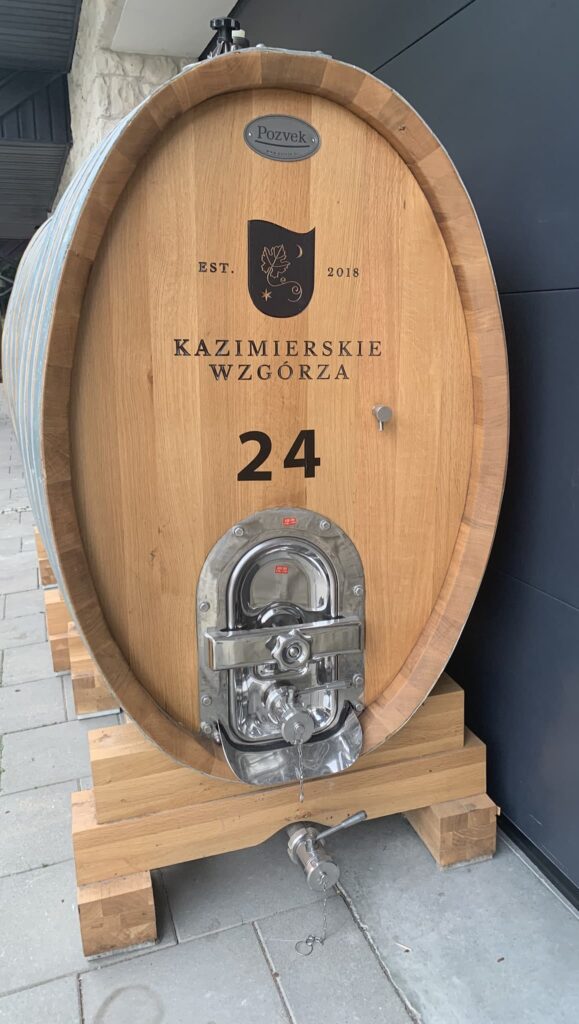
Kazimierskie Wzgórza Winery – Kazimierz Dolny, Poland
We set out from Warsaw. Motorway, fields and forests flashed outside the windows and then we reached a single-lane road. About an hour and a half later, we found ourselves in a completely different landscape. We’re surrounded by hills, ravines and picturesque, historic houses. Staying with the theme of vineyards close to home, this time I went to one of the most prominent regions of the Polish wine making scene – Kazimierz Dolny.
During my previous visits to the region, the logo of Kazimierskie Wzgórza vineyard (Kazimierskie Hills) stuck in my memory. So, that’s exactly where we’re headed. Could this be another case of highly effective marketing, just like in Dwórzno? But Kazimierskie Wzgórza felt a lot better right from the start. I called to ask about availability for the next winery tour and whether I can bring a dog. I was greeted with sheer politeness and professionalism. “We have free spots, I’ll make the reservation right away, the dog is no problem.” They even offered a cheaper tour option for our designated driver.
Our guide was Bogusia, co-owner of the vineyard. She told us interesting facts about the region, viticulture and the basics of winemaking. We learnt that the area around Kazimierz Dolny is particularly suited for growing grapes for several reasons. Firstly, the area is hilly, and the hills help with sunlight exposure and drainage of excess water. Second, the soil. Light and airy loess sitting on characteristic limestone rocks. Later, we saw that many local buildings had walls built from the same stone. If you look closely, you can spot imprints of differently shaped shells in the white stone. Thirdly, the Vistula River. The queen of Polish rivers flows through Kazimierz Dolny creating a unique microclimate. And as it turns out, the Lublin region is the sunniest part of Poland. Mind you, not the warmest, but with the most hours of sunshine. Everybody knows that this is a key factor when growing grapes.
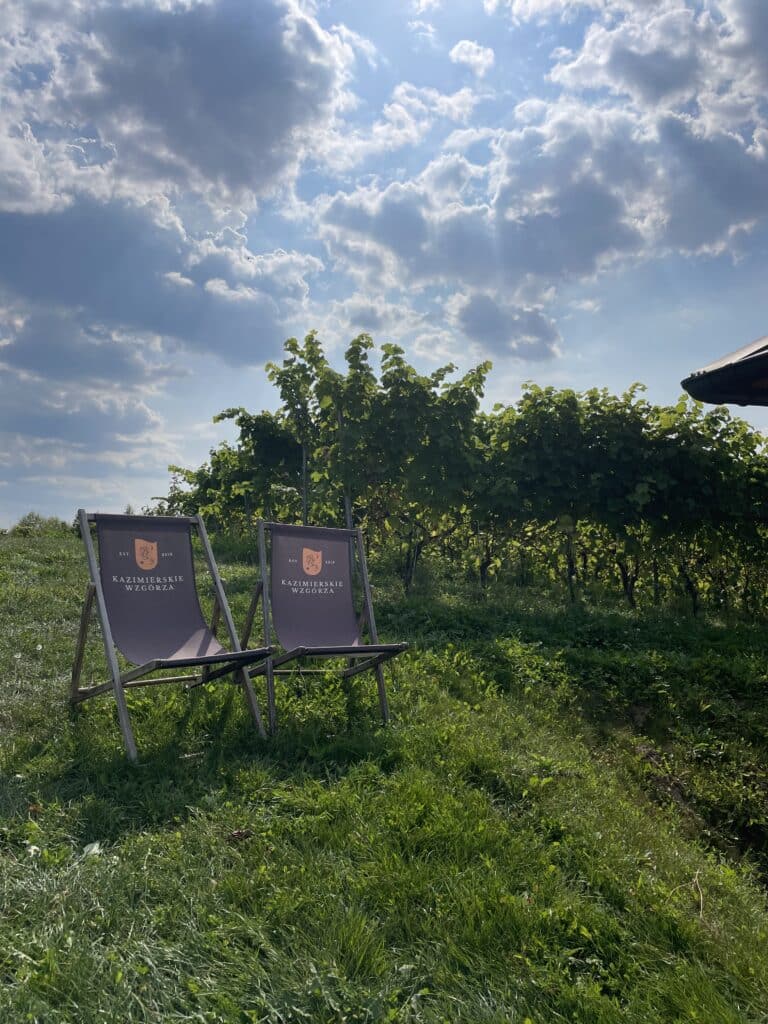
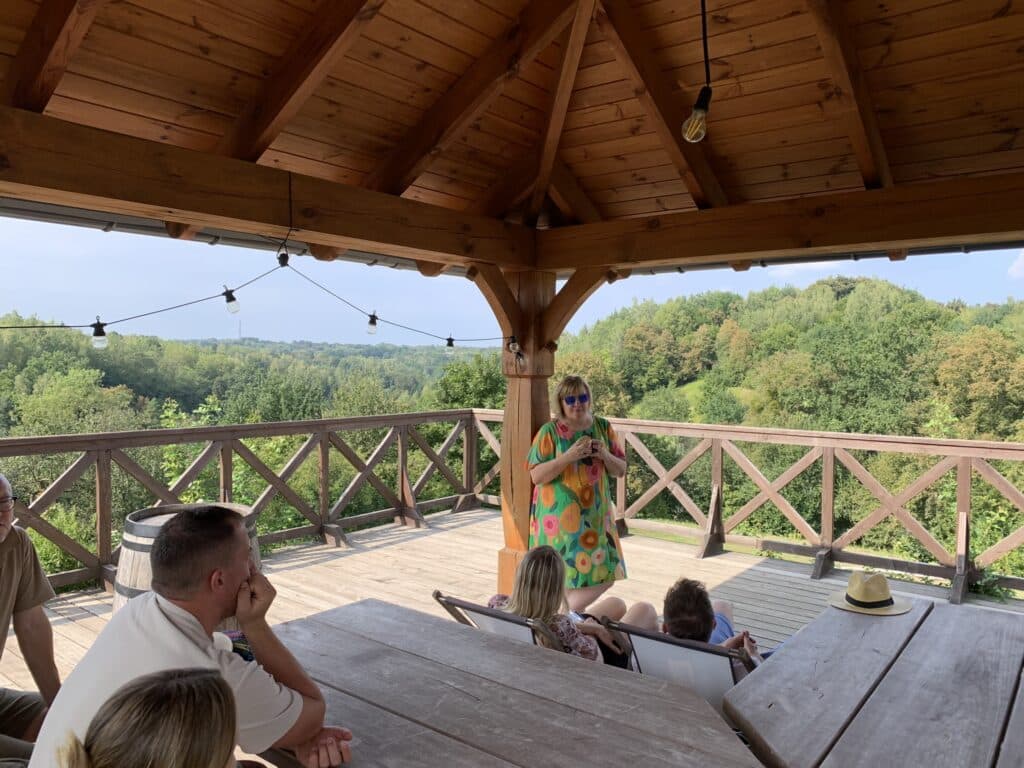
We strolled among the grapevines, tasting different varieties straight from the vine and listened to more stories. It couldn’t be more idyllic and peaceful. Although it was a bit early for the grape harvest, we learnt that the first batch of Solaris had already been picked. The owner of Kazimierskie Wzgórza noted that the harvest started 2-3 weeks earlier than usual. The summer was scorching hot with minimal rainfall. I made a mental note that it might be worth considering stocking up on the 2024 vintage! Due to weather of this kind, 2024 wines could turn out to be quite interesting and potentially quite unusual for Polish conditions.
After all, Poland like Austria, Germany, or Switzerland is situated in what’s called the cool zone for grape growing. At Kazimierskie Wzgórza, about 70% of the varieties are white. Interestingly, the owners are slowly experimenting with Vitis Vinifera varieties, such as Chardonnay, Riesling, Pinot Noir, and Zweigelt. Hybrid varieties (special grape varieties developed for cooler zones) still dominate, but their share is decreasing every year.
As it turned out, typical of the Polish legislature, there are many prohibitive laws in the winemaking industry. In Kazimierskie Wzgórza, last year’s wine hadn’t been bottled yet, while this year’s grapes were already starting to be harvested. Even though the additional storage space was practically empty, the unbottled wine couldn’t have been transported there without the wine being fitted with the tax designations first. And what’s a poor winemaker to do? Not only do they fight with unpredictable forces of nature, but also with predictably irritating Polish regulations..
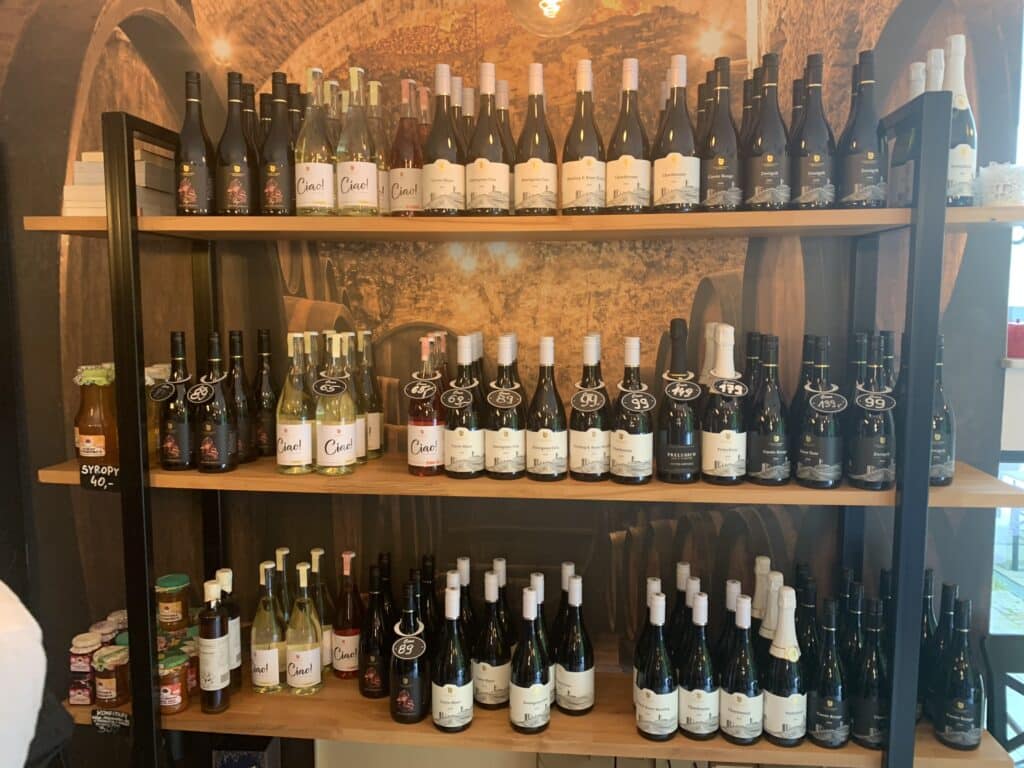
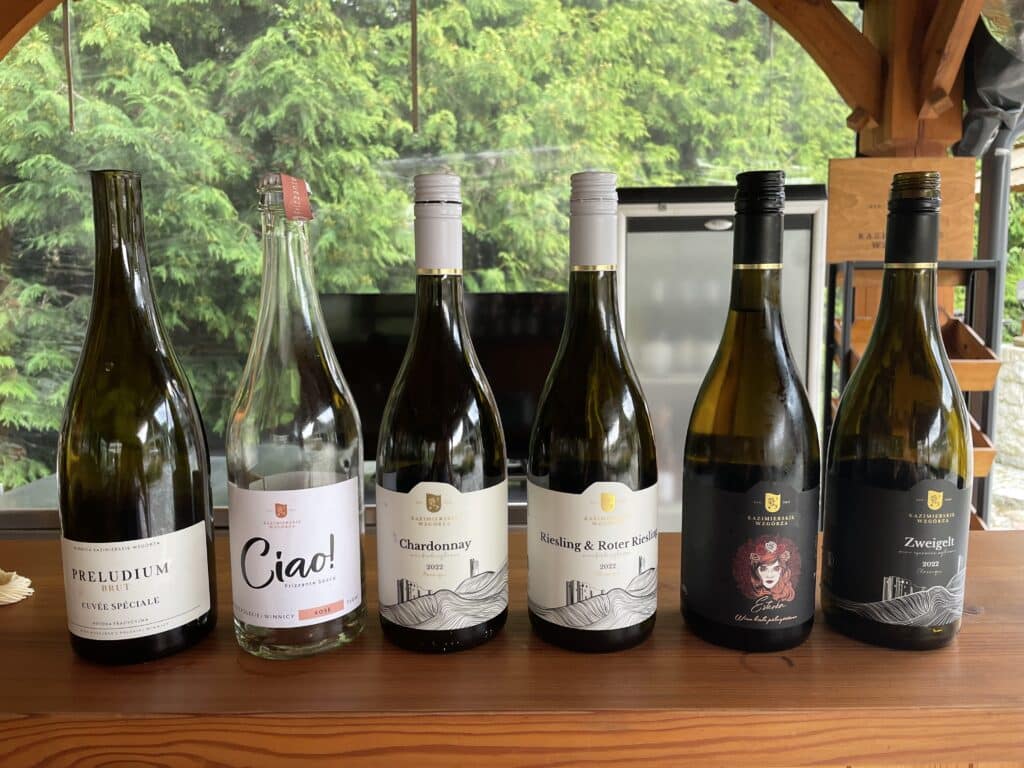
The second part of the tour was a tasting of six wines. We also got a selection of local cheeses and cebularz (a traditional flatbread with onion topping). We immediately fell in love with one of the cheeses. Local Bursztyn is simply divine and trying it alone justified the entire trip. Luckily, the wines were also very good. We started with two sparkling wines, Preludium and Ciao!.
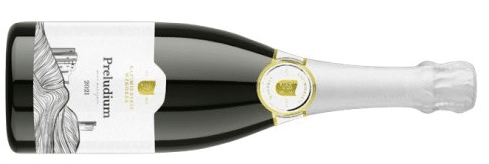
Preludium is a sparkling wine made using the traditional method from two selected parcels of Seyval Blanc. Preludium has a surprisingly distinct aroma and an interesting color. It’s quite fruity, but really well-balanced and enjoyable. For me, it can easily compete with many Proseccos. The main notes are grapefruit, green apple and a bit of peach. The finish is pleasantly long. There are plans to attempt making sparkling wine using the traditional method from Chardonnay and Pinot Noir next year, the very varieties used in Champagne. I’m very curious to see how that turns out!
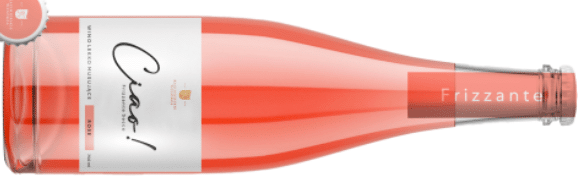
Ciao! is a sparkling rosé made in the style of Italian frizzante. It starts as a still wine and carbon dioxide is added later. Zweigelt and Cabernet Cortis were used to make it. This is a very good use of these varieties, especially the latter, which rarely shines on its own. Ciao! is a pure embodiment of a summer drink. It’s more reminiscent of a fizzy drink. I would put it in one category with cider and beer rather than wine. On this very hot day, it’s perfectly refreshing as it is supposed to be. The main aromas are strawberry and bubblegum.
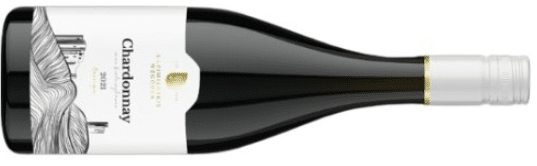
Następnie przechodzimy do win białych. Z tych próbujemy Chardonnay 2022, Riesling & Roter Riesling 2023. Chardonnay robione jest w klasyczny sposób z użyciem metody fermentacji jabłkowo-mlekowej. Ma dość blady, jasno żółty kolor. I zapach i smak natychmiast wskazują na Chardonnay, ale są one dość wycofane, wskazując na zimny klimat. Dobry balans nut maślanych i bułkowych oraz cytrusów. Przyjemna kwasowość.
Next, we move on to the white wines. We try Chardonnay 2022, Riesling & Roter Riesling 2023 and Esterka 2022. The Chardonnay is made in a classic style using malolactic fermentation. It has a rather pale, light yellow color. Both the aroma and taste immediately point to Chardonnay, but they are quite understated, indicating a cool climate. A good balance of buttery and pastry notes with citrus. Pleasant acidity.
Tasting the Chardonnay is the moment when I started to get a bit bored. Each new bottle came with a 15 min introduction. There were very few questions from the audience, which contributed to the atmosphere of a lecture hall rather than a relaxing wine tasting. Of course, part of the problem is that this was probably my nth tour where I heard about dosage, Madame Clicquot and how red wine gets its colour from the grape skin. But I still think the information overload could be reduced in favour of a conversation with the group. The wines were good, so there was plenty to discuss. Especially since the group was quite intimate. Anyway, let’s get back to the last wines.
Esterka is named after a local legend. It’s a blend of Muscaris and Souvignier Gris. The aroma is mainly grape, but also heavily floral, with notes of lilac and acacia. The flavours are mostly floral, with acacia taking the lead. With its 12 grams of sugar, it’s quite good for casual sipping.
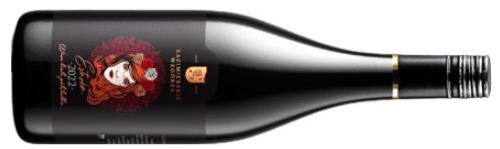
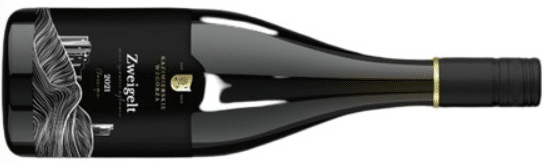
Finally, we tried the only red in the set. Zweigelt 2023 has a ruby colour. The aroma reminds me of cherry jam. Similarly the taste, although here it’s more like unripe cherry, with notes of cranberry. Light body, pleasant bitterness and tannins. I find it really enjoyable.
Afterwards, we absolutely had to stay for another glass before heading out to dinner in the town. I think my biggest complaint regarding the tasting is the lack of the option to try the Pinot Noir. Pinot was available by the bottle though, so all is not lost, and I’ll catch up at home! The atmosphere of Kazimierskie Wzgórza, the wine, the service – they all deserve a good word. From the owner to the assistant staff, everybody put their best foot forward. The result was excellent! I wish them all the best in the future. In anticipation of the 2024 vintage, I am already thinking about the next visit.
Kazimierskie Wzgórza Winery: https://kazimierskiewzgorza.pl/.
Kazimierskie Wzgórza Winery – Kazimierz Dolny, Poland Read More »