polish wine

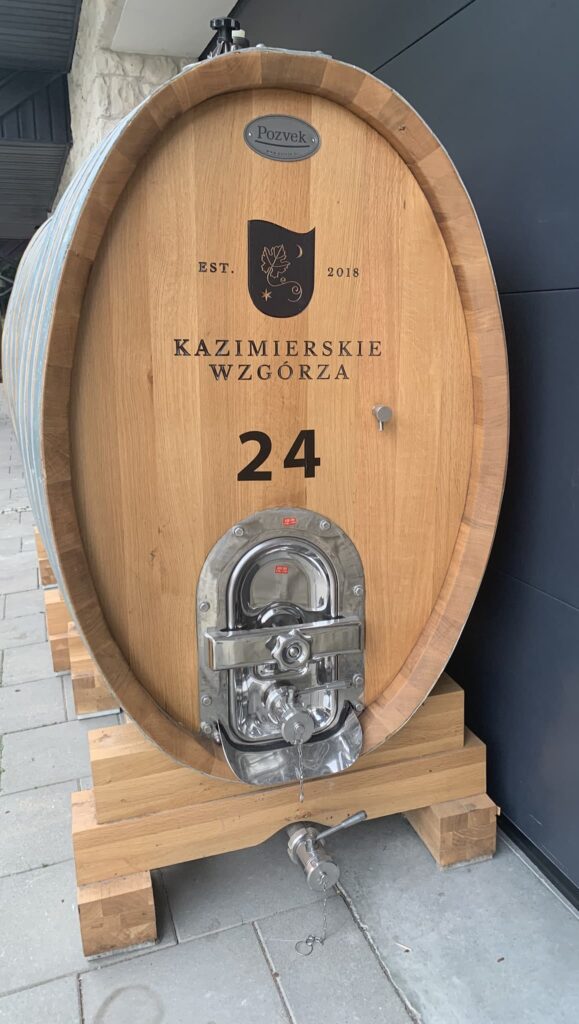
Kazimierskie Wzgórza beczka z logo.

Kazimierskie Wzgórza Winery – Kazimierz Dolny, Poland

We set out from Warsaw. Motorway, fields and forests flashed outside the windows and then we reached a single-lane road. About an hour and a half later, we found ourselves in a completely different landscape. We’re surrounded by hills, ravines and picturesque, historic houses. Staying with the theme of vineyards close to home, this time I went to one of the most prominent regions of the Polish wine making scene – Kazimierz Dolny.

During my previous visits to the region, the logo of Kazimierskie Wzgórza vineyard (Kazimierskie Hills) stuck in my memory. So, that’s exactly where we’re headed. Could this be another case of highly effective marketing, just like in Dwórzno? But Kazimierskie Wzgórza felt a lot better right from the start. I called to ask about availability for the next winery tour and whether I can bring a dog. I was greeted with sheer politeness and professionalism. “We have free spots, I’ll make the reservation right away, the dog is no problem.” They even offered a cheaper tour option for our designated driver.

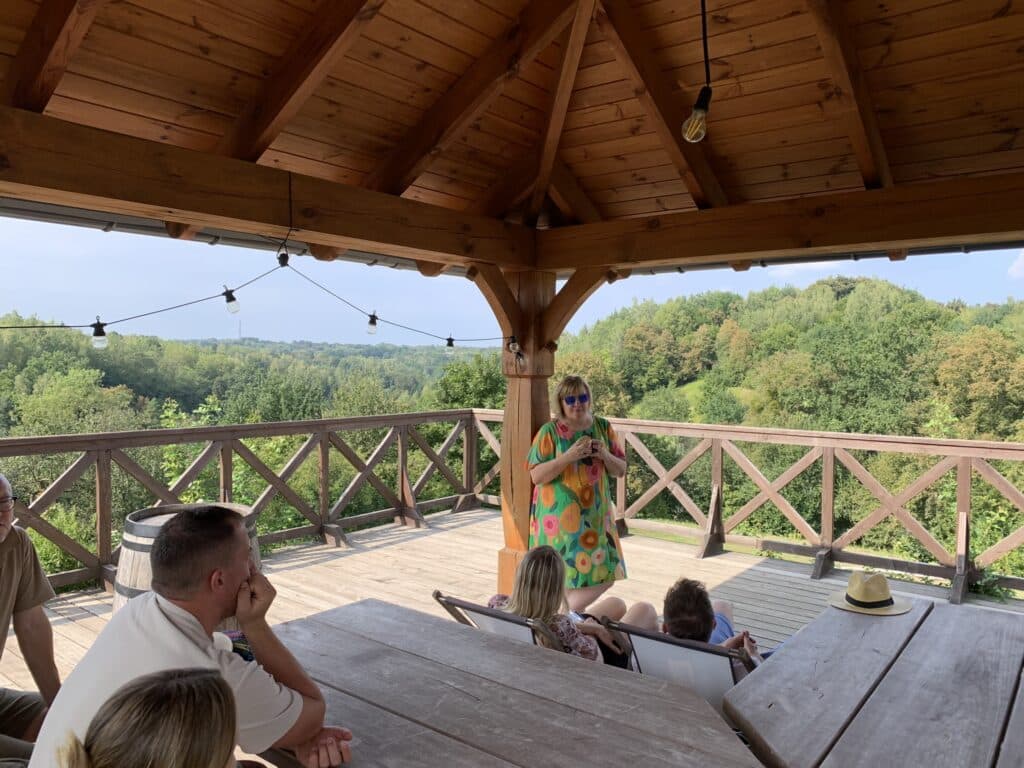
Our guide was Bogusia, co-owner of the vineyard. She told us interesting facts about the region, viticulture and the basics of winemaking. We learnt that the area around Kazimierz Dolny is particularly suited for growing grapes for several reasons. Firstly, the area is hilly, and the hills help with sunlight exposure and drainage of excess water. Second, the soil. Light and airy loess sitting on characteristic limestone rocks. Later, we saw that many local buildings had walls built from the same stone. If you look closely, you can spot imprints of differently shaped shells in the white stone. Thirdly, the Vistula River. The queen of Polish rivers flows through Kazimierz Dolny creating a unique microclimate. And as it turns out, the Lublin region is the sunniest part of Poland. Mind you, not the warmest, but with the most hours of sunshine. Everybody knows that this is a key factor when growing grapes.
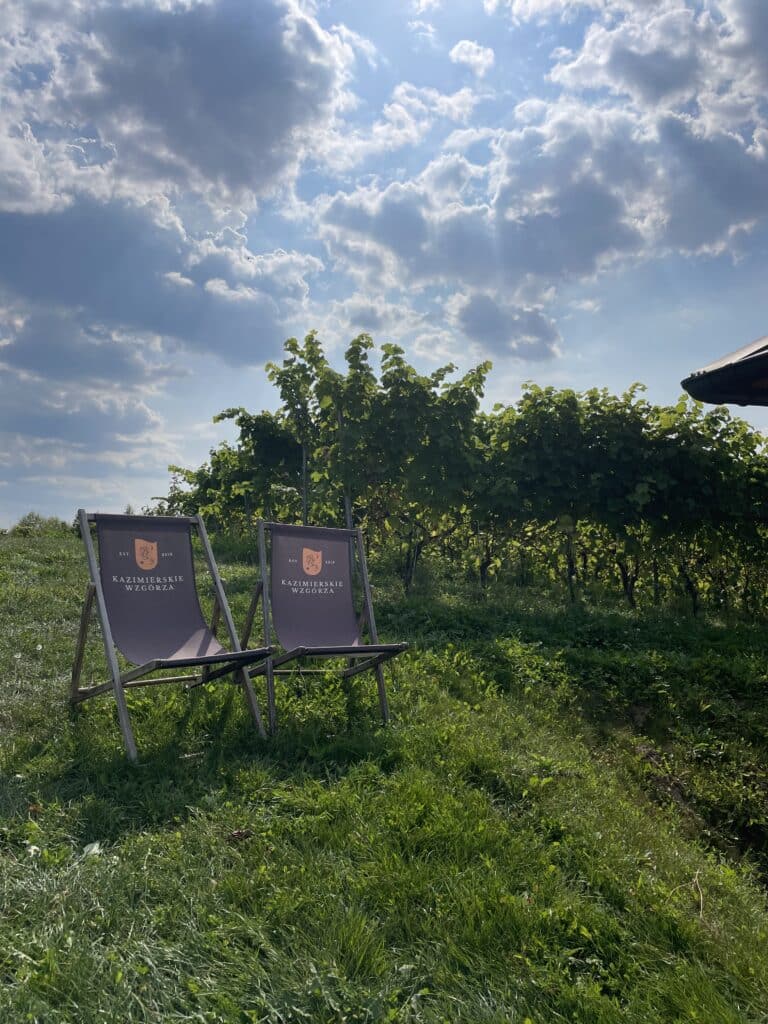
We strolled among the grapevines, tasting different varieties straight from the vine and listened to more stories. It couldn’t be more idyllic and peaceful. Although it was a bit early for the grape harvest, we learnt that the first batch of Solaris had already been picked. The owner of Kazimierskie Wzgórza noted that the harvest started 2-3 weeks earlier than usual. The summer was scorching hot with minimal rainfall. I made a mental note that it might be worth considering stocking up on the 2024 vintage! Due to weather of this kind, 2024 wines could turn out to be quite interesting and potentially quite unusual for Polish conditions.

After all, Poland like Austria, Germany, or Switzerland is situated in what’s called the cool zone for grape growing. At Kazimierskie Wzgórza, about 70% of the varieties are white. Interestingly, the owners are slowly experimenting with Vitis Vinifera varieties, such as Chardonnay, Riesling, Pinot Noir, and Zweigelt. Hybrid varieties (special grape varieties developed for cooler zones) still dominate, but their share is decreasing every year.

As it turned out, typical of the Polish legislature, there are many prohibitive laws in the winemaking industry. In Kazimierskie Wzgórza, last year’s wine hadn’t been bottled yet, while this year’s grapes were already starting to be harvested. Even though the additional storage space was practically empty, the unbottled wine couldn’t have been transported there without the wine being fitted with the tax designations first. And what’s a poor winemaker to do? Not only do they fight with unpredictable forces of nature, but also with predictably irritating Polish regulations..
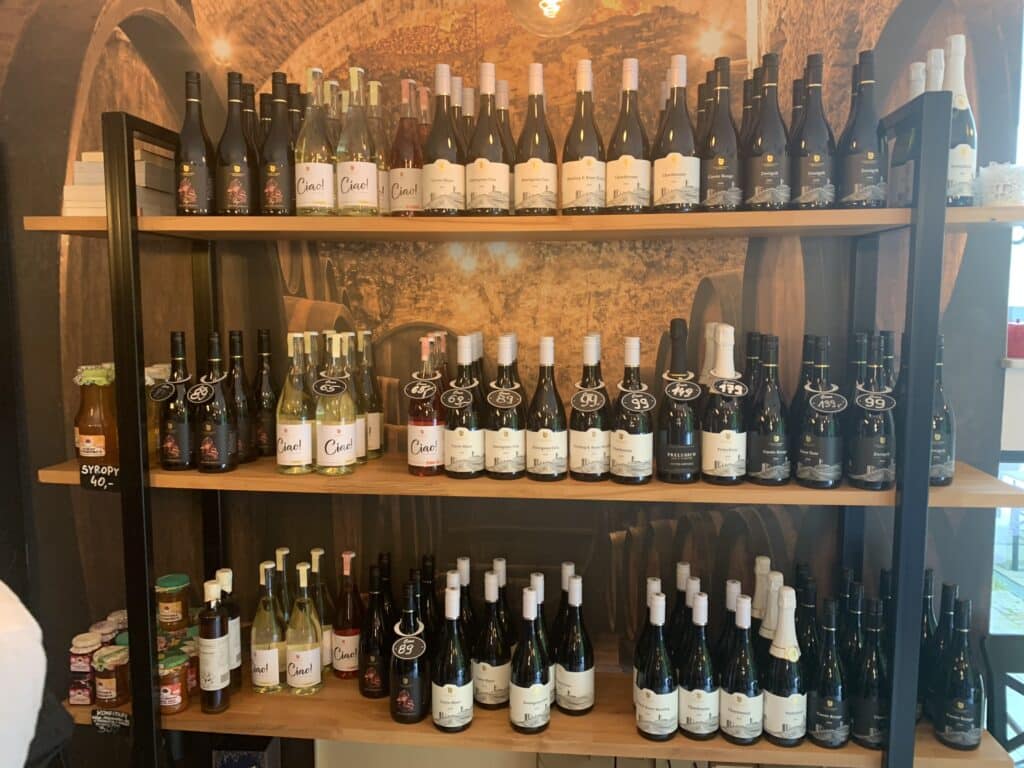
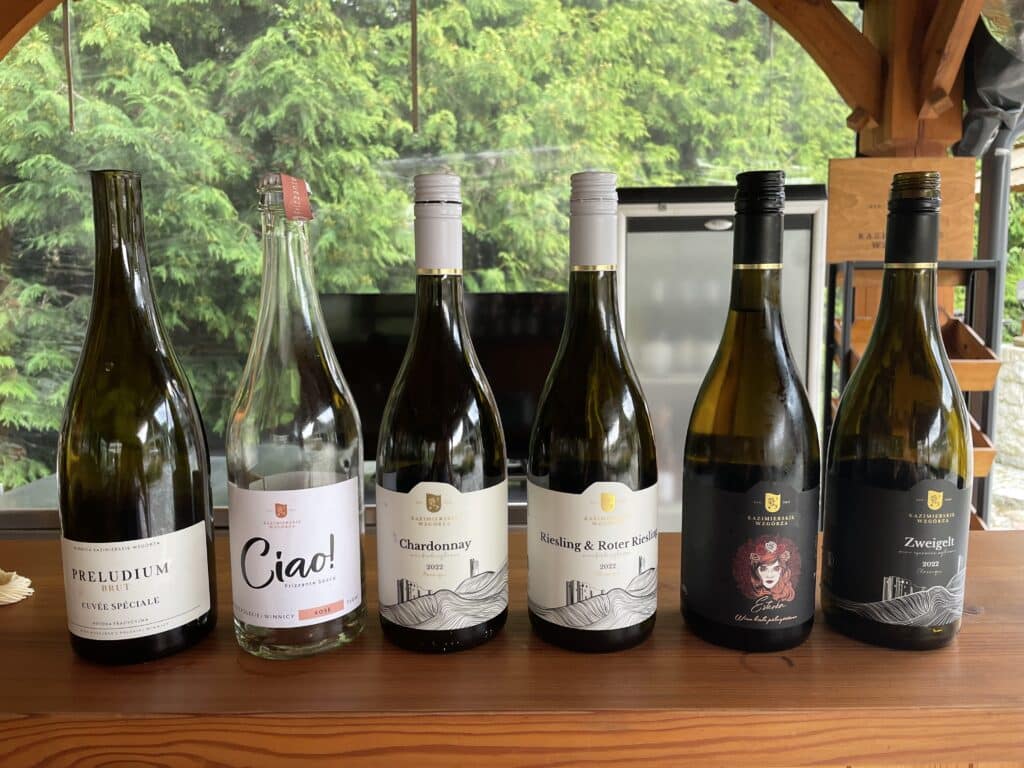
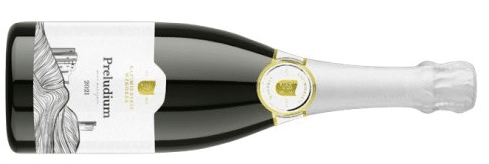
The second part of the tour was a tasting of six wines. We also got a selection of local cheeses and cebularz (a traditional flatbread with onion topping). We immediately fell in love with one of the cheeses. Local Bursztyn is simply divine and trying it alone justified the entire trip. Luckily, the wines were also very good. We started with two sparkling wines, Preludium and Ciao!.

Preludium is a sparkling wine made using the traditional method from two selected parcels of Seyval Blanc. Preludium has a surprisingly distinct aroma and an interesting color. It’s quite fruity, but really well-balanced and enjoyable. For me, it can easily compete with many Proseccos. The main notes are grapefruit, green apple and a bit of peach. The finish is pleasantly long. There are plans to attempt making sparkling wine using the traditional method from Chardonnay and Pinot Noir next year, the very varieties used in Champagne. I’m very curious to see how that turns out!
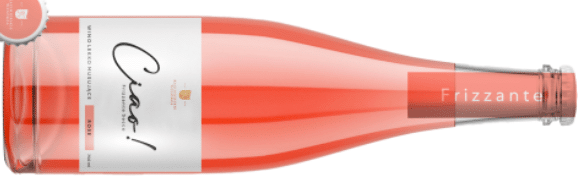
Ciao! is a sparkling rosé made in the style of Italian frizzante. It starts as a still wine and carbon dioxide is added later. Zweigelt and Cabernet Cortis were used to make it. This is a very good use of these varieties, especially the latter, which rarely shines on its own. Ciao! is a pure embodiment of a summer drink. It’s more reminiscent of a fizzy drink. I would put it in one category with cider and beer rather than wine. On this very hot day, it’s perfectly refreshing as it is supposed to be. The main aromas are strawberry and bubblegum.
Następnie przechodzimy do win białych. Z tych próbujemy Chardonnay 2022, Riesling & Roter Riesling 2023. Chardonnay robione jest w klasyczny sposób z użyciem metody fermentacji jabłkowo-mlekowej. Ma dość blady, jasno żółty kolor. I zapach i smak natychmiast wskazują na Chardonnay, ale są one dość wycofane, wskazując na zimny klimat. Dobry balans nut maślanych i bułkowych oraz cytrusów. Przyjemna kwasowość.

Next, we move on to the white wines. We try Chardonnay 2022, Riesling & Roter Riesling 2023 and Esterka 2022. The Chardonnay is made in a classic style using malolactic fermentation. It has a rather pale, light yellow color. Both the aroma and taste immediately point to Chardonnay, but they are quite understated, indicating a cool climate. A good balance of buttery and pastry notes with citrus. Pleasant acidity.
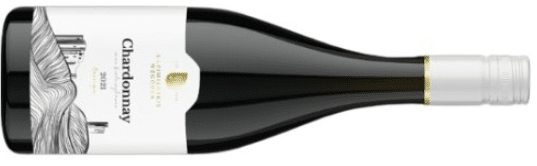
Tasting the Chardonnay is the moment when I started to get a bit bored. Each new bottle came with a 15 min introduction. There were very few questions from the audience, which contributed to the atmosphere of a lecture hall rather than a relaxing wine tasting. Of course, part of the problem is that this was probably my nth tour where I heard about dosage, Madame Clicquot and how red wine gets its colour from the grape skin. But I still think the information overload could be reduced in favour of a conversation with the group. The wines were good, so there was plenty to discuss. Especially since the group was quite intimate. Anyway, let’s get back to the last wines.

Esterka is named after a local legend. It’s a blend of Muscaris and Souvignier Gris. The aroma is mainly grape, but also heavily floral, with notes of lilac and acacia. The flavours are mostly floral, with acacia taking the lead. With its 12 grams of sugar, it’s quite good for casual sipping.
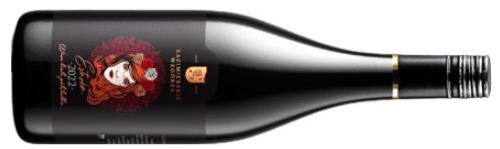
Finally, we tried the only red in the set. Zweigelt 2023 has a ruby colour. The aroma reminds me of cherry jam. Similarly the taste, although here it’s more like unripe cherry, with notes of cranberry. Light body, pleasant bitterness and tannins. I find it really enjoyable.
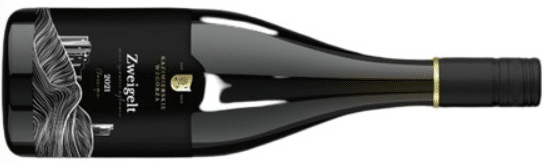
Afterwards, we absolutely had to stay for another glass before heading out to dinner in the town. I think my biggest complaint regarding the tasting is the lack of the option to try the Pinot Noir. Pinot was available by the bottle though, so all is not lost, and I’ll catch up at home! The atmosphere of Kazimierskie Wzgórza, the wine, the service – they all deserve a good word. From the owner to the assistant staff, everybody put their best foot forward. The result was excellent! I wish them all the best in the future. In anticipation of the 2024 vintage, I am already thinking about the next visit.

Kazimierskie Wzgórza Winery – Kazimierz Dolny, Poland Read More »
Dwórzno vineyard.

The Power of Marketing – Dwórzno Vineyard near Warsaw

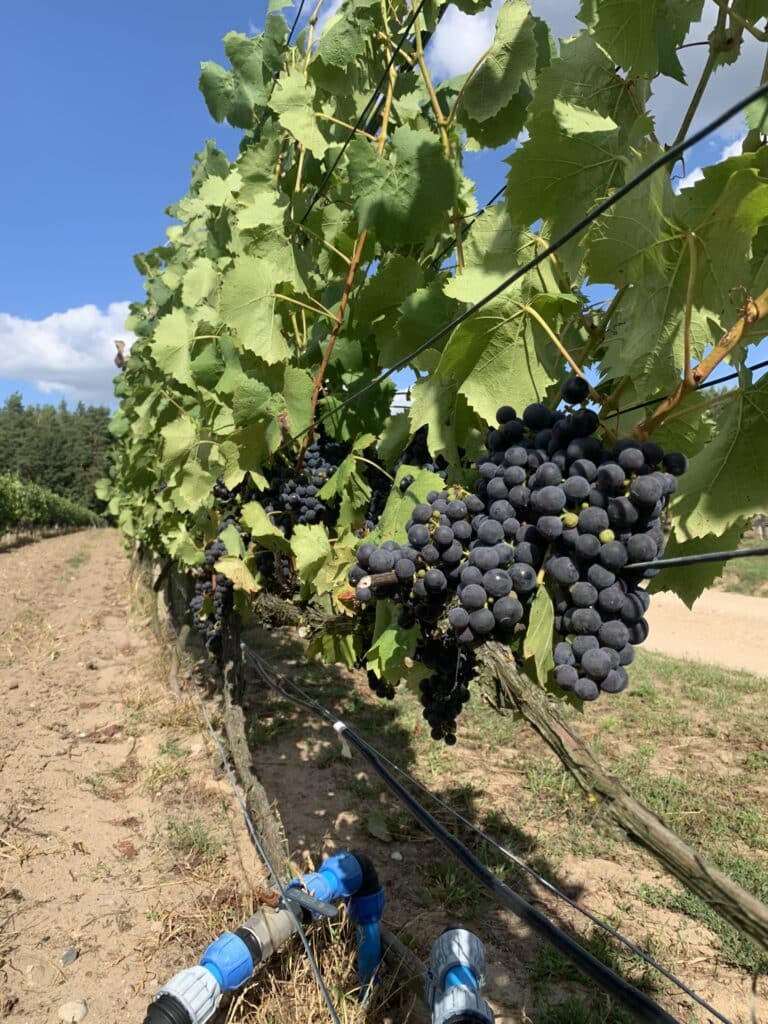
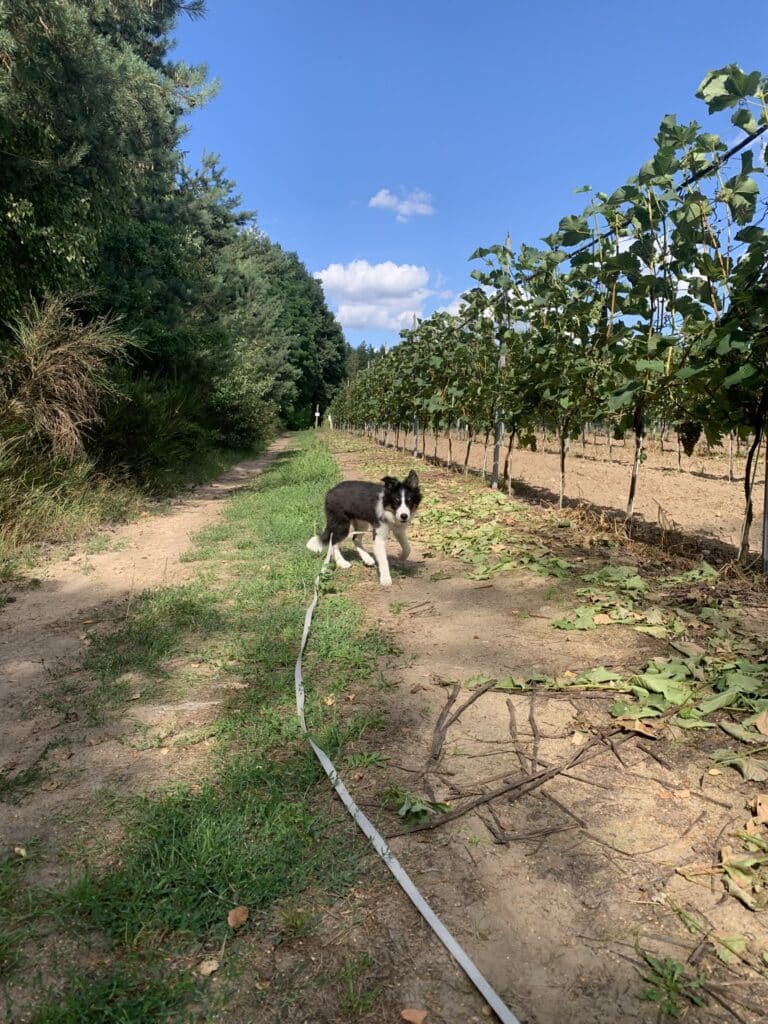
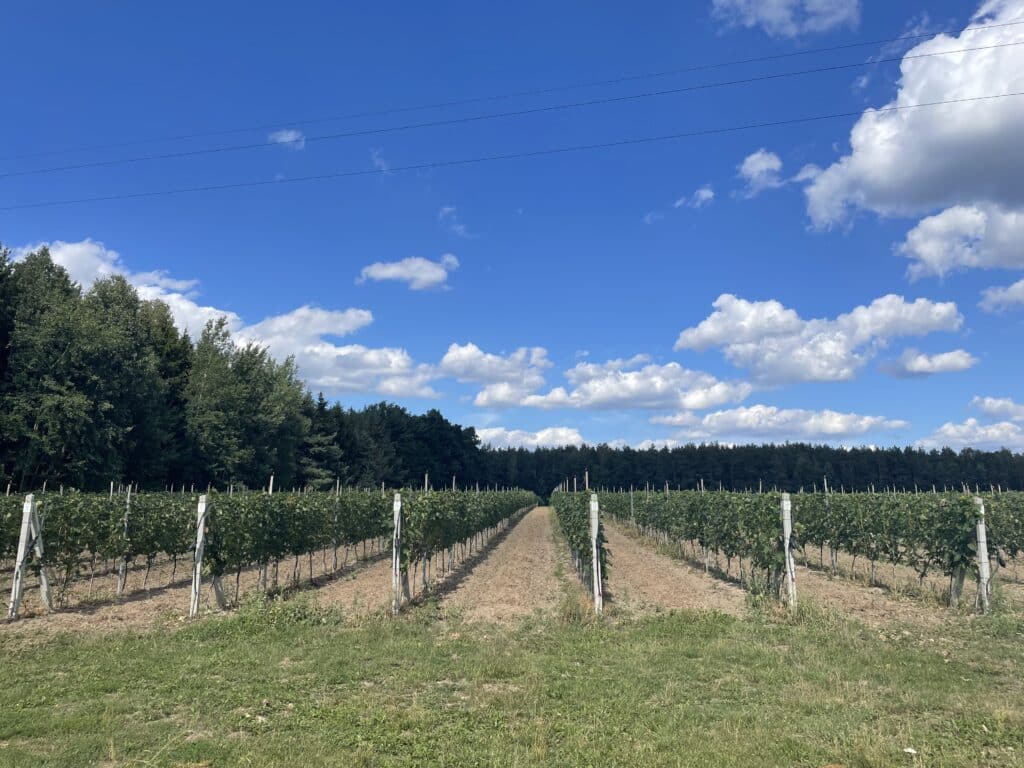
“The place has such an amazing atmosphere!”, “You can chill out on deckchairs.”, “It’s a perfect way to spend a Sunday afternoon.”, “It’s only 30 minutes from Warsaw.” — we kept hearing about Dwórzno Vineyard. Predictably, we eventually gave in. We put a couple of friends and a dog into a car and off we went to check out this mysterious wine craze spread around Warsaw. I must admit, there was a grain of truth in all the excited comments. The journey from Warsaw is quick and the surroundings very beautiful. Especially the final few kilometres on a narrow road through fields, meadows and ponds. Stunning August weather helped tremendously too. The Dwórzno Vineyard itself has charming grounds typical for Mazovian countryside — the plots for grapevine cultivation are cut out of a pine and birch forest.

Our visit had a rocky start. Upon arrival, we found ourselves in the middle of a large courtyard, not quite sure what to do next. We spotted what looked like a stripped version of the chillout area from all the social media pictures. But apart from one lonely couple (interestingly, not drinking wine) there was nobody around. After chatting with those two and wandering around the courtyard, we managed to find a door that led to an improvised shop. There’s absolutely nothing wrong with such small operations. Personally, I quite enjoy visiting these kinds of places. However, Dwórzno could at least think about some signage to help their guests navigate the estate more easily.

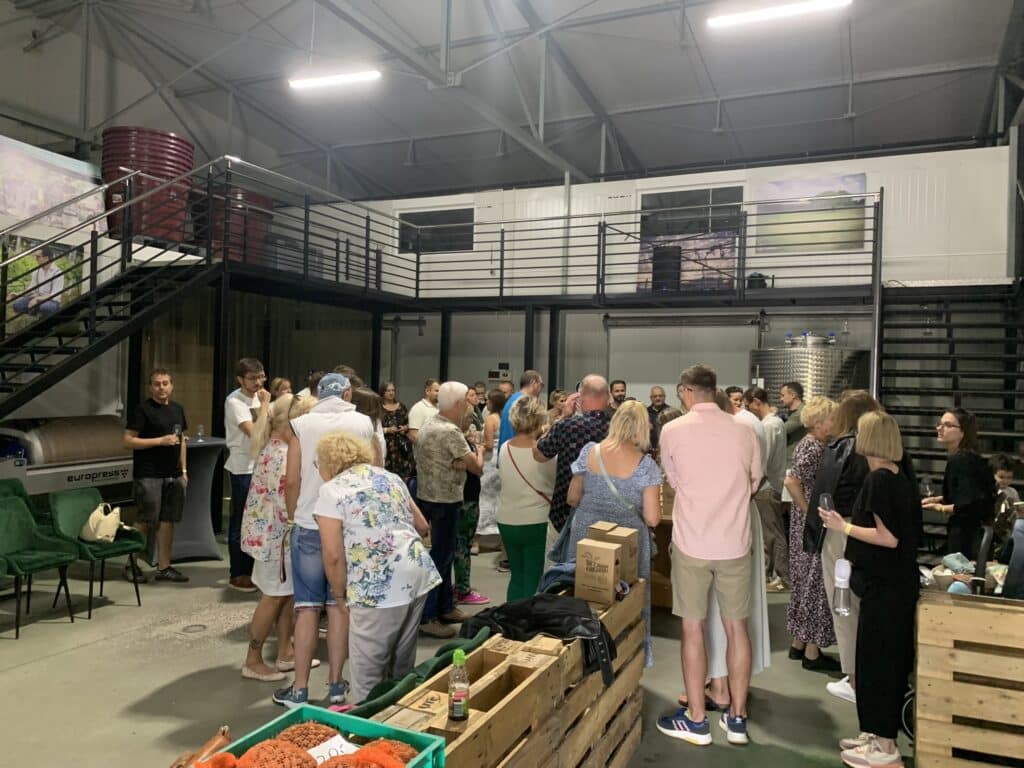
To our surprise, we faced a real crowd inside. About 50-60 people. You could tell the group were Warsaw natives. Many young couples and several groups of friends. It turned out that they were part of a vineyard tour. I’ve never seen so many people on a vineyard tour in my life. “They must be doing something right”—I thought. Encouraged by the apparent popularity of the vineyard, we didn’t hesitate any longer and immediately asked to taste all the wines. The options were either a whole bottle or a glass, nothing more tasting friendly. Hmm, an interesting beginning indeed.

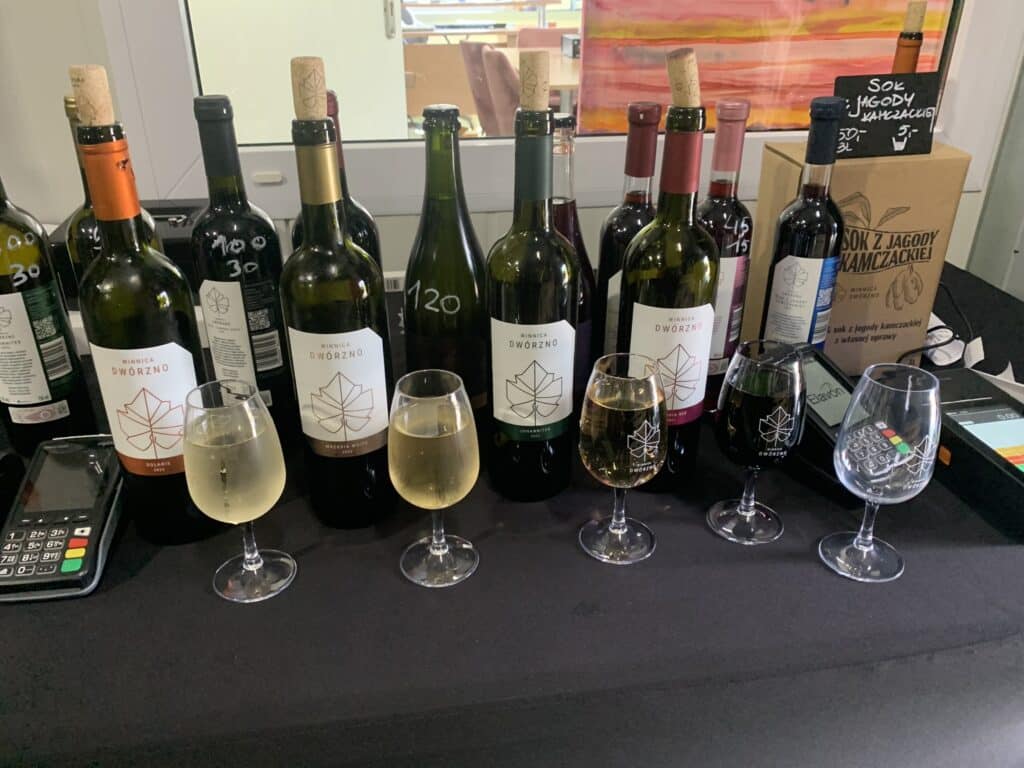
“Let’s go with the glasses; we’ll share somehow.” – we agreed. It’s probably safer than going off the script with a somewhat rude staff member selling the wine. Five glasses totaled 120 PLN (28 €). Bottles ranged from 80 to 120 PLN (19-28 €). The super “helpful” saleswoman informed us that: “these are a bit drier, and these are a bit sweeter.” No nonsense and straight to the point. The portions seemed to overcompensate for the price. It was quite difficult to carry everything to our table without spilling.

So what did these slightly dry and slightly sweet wines amount to:

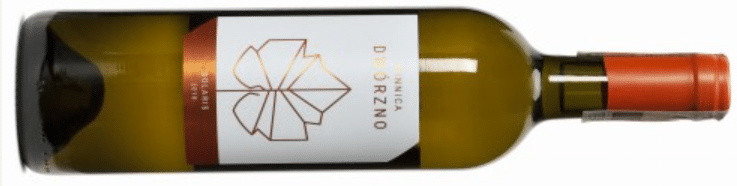
Solaris 2023 – very pale in colour, practically transparent with greenish reflections. The aroma featured green apples together with a bit of peach. This must be one of the drier ones, with a pretty decent finish. On the palate, a bit of anise, menthol, elderflower, wild flowers and citrus.

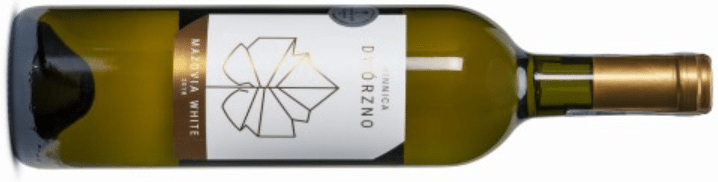
Mazovia White 2022 – the colour was definitely rounder, more yellow. It was much fruitier on the nose, I smelled acacia honey. Unfortunately, it didn’t do as well in terms of the taste. The flavours were flat, overwhelmed with lemon and grapefruit acidity.

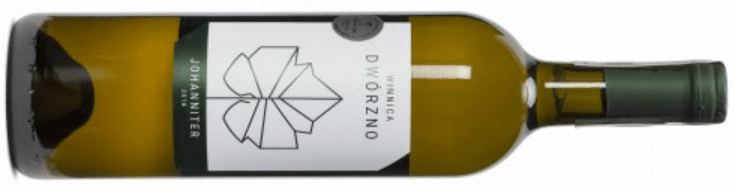
Johanniter 2022 – a fairly full colour, more golden than yellow. Despite the hot day, the wine was served at room temperature—yummy. The aroma wasn’t very intense. I was hard pressed to detect anything specific. First sip revealed a slight fizz. It had even less flavour than the previous wine, lacking even acidity. Maybe it had more sugar? Hard to say.

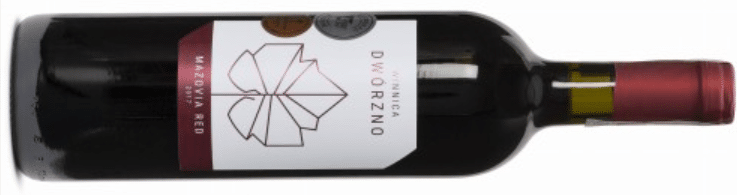
Mazovia Red 2021 – an intense burgundy colour, identical to the next red as well. I could taste chokeberry, blackcurrant and a hint of cherry notes. However, it did not display any depth and the overall profile was lacking in complexity. Very little acidity. Everyone agreed that Mazovia Red reminded them of a popular Polish fruit drink, compote.

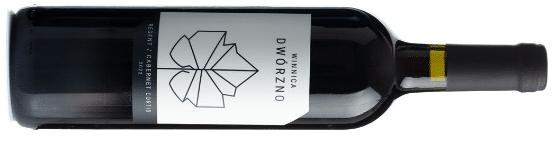
Regent / Cabernet Cortis 2022 – colour as above. The fruit aroma was more ripe, more currant-like. The palate at first seemed to be a bit more pleasant than in the previous wine, but sadly that was just the initial impression. Then came a strong sulphur taste. I probably don’t need to add that it was rather unpleasant. It left a long finish, which in this particular case definitely didn’t improve the wine.

So we sat and watched people coming out of the tour with boxes of wine. Another 50 or so gathered by the green rows of vines for the next slot. Dwórzno Vineyard can definitely boast an incredibly effective marketing strategy (the same mechanic that attracted us). They had a great idea to create an unusual urban attraction, despite being somewhat distant from the capital. Bored Varsovians will look for something “to do” on the weekend, and tourists will find this place in the list of top 10 unique experiences in Warsaw. Thanks to the shuttle rovided from the city centre, it’s very easy to get there. Another brilliant business idea. Overall, Dwórzno Vineyard deserves real praise for a very good business sense. I am just disappointed that their day trip package does not include good wine. And I wanted it so badly to be good, to have a place to stock up so close to home! Sadly it was just too good to be true…

The Power of Marketing – Dwórzno Vineyard near Warsaw Read More »

Sad w świętokrzyskim.

Winnica Płochockich – a hidden gem in the hills of southern Poland

The wine tradition is ancient, but alive and constantly forming. There are places like Italy or France, where wine culture is deeply rooted in the local and national identity. Wine is as commonplace as bread. And there are places like Poland.  A few centuries ago, in Polish literature we could find mentions of  ‘’Burgunder’’ or ‘’Węgrzyn’’ (lit. Hungarian). However, wine-drinking culture had somewhat vanished in the last century and only recently it has been  coming back to life. The lack of quality product on the supermarket shelf, which was the main hurdle for a Polish wine lover, is no longer the case. Wine growing and winemaking is another matter completely. In this sphere Polish producers face a number of unique challenges: environmental, financial, technical or even legal (only since 2008 selling wine from your own vineyard is permissible under Polish law). Consequently, many Polish winemakers still have some work to do before they can match the quality of their more experienced colleagues abroad. Luckily for us, there are a handful of local vineyards which significantly stand out from the crowd already. Today we are going to visit one of them, a vineyard called Winnica Płochockich.

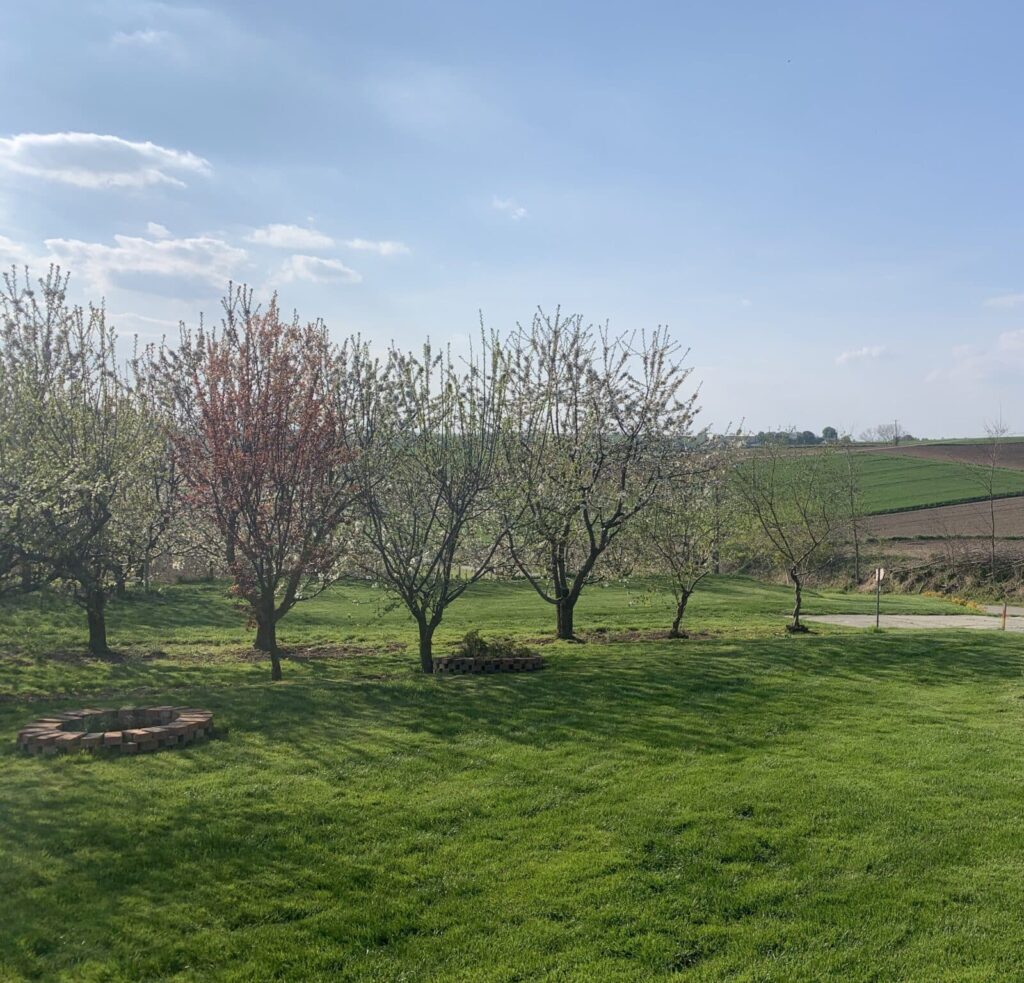
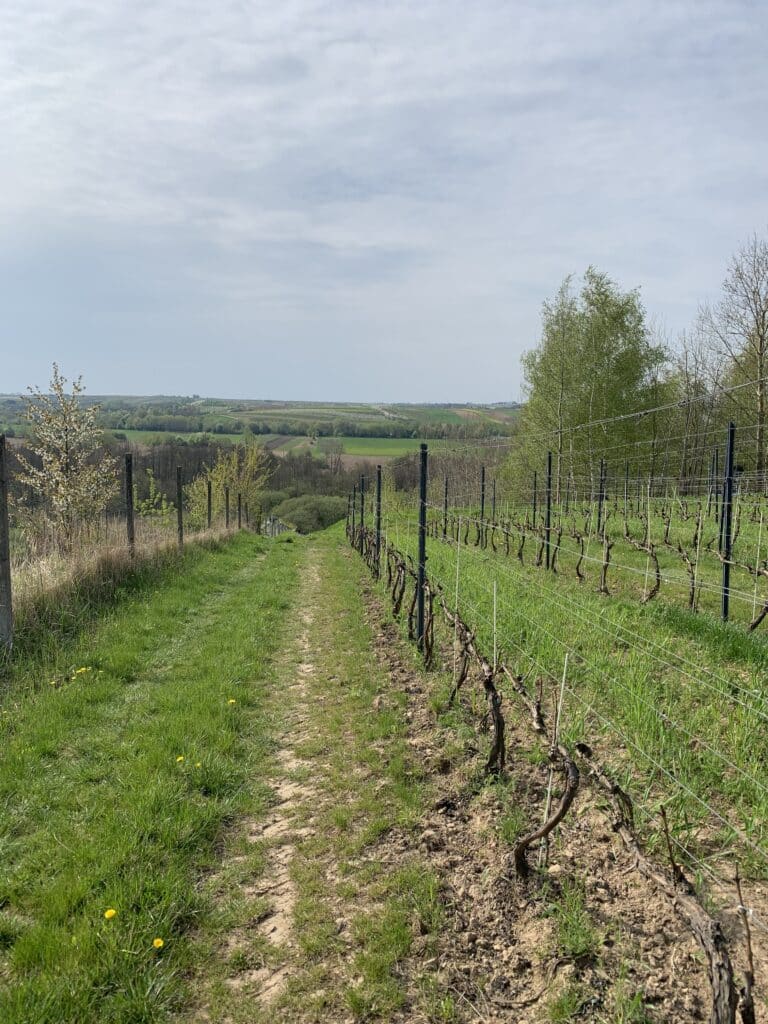
Winnica Płochockich is tucked away in the rolling hills of Świętokrzyskie voivodeship in southern Poland. It is a family business run by a couple, Barbara and Marcin Płochoccy. The operation which started in 2006 was only the third vineyard to be officially registered in the whole country. Interestingly, the owners did not have a background in winemaking and initially balanced their passion for wine with other professional responsibilities. The vineyard is located in Daromin village in the Sandomierz area – 3 hours by car from either Warsaw or Krakow. The winery welcomes visitors for casual shopping, tours that include tasting or even overnight stays in rooms, which are situated literally above tanks of fermenting wine! I also highly recommend walks among the vines; feast for the eyes guaranteed. I visited in early May so the vineyard was just coming to life after the winter. Neighbouring orchards which were in full bloom supplemented the additional palette of colours.

Let’s talk about wine. The estate is fairly small with just 7 hectares of land and yet growing 20 different grape varieties. As a result, a wide selection of both reds and whites is on offer. The vineyard grows international varieties such as Pinot Noir and Riesling, as well as more niche ones such as Hibernal Solaris or Johanniter. While white wines are certainly the highlight, any bottle with the Płochocki logo is sure to impress. The same cannot be said for every vineyard nearby. However, I am not going to go into more detail about that now because I don’t want to prematurely discourage eager local enotourists. Let’s just focus on the outstanding example today. During our stay, we were lucky to try a great selection of wines. Below, I go over the headlines and the most interesting examples.

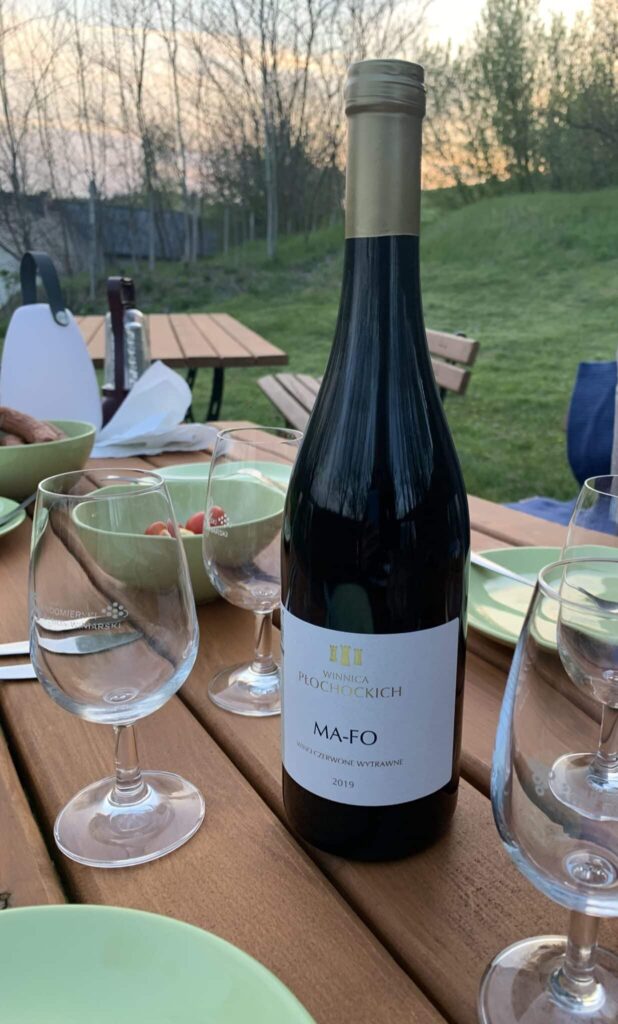
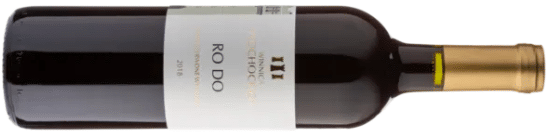
From the reds we tried Ma Fo and Rodo. Ma Fo is made from Frontenac and Marechal Foch. Rodo is also a blend of Marechal Foch, Regent and Cabernet Cortis. This was my first experience with these varieties, but I very much enjoyed that first encounter. It was evident that the wines came from a cool climate. Satisfyingly, they turned out to be quite complex. Ma Fo was full-bodied with flavours of dark fruit, plums,blueberries and notes of vanilla. Rodo, on the other hand, was more crisp and subtle, tasting of cherry and redcurrants.

Luckily for us, Barbara also had the last few bottles of 2020 Pinot Noir. This single variety wine was produced in a limited series of just 600 bottles. The fact that it was already sold out might tell you something about its quality. I would say that this bottle was a typical example of Pinot Noir, which in this context, is a very good thing! Regrettably, often when this variety is grown in unusual geographies, a flat and characterless wine is the result. Not this time. This Pinot was smooth, with spicy notes of pepper and a palate full of  red fruit such as cranberry and ripe cherry. Tannins were soft and pleasant. I am now imagining the kind of wine it will become after another two or three years of aging.

I must say, at this point I was quite happy already. It was very satisfying to find red wines of this quality produced by Polish winemakers. Nevertheless, the best that Winnica Płochockich has to offer are their whites. We tasted Hibia and Inspira Volcano. These two would easily stand their ground in comparison with many foreign bottles. Not only as an interesting novelty from Eastern Europe, but mostly thanks to their complex structure and intensity of flavours. These whites were blends similarly to Ma Fo and Rodo, made out of five and three varieties, respectively.

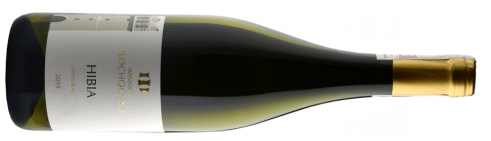
Hibia is made of Hibernal, Solaris, Traminer, Cserszegi Fűszeres and Muscaris. It displays pale yellow hues. It is very fruity both on the nose and the palate. The reverie of different aromas was rich, but not overwhelming. It was very fun to enjoy its changing nature: from tropical fruit flavours like melon and pineapple to fresh flowers, jasmine and roses. Underlying acidity balanced the wine nicely. It’s a summer drink, to drink with friends – just have fun and enjoy what’s good in life!

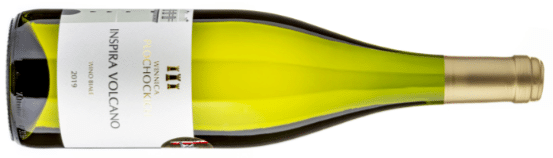
Inspira Volcano was a different story. It’s a rather serious wine made from Johanniter, Seyval Blanc and Hibernal. This white wine was very good shortly after release, however, as a big bonus, it also ages pretty well. The older it gets, the more developed its character and flavour get. Rumour has it that on her visit to Poland, Jancis Robinson (a world-famous wine guru) tried a 10 year old bottle of Inspira Volcano and was very pleased with it. Unlike Hibia, Inspira spends 12 months in oak barrels. Citrus notes dominate, but there is something balsamic to the flavour. The result is lavish, but intricate and elegant.

Winnica Płochockich differs from their neighbours in one more aspect. They focus on dry wines. The exception is a typical dessert wine, Raisins. Raisins, as the name suggests, is produced from the juice from dried grapes, analogous to some Italian and Spanish sweet wines. This achieves concentration of sugar and flavour. Unsurprisingly, it’s fairly sweet, but remains refreshing thanks to a decent level of acidity. The main flavour notes included exotic fruit, mango in particular. The raisins aroma was present too.

Is now a perfect time to stock up on some bottles of Inspira Volcano or Pinot Noir? Or Riesling, which is a new release from the winery and incidentally very well suited for this climate. I wonder about the future of Winnica Płochockich, the next 5, 10 or even 20 years…Considering the passion of the owners and the quality of their wines, I can’t help but think that they might do pretty well. It’s difficult to foresee that the popularity of a certain product is about to skyrocket. Is Winnica Płochockich just steps away from this moment? There is no way to say. But in the ‘’worst case scenario’’, I will be left with a few bottles of exceptionally good wine. I can probably live with that!

Winnica Płochockich – a hidden gem in the hills of southern Poland Read More »
Dwór Kombornia.

Carpathian Wine Bar

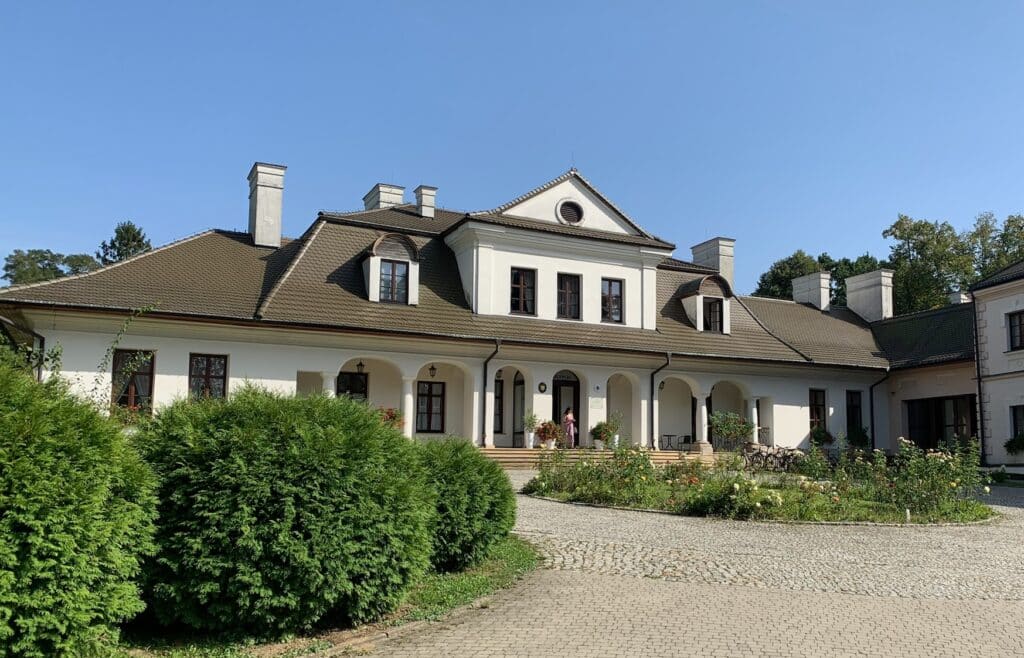
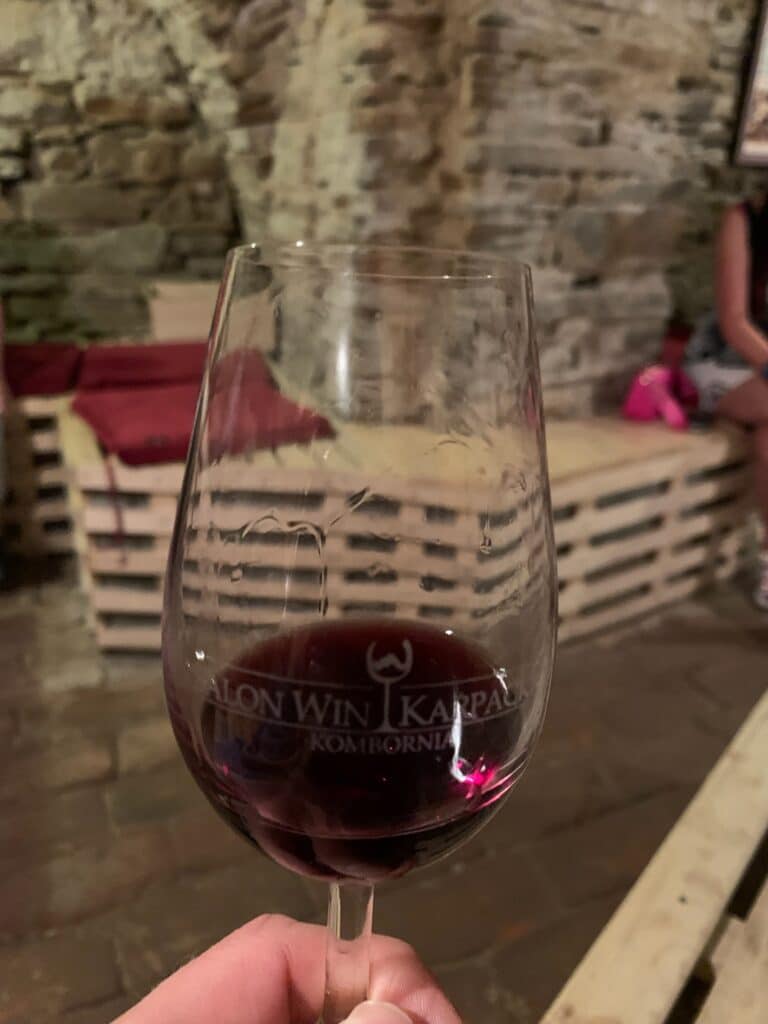
We’ll make our start in a place that’s probably totally alien to many people and definitely not associated with wine, i.e. a Sub-Carpathian region in Poland! One summer day, we found ourselves in a city called Krosno in Lower Beskid in Southern Poland. From Krosno, we made our way to a nearby village of Kombornia with an 18th century manor house at its centre. The surrounding area can actually boast quite a few of those, which isn’t always the case in this strange country wrecked by two world wars and 50 years of communism. There was a certain serenity in this idyllic countryside setting. Although the house had been renovated and the exterior presented itself quite well, inside the effects of refurbishment were slowly fading away. It felt dated and not necessarily in a nice way. However, Kombornia Manor has one little gem hidden away inside a small hill on the estate’s grounds. This is where we found the Carpathian Wine Bar (or Salon, own translation; original Salon Win Karpackich).

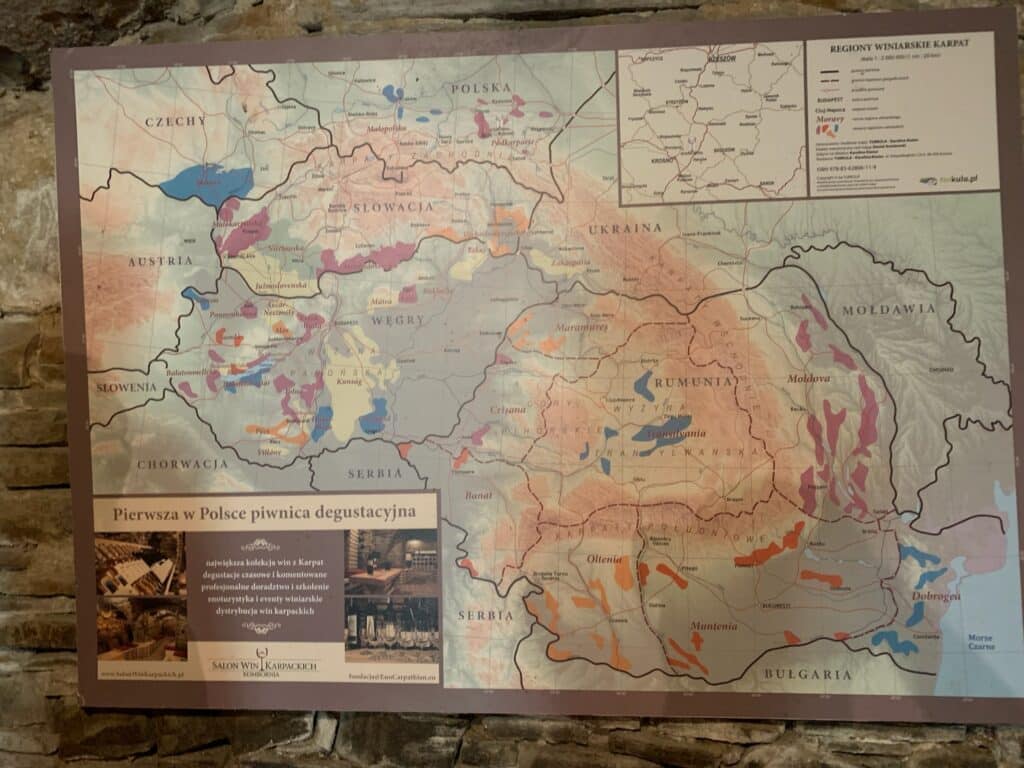
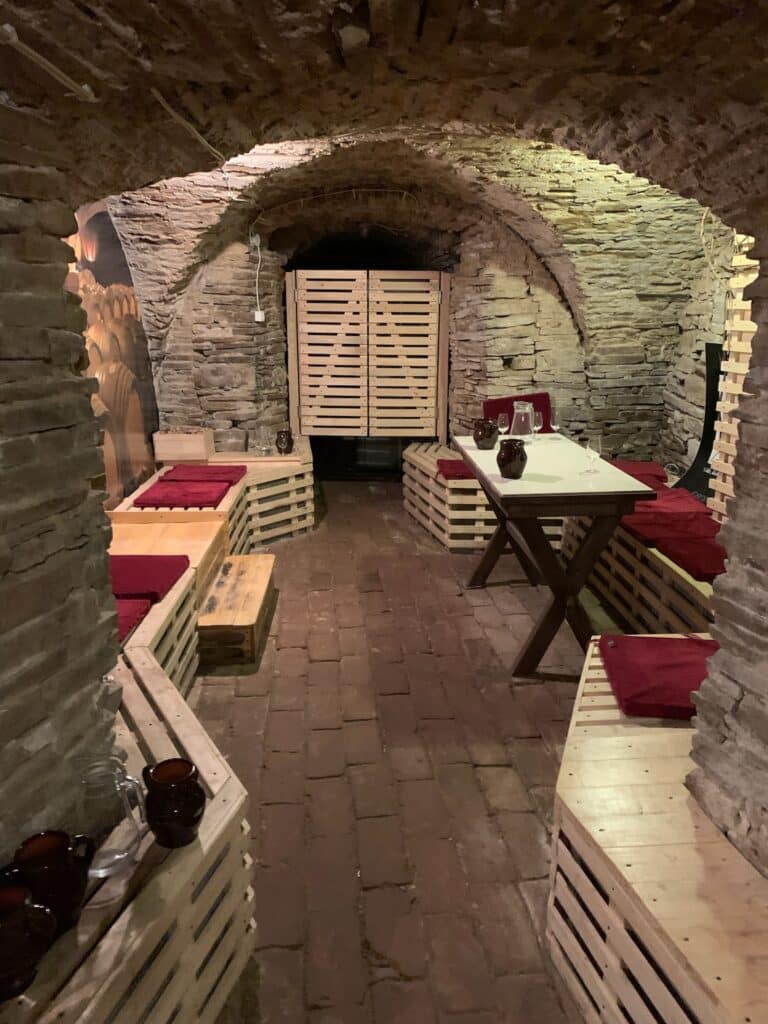
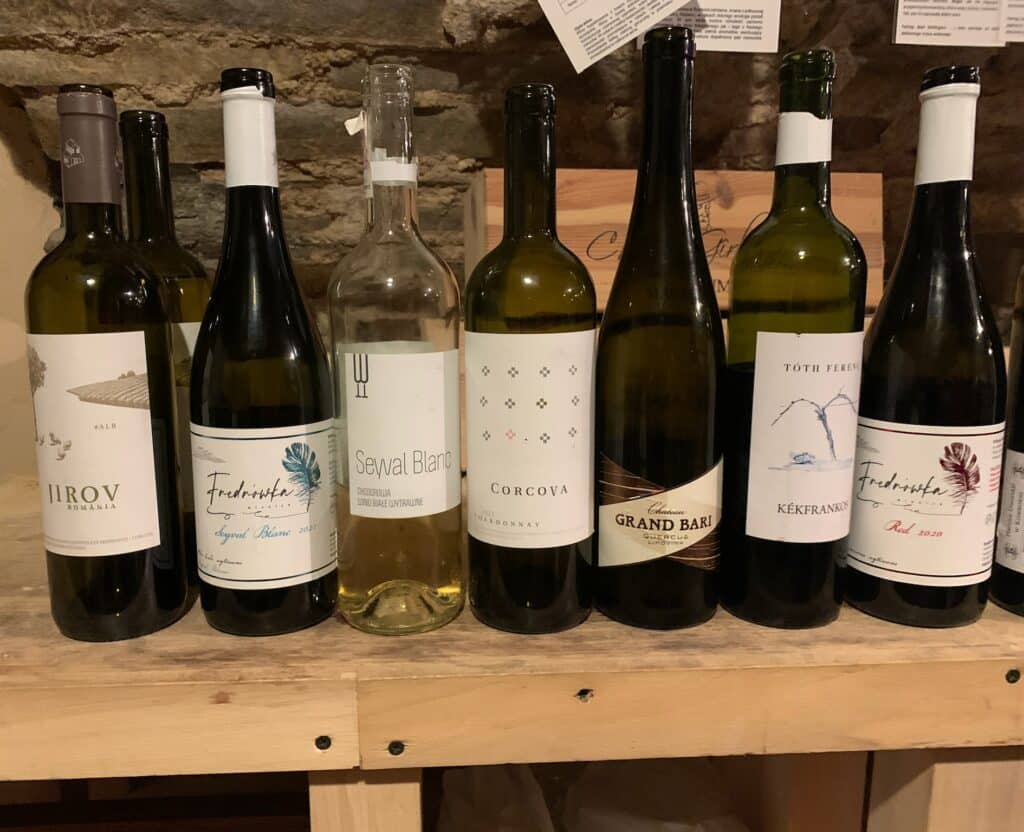
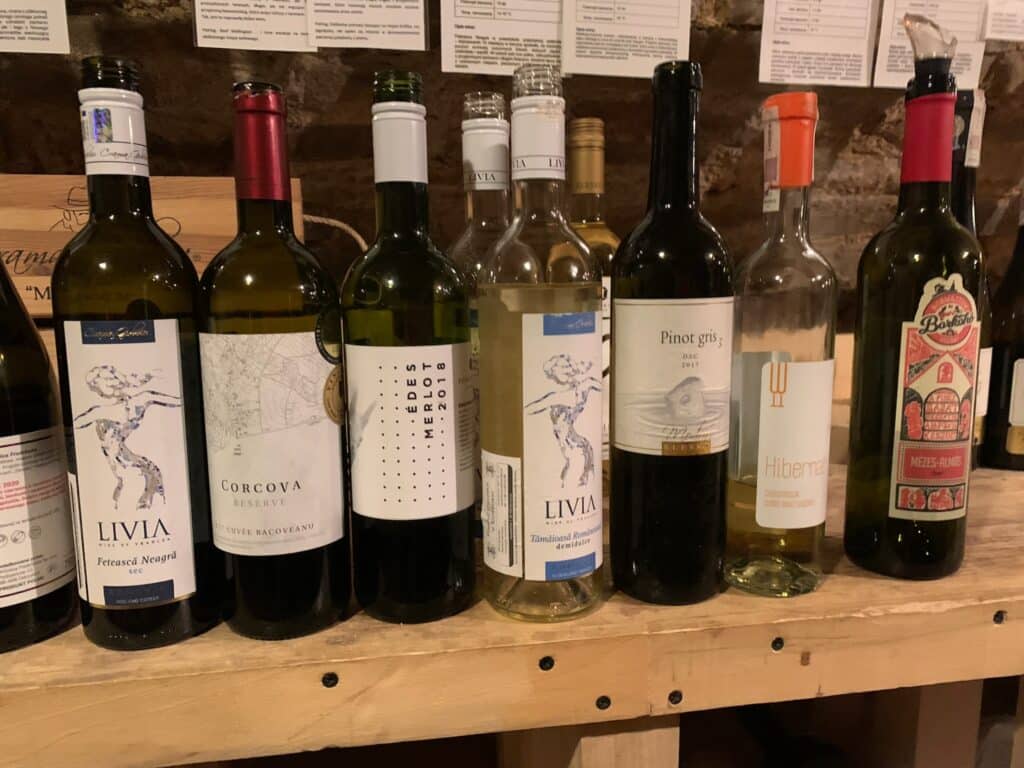
The Salon is actually a large cellar. We immediately felt the temperature drop as we entered. Interior was definitely cooler and more humid than outside. Upon entry, we were welcomed by rows of wine bottles, which can be purchased later if anything catches the visitor’s eye. At the end of the corridor, we spotted a huge map illustrating the concept behind this Salon. Carpathian mountains were snaking through 8 countries in Eastern and Central Europe. We didn’t have the time to linger as Ryszard Skotniczny saw us to our places around the corner where the usual tasting set up of wine glasses and spitters was waiting for us. Ryszard created the Salon and incidentally also owns the whole place! He quickly gauged the collective wine experience and knowledge of the group and took us on a crazy wine journey through the Carpathian region.

We flew through Slovakia, Moldova, Romania and Hungary. We sometimes made a quick jump back to our home country, Poland. “Fly” seems like an appropriate term since we tasted 14 wines in less than an hour! The variety of wines was mind-blowing. We tried quite revolting attempts at a proper red wine from nearby wineries, way too sweet Romanian juice-like concoctions, but also delightfully complex aged white wines from Slovakia. We experienced some classics from Eger with rounded tannins and earthy notes that showed a great promise. “It’s not my goal for you to like every wine you taste today” Ryszard cheerfully explained. “After all, you all have different preferences and tastes, which makes it an impossible job. However, what I can do instead is to demonstrate the variety of what you can find in this wonderful region”. I really start to appreciate this approach given that quality is a relative concept, and it definitely helps to try wines made more skilfully and those which were given less attention by the winemaker. This is how we build up our mental library of flavours and likes, that ultimately helps us find and refine what we enjoy most. It’s also quite a refreshing and honest approach. Whenever I visit a winemaker directly, they will never admit that they have given a mediocre flavour to some of their wines on purpose in order to squeeze out as much as they can from their harvest and offer the wine at a budget price.

After the tasting, our sommelier and host was very generous with his time. We lingered on and chatted about decent local wineries and exchanged ideas for future wine trips to Hungary. Although we liked quite a few wines, we left the Salon with just two bottles. After a recent trip to Tuscany (watch this space for more details!) storage at home remains a bit of a challenge so I needed to be reasonable this time around.

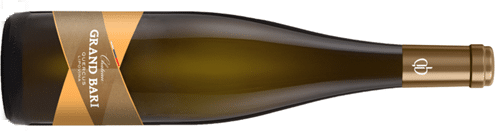
The first bottle is a white wine, a 2016 Quercus Lipovina by Chateau Grand Bari from Slovakian Tokaji. Slovakian Tokaji? You might be wondering if I accidentally mixed up some countries. Definitely not! We learn that while Tokaji is a historical region that’s mostly associated with Hungary, its northern edge is actually part of today’s Slovakia. The wine itself is delightful and has aged very gracefully. It has a rich nose dominated by a lime tree honey with a hint of petrol. The wine is definitely full-bodied, well-balanced and complex. I detect honey, a bit of citrus fruits and even some pineapple. The finish is long and satisfying. It’s available for just 55 zł (c. £10).

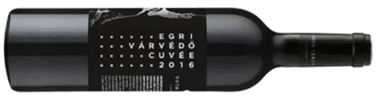
The second one is a red wine, a 2016 Varvedo Cuvee by Toth Ferenc from Eger, Hungary. During the tasting we tried a Kekfrankos from the same winemaker but unfortunately that one was out of stock so I took a risk and went for Varvedo Cuvee. The bet definitely payd off! This classic Bordeaux blend (Cabernet Sauvignon, Cabernet Franc and Merlot) is a very pleasant medium bodied wine. I smell strong earthy notes supplemented by red fruits. On the palate chocolate and oaky notes dominate, but I can also taste some plums and blackberries. It definitely benefits from decanting it for 30 minutes or so. This one comes at 100 zł (c. £18).

The Salon is definitely a very interesting place and a thought-provoking idea. Rather than focus on a single country, the idea is to present the variety of wines and winemakers united by a mountain range spanning numerous countries. Although they produce different wines and are separated by national borders, in a way, they probably have more in common with each other than some winemakers from France or Italy or even winemakers from their home countries which do not feel the influence of the mountains. The Salon allows its guests to explore quite niche wines. Many of them are quite basic but every now and then we can find a real treat at a very reasonable price. We explored a true variety of wines, but for me it worked quite well because of the uniting concept behind the selection. What a contrast to some introductory tastings where we are asked to try a white from New Zealand, then a red from Chile and go back to the old good Bordeaux again. We might taste some wines but we learn very little. We also enjoyed the format of the tasting – it was a snappy, sensory experience with limited theoretical lectures. I believe anybody could enjoy it regardless of their “wine experience”. I definitely recommend it to anybody who finds themselves in this region!

Let’s also mention that the area, especially the city of Krosno, is famous for glass making. The local museum is a great way to learn more about the history of this craft and industry, but also purchase some unique hand-made goods. I also recommend an outlet shop from Krosno company (confusingly named exactly the same as the city!), where high quality wine glasses, decanters, and other glass items can be purchased at very reasonable prices. The boot of my car was definitely full of wine glasses as we all know there’s never enough of them. I wonder, what will fill them in the future? Cheers!

Carpathian Wine Bar Read More »

×