unWined

Wine shop in Eger.

Bull’s Blood in the 21st century – Eger, Hungary

To feel a rebirth of the thermal baths, one must first embark on the path of self-destruction, wrote a famous culinary journalist Robert Makłowicz. A beautiful place to test this thesis is the wine town of Eger in Hungary. Located in the northern part of the country, it is famous for its numerous medicinal thermal baths and even more numerous wineries. The area is full of both. This time I invite you to unWined with me in the style of 19th century aristocracy. We will travel to an imperial spa town known for its healing waters, but we will definitely spend most of the time enjoying the local wines.

Speaking of wine, this is definitely an interesting region, especially thanks to the local appellation of Egri Bikavér, or Bull’s Blood. This name surely evokes some dreadful recollections for many people who had the opportunity to taste a wine with this label during the communist era (unfortunately, I missed out on this “treat”). One of the winemakers in Eger told me that in his youth, he used to drink Bull’s Blood only heavily diluted with cola. My father, upon trying it for the first time, decades ago, exclaimed that he would never drink wine in his life. He didn’t quite stick to his resolution, because since then he became a real wine enthusiast. Nonetheless, the traumatic memories remain…

So, is the current charm of Eger somehow associated with this abhorrent pseudo-wine? Not at all! Luckily, this unfortunate legacy is now a thing of the past. With the closure of the local conglomerate Egervin (they mass-produced truly nasty stuff), and as a result of political changes, smaller winemakers have returned to the region. They are keen to take full advantage of Eger soils, climate and resulting unique terroirs and once again create beautifully ageing, expressive, and complex wines. The winemaking tradition there dates back to the Middle Ages and was only temporarily disrupted in the twentieth century.

Tóth Ferenc winery illustrates the local history well. Mr. Tóth Ferenc was born into a winemaking family, who lost everything in the 1950s. In the 1980s, they began to rebuild slowly, and now Tóth Ferenc is a 25-hectare vineyard. This winery was a must-visit in my itinerary (I bought my first bottle from Tóth Ferenc at the Carpathian Wine Bar). Another place I would like to mention is St. Andrea. According to world critics, this winery produces the best wine in Eger – St. Andrea Agapé.

Before we delve into specific wines from both wineries, first a few words about the region’s trademark – Egri Bikavér (Bull’s Blood). This red wine must be composed of at least three and a maximum of thirteen grape varieties. The base is always Kékfrankos (also known as Blaufränkisch). Other commonly added varieties include Merlot, Cabernet Sauvignon, Syrah, Pinot Noir, and Kadarka. There are three tiers: Classicus, Superior, and Grand Superior. Depending on the chosen blend, different versions of Bull’s Blood vary in the quantity of grapes used for production and the ageing method. These ultimately determine the final designation of the wine.

And now, the Egri Bikavérs I’ve tried:

Áldás, Egri Bikavér Superior, St. Andrea, 2022 – this is the basic Egri Bikavér from St. Andrea, created from a blend of various terroirs, all of which include volcanic soils. This wine is composed of seven different grape varieties. It has an intensely fruity aroma. The taste is dominated by redcurrant and red cherries with tolerable acidity. Fairly soft tannins make it easy to drink despite its young age.

Merengő, Egri Bikavér Superior, St. Andrea, 2021 – despite being in the same class as Áldás (Superior), this wine is definitely of  higher quality. It is full-bodied and more structured. Flavours of redcurrant dominate but tobacco, dark chocolate, and black pepper also come through clearly. It’s a more complex and elegant wine. The tannins are tolerable, although still quite green. The wine will definitely become more enjoyable as it ages.

Igazán, Egri Bikavér Grand Superior, St. Andrea, 2016 – here we have a Grand Superior wine. It comes from a selected terroir, located on a hill with limestone soils. In some regards, the wine is similar to its younger equivalents – it possesses freshness and significant acidity. Equally, you can just feel its maturity and refinement. Ripe black fruit flavours dominate, with more pronounced plums and blackcurrant.

Várvédő, Egri Bikavér Superior, Tóth Ferenc, 2018 – Tóth Ferenc’s wines were characterised by piercing acidity. This six-year-old wine, despite spending two years in the oak barrels, and having 15% alcohol content, preserved an interesting freshness. The wine is well-structured with a full body. On the nose there are very vivid notes of the forest floor and wet wood. In addition to blueberries and blackcurrant, there are also distinct notes of cocoa.

Síkhegy, Egri Bikavér Grand Superior, Gál Tibor, 2018 – Grand Superior class at a very reasonable price. The wine, as befits this category, is complex, elegant, and well structured. Selected from the Síkhegy terroir dominated by clay soils, it is a blend of five grape varieties. The palate flavours is a swirl of plums, blueberries, but also freshly ground coffee and bonfire smoke.

Egri Hegybíró Bora, Egri Bikavér, Dula Pincészet, 2012 – the oldest Egri Bikavér I had a chance to try during this trip. The price (less than 12 ​​€ in store, and around 14 ​​€ in a local restaurant) was as surprising as what I encountered after opening the bottle. Although due to its twelve years, the wine has become palatably lighter, it still maintained complexity and nuances of different flavours. Dark chocolate and wet earth notes dominated, but I still detected distinct flavours of plums and brambles. It paired magnificently with rabbit and venison dishes! I highly recommend it. By the way, the food and drinks prices in Eger are very friendly to a Polish pocket, so even better to a Western one!

What about those thermal baths and the treatment then? I must say that after two days of intensive tasting, a trip to the hot springs by a naturally occurring salt hill (a mini version of the Turkish Pamukkale) did the trick. After three hours spent soaking in sulphur-smelling waters, while basking under the strong April sun, I emerged like a newborn, ready to attack a few more really good bottles of Bull’s Blood. I hope Mr. Makłowicz would be proud of me.

Bull’s Blood in the 21st century – Eger, Hungary Read More »

Alto Adige view.

Alto Adige / Südtirol – Italian Germany or German Italy?

My recent journey to unWined took me to northern Italy. At least that was my impression judging from the maps and road signs. However, the autonomous region of South Tyrol is certainly a place of many nuances and a very pronounced multiculturalism.

According to official statistics, 62% of the population speaks Italian as their first language, while 30% speaks German. In my short experience in the region (a couple of days), German seemed to dominate. Yes, I’ve heard occasional ciao and grazie, but the further west we traveled, they completely gave way to the friendly Grüß Gott. Most professionals advertising their services on cars opted for the German language version, unlike official signs, which were always bilingual. Unmistakably, the driving style was 100% Italian – sudden overtaking, tailgating and disregard for speed limits were commonplace.

The climate of South Tyrol is an interesting mix. It was March, so it was still quite cold, as indicated by snowy Alpine peaks all around. At the same time, I’ve seen thriving palms by the Caldaro Lake (Kalterer See) and ripening lemons on the trees in the market of a mountain town. Local cuisine is similarly peculiar. Although we managed to find a place offering pizza and pasta, it was easier to come across a Gasthaus with schnitzels and a German-style bakery full of donuts and poppy seed cakes. On the other hand, the coffee machine in the hotel, when asked  for “Kaffe”, dispensed about 5 ml of very aromatic (and very Italian!) espresso.

So is this German Italy or Italian Germany? Honestly, I’m not sure if it’s possible to label this region like that. It’s a mix of at least two cultures which together created something entirely new. They managed it by selecting different influences and adapting them to the local character of the place.

These influences are also present in the local winemaking tradition. Among the wineries, there is no shortage of German-sounding names. In the wine itself, you can definitely taste the hints of a cold climate. White wines are the most prominent. For instance, the nearby village of Tramin boasts that it is the birthplace of the famous aromatic and peppery Gewürztraminer variety. There are some interesting exceptions to the white wine rule. Most notable is Kalterersee – a type of local red wine made from the indigenous Vernatsch grape, grown around Caldaro Lake (Lago di Caldaro). Lagrein is another local grape variety used to produce red wines. International grape varieties such as Chardonnay, Pinot Noir, and Merlot are also quite prevalent.

Dramatic landscapes of Alto Adige were a real highlight for me. Every bit of arable land in the mountain valley was used, either for orchards or grapes. The scenery was clearly layered. Looking from the bottom there were: fruit orchards in the flat fields, the hills largely covered by rows of vines (cultivated in multiple ways), then only a strip of forest topped by bare rocks of the peaks. The hills are as steep as some of the impressive vineyards in Germany or France.

I visited two wineries during my stay: Castel Sallegg in Caldaro and Elena Walch in Tramin. In both, I was able to taste several wines without prior booking (and with no charge). Beware of the typically Italian opening hours with a two-hour gap in the middle of the day!

At Castel Sallegg, I focused on red wines. Sauvignon Blanc 2022 and Gewürztraminer 2022 were the only whites I tried. The wines were true to the characteristic notes of their varieties. Floral for Sauvignon and rosy for Gewürztraminer. Interestingly, as far as the taste goes  they were pretty different to their cousins from France or New Zealand. Sauvignon was distinctly dry and mineral with only slight hints of citrus fruit. Gewürztraminer was full of contrasts. On the one hand quite fruity, yet yeast flavors dominated. There also was a bit of interesting bitterness or even spiciness.

From the reds, I tried Pinot Noir 2022 (stainless steel tanks), Pinot Noir Serenis 2019 (oak barrels), Merlot Serenis 2019 (oak barrels), as well as wines made from local grape varieties Lagrein 2022 (stainless steel tanks) and Bischofsleiten 2022 (the local Kalterersee, also made in stainless steel tanks). Most of these wines were light, fresh, and quite acidic. Not very fruity, unfortunately, with a rather limited range of flavors. I preferred the wines that had aged in oak, they showed more elegance and complexity. Bischofsfleiten intrigued me the most; it was unique and expressed the character of the region well. It is a very light and fruity red wine, almost transparent in color. Notes of strawberries and raspberries dominate, with ever present acidity. It is recommended to serve chilled. It supposedly pairs very well with many dishes, including fish!

Po doświadczeniach i radach z Castel Sallegg, w winiarnii Elena Walch skupiłem się na winach białych ze średniej i wyższej półki. Wina były zrobione z różnych szczepów więc naturalnie się różniły, ale miały jedną łączącą je cechę – były bardzo „eleganckie”. To dość niejasne określenie, lecz takie wrażenie przychodziło mi od razu na myśl pijąc te wina. Były złożone, nieprzesadzone pod żadnym względem, miały subtelną klasę. Moje wrażenia:

At the Elena Walch winery, after the experiences and advice from Castel Sallegg, I focused on white wines from the medium and higher shelves. The wines were made from different grape varieties, so naturally they varied. But they had something in common – they seemed very “elegant”. I know that this term might sound quite vague. For me, though, it best describes Elena Walch wines. They were complex, understated, with subtle class. My notes from the tasting:

Single Vineyard Kristallberg Pinot Bianco 2022 – honey-floral scent. Quite mineral with a hint of unripe pear on the palate. Slightly bitter.

Chardonnay Cardellino 2022 – yeast and brioche on the nose. Buttery and yeasty flavors with citrus fruit notes. Pleasantly mouth-filling.

Gewürztraminer Concerto Grosso 2022 – typical bouquet for this variety: mango, lychee, and rose. I tasted some fruity notes that were balanced with a certain sharpness, giving this wine a very interesting character. Quite full-bodied and giving an impression of sweetness, despite minimal sugar content. Completely different from a “typical” Gewürztraminer.

The highlight of this tasting was a decent red wine, Lagrein Riserva Castel Ringberg 2021. The wine spent 20 months in oak barrels. It smelled and tasted strongly of black currant. It had powerful tannins, it might need a few more years to soften and gain a deeper flavor.

Alto Adige / Südtirol is a very fascinating region that combines seemingly very different worlds, German and Italian. It’s definitely worth a visit (especially if you’re driving down to Italy to ski, then it’s on the way). Alpine panoramas made the biggest impression on me: high mountain passes shrouded with a mysterious layer of clouds and below slopes covered with fruit trees and vines. The wine was simply okay. I bought a few souvenir bottles, especially Kalterersee, but that’s all. This style of (red) wine is probably not my thing. I think next time, I might need to visit some other regions of northern Italy. Maybe Barolo?

Alto Adige / Südtirol – Italian Germany or German Italy? Read More »

View of Znojmo cathedral.

Wine tasting for all in Moravia!

I have recently visited the Moravia region in the Czech Republic, tasting numerous fresh and zesty whites from the local producers. It’s a fascinating region with breathtaking mediaeval towns and rural character. Its close proximity to cultural centres such as Prague and Vienna, full of museums, theatres and, of course, chic wine bars makes it an amazing destination even for the most demanding wine connoisseurs.

But what stood out to me particularly was a wine bar in Znojmo, Enotéka znojemských vín. With its concrete modern interior, it is housed in an old 19th century brewery building overlooking the Thaya river. It creates quite a setting. Enotéka offers over 120 bottles of local Moravian wines, both from small and large producers. However, the most fascinating thing is the innovative way to taste the wines. Each visitor gets a glass and a pre-charged card and then can taste any of the dozens of wines. Armed with the list of wines and a pencil, my friends and I approached dispensers which issue two-sip quantities of 20 ml, but let you get more if you really like it. It made for a very fun experience.

I was impressed with the way this tasting method makes wine approachable for anybody regardless of their knowledge and experience! To learn about different varieties, to note the peculiarities of the vintages and familiarise themselves with the diverse producers of the region. And how far it is from formal and often a bit daunting traditional wine tastings (usually quite pricey too!). Tastings which tend to alienate wine and with their posh associations discourage so many would be wine lovers. We should really celebrate and applaud such clever and inclusive ways which democratise access to the wonderful world of wine!

The evening passed very quickly and we tried 14 different wines. The ones that really stood out for me were:

Thaya Vinarstvi, Apri Chardonnay 2018 – this was a surprisingly good Chardonnay. It had just the right balance of acidity and creaminess. Key flavour notes included vanilla and banana but also citrusy notes of lemon and grapefruit. It already had a few years in it, but could easily develop over a few more.

Arte Vini, Pinot Noir 2019 – a decent Pinot, which had typical cold climate characteristics. It was rather fresh and light. Cherry and raspberry notes dominated. There was a nuance of tobacco and oak flavours but they were not very prominent, though.

Vinne Sklepy Lechovice, Cabernet Sauvignon Sladke Ledove 2013 – this is an ice wine made of Cabernet Sauvignon. It had a decent amount of residual sugar (>200g/l), although the sweetness did not overpower other flavours. Blackcurrant and plum notes dominated, blended with delicate honey and orange accents.

Hats off to Enotéka znojemských vín!

Wine tasting for all in Moravia! Read More »

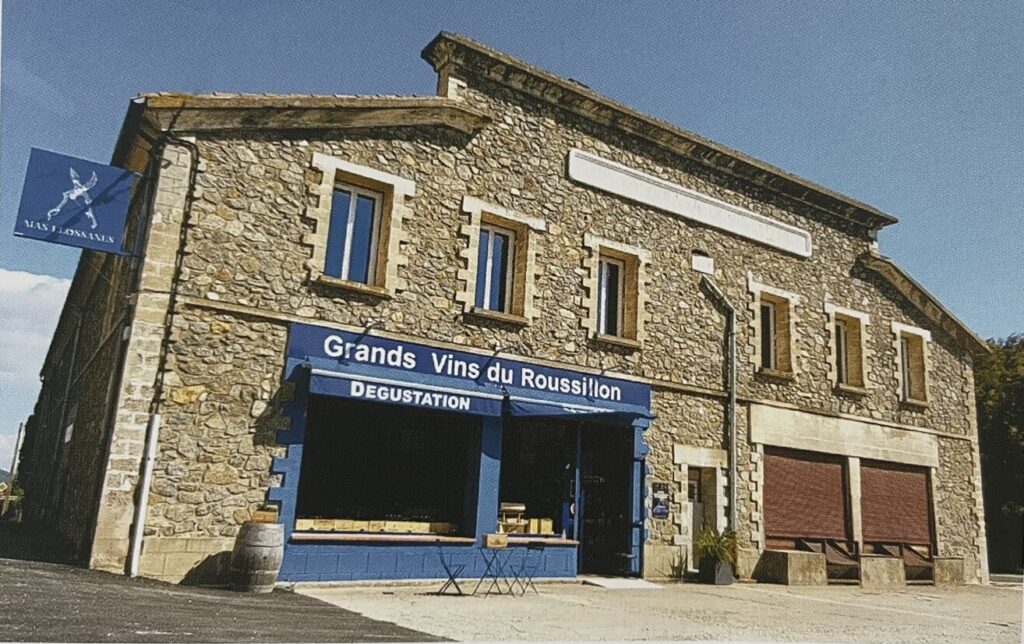
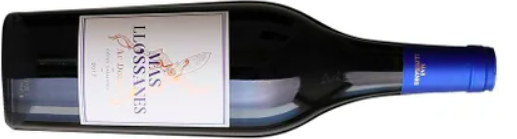
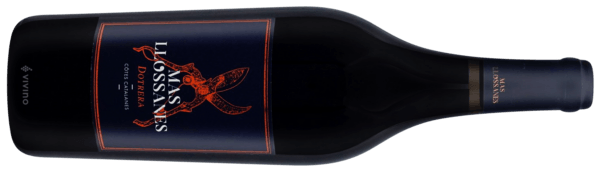
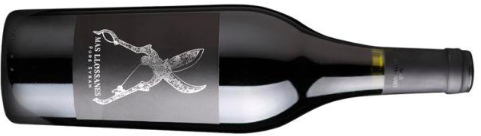
Mas Llossanes wine shop picture.

Mas Llossanes – altitude vineyard in Roussillon

After a short stop in Alsace, we headed towards the Pyrenees to hike and climb in the mountains. Along the way, we stopped near Avignon. Unfortunately it was Sunday and most wineries in the Rhone Valley were closed. We couldn’t stock up for the rest of our trip! I feverishly searched through the obligatory copy of the World Atlas of Wine that I had brought along. To my disappointment it seemed that in the Languedoc-Roussillon region, mostly white or at best rosé wines were available. I had already given up the hope of buying some punchier characterful red wines. Suddenly, 5 km before our destination, Prades, on the French-Spanish border already quite high in the mountains, we passed a sign for “Cave du Mas Llossanes“. This vineyard didn’t appear in my research, but a quick visit to Vivino gave us a green light. So, we decided to stop by for a moment and see what we could learn about the wines in this corner of France. In the end, we spent over an hour there, talking to the incredibly nice owner of the winery, Solenn. Solenn let us try most of the wines she produces with her husband, Dominique.

Solenn and Dominique spent many years working together for a large wine producer in Tuscany. Dominique was responsible for wine growing and production, while Solenn worked as a sommelier. Her sommelier skills were evident in how she treated her customers. A nice surprise was that she spoke very good English. Since we were the only guests in the shop, she started talking to us almost immediately. After gauging our interest she recommended a couple of bottles. However, when she noticed how excited we were getting, she walked us through most of the wines on offer (including a one that was no longer available – apparently it had been sold out at a local fair a couple of days earlier). After the tasting, she couldn’t resist adding one extra bottle to our order (“I don’t like leaving an empty space in the box,” she said) and signing me up for the newsletter. All of this was done very skillfully and didn’t feel forced.

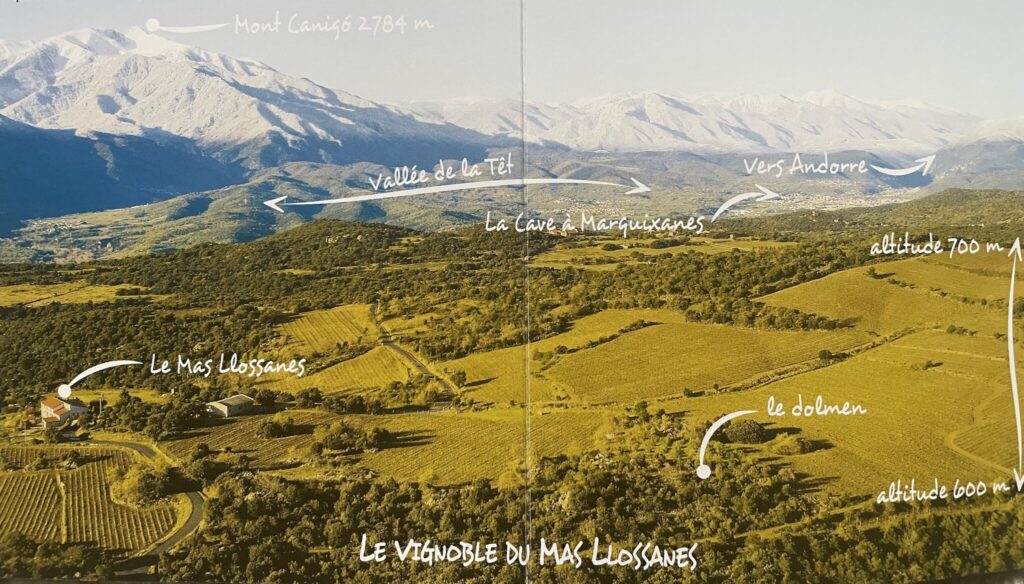
The wines themselves were very good. And interestingly, mostly red. Of course, we had to ask: “How come?”. My haphazard study of classic wine texts suggested that this shouldn’t be the case in this part of the world. However, everything was explained by altitude! The vineyard is located at an altitude of 600-700 metres above sea level, making it one of the highly situated vineyards in France. This means that despite the Mediterranean climate along the whole coast, the influence of the Pyrenees and altitude reduces the temperatures to which the grapes are exposed. This makes it quite well suited for the cultivation of red wine grapes.

Mas Llossanes, located deep in the Pyrenees, is still a fairly young business, established only 8 years ago. But even now, I envision a long and exciting future ahead of them, considering the owners’ previous experiences and the quality of their wine. The couple champions the methods of production that stay in harmony with the local climate, avoiding chemical interventions. The wines are certified organic and the crops are grown according to biodynamic principles. The addition of sulfites is minimised and only naturally occurring yeasts are used for fermentation. The Carignan variety plays a leading role, accompanied by Grenache, Syrah, Chenanson, Cinsault, and Chasan. Now, let’s discuss what I was so impressed with!

We started with a Rosé made exclusively from Carignan. As Solenn explained to us, the Rosé from Mas Llossanes was created to challenge the stereotype of Rosé from Roussillon. The wine was fresh and pleasant on the nose, but it didn’t make me think of strawberries by the pool. This rosé was closer to an aperitif – it definitely stimulated the salivary glands to work. It was pretty dry and quite acidic. I tasted blood orange, rose, and citrus on the palate. I imagine that it would pair very well with food.

Next was the 2021 Court Métrage, made mostly from Carignan. This wine is supposed to be light, fruity and easygoing. Exclusively stainless steel tanks are used in its production. The naked cork, without the typical cover, makes it more quirky. When I tried it, I was first met with aromas of strawberries and blackcurrant. The taste of red fruits such as strawberries, raspberries or red currants dominated, notwithstanding noticeable and pleasant acidity.

Then we tried the 2018 Au Dolmen. It’s a blend of Carignan, Syrah, and Grenache. The wine is only made in stainless steel tanks, but thanks to the addition of Syrah and Grenache, it has a much more complex character. Solenn recommends having this wine with food to balance its power. However, with the first sip, I already decided that I’d rather enjoy it on its own while contemplating some mountain views. Au Dolmen has fairly strong tannins, but they’re quite elegant. On the palate, blackcurrant comes through, along with some spices and pepper. Our hostess told us the origin of the name, which corresponds to the local prehistoric, stone structure, a mini “Stonehenge”.

Dotrera, also from 2018, is a more complex expression of the same grape varieties as Au Dolmen. The difference is that the grapes come from older vines, and the wine is aged in used oak barrels. The wine is layered, with strong tannins. Overall, it’s much more powerful. Flavours of dried plum, blueberries, and blackberries dominate. Menthol and oriental spice notes are also interesting. It’ll certainly pair very well with strong flavours such as red meat. Although, as with Au Dolmen, I really liked it on its own. The wine was still quite young considering its method of production and the grape varieties used, so I’m very curious to see how it’ll present itself in 5 or 10 years.

Finally, we tasted the Pur Syrah – the sold out bottle. As the name suggests, it’s 100% Syrah from 2020. The wine ages in oak barrels. It was definitely too young to drink at this point; the tannins were still quite green and rough. Nevertheless, it showed very promising signs. It seems that this will be a very good expression of the grape and the result would differ completely from the blends we had tried before. Unfortunately, this bottle costs 45 €, almost twice as much as Dotrera. This time, I decided against it and opted for more immediate gratification with the other wines instead of investing in the future. Maybe next time!

No doubt, my completely unplanned visit to Mas Llossanes was a success. Somehow, the car visibly sank down after I loaded all the shopping into the boot. I bought wines not only for the remainder of our holidays but also to take home and as gifts for those friends who appreciate a good bottle of wine! My only regret is that I didn’t stock up more… Recently, a few months after the visit, I checked the winery’s website. It seems that they have launched an online shop since then. If the shipping costs won’t crush me, I hope to quickly remedy my mistake!

Mas Llossanes – altitude vineyard in Roussillon Read More »

Sad w świętokrzyskim.

Winnica Płochockich – a hidden gem in the hills of southern Poland

The wine tradition is ancient, but alive and constantly forming. There are places like Italy or France, where wine culture is deeply rooted in the local and national identity. Wine is as commonplace as bread. And there are places like Poland.  A few centuries ago, in Polish literature we could find mentions of  ‘’Burgunder’’ or ‘’Węgrzyn’’ (lit. Hungarian). However, wine-drinking culture had somewhat vanished in the last century and only recently it has been  coming back to life. The lack of quality product on the supermarket shelf, which was the main hurdle for a Polish wine lover, is no longer the case. Wine growing and winemaking is another matter completely. In this sphere Polish producers face a number of unique challenges: environmental, financial, technical or even legal (only since 2008 selling wine from your own vineyard is permissible under Polish law). Consequently, many Polish winemakers still have some work to do before they can match the quality of their more experienced colleagues abroad. Luckily for us, there are a handful of local vineyards which significantly stand out from the crowd already. Today we are going to visit one of them, a vineyard called Winnica Płochockich.

Winnica Płochockich is tucked away in the rolling hills of Świętokrzyskie voivodeship in southern Poland. It is a family business run by a couple, Barbara and Marcin Płochoccy. The operation which started in 2006 was only the third vineyard to be officially registered in the whole country. Interestingly, the owners did not have a background in winemaking and initially balanced their passion for wine with other professional responsibilities. The vineyard is located in Daromin village in the Sandomierz area – 3 hours by car from either Warsaw or Krakow. The winery welcomes visitors for casual shopping, tours that include tasting or even overnight stays in rooms, which are situated literally above tanks of fermenting wine! I also highly recommend walks among the vines; feast for the eyes guaranteed. I visited in early May so the vineyard was just coming to life after the winter. Neighbouring orchards which were in full bloom supplemented the additional palette of colours.

Let’s talk about wine. The estate is fairly small with just 7 hectares of land and yet growing 20 different grape varieties. As a result, a wide selection of both reds and whites is on offer. The vineyard grows international varieties such as Pinot Noir and Riesling, as well as more niche ones such as Hibernal Solaris or Johanniter. While white wines are certainly the highlight, any bottle with the Płochocki logo is sure to impress. The same cannot be said for every vineyard nearby. However, I am not going to go into more detail about that now because I don’t want to prematurely discourage eager local enotourists. Let’s just focus on the outstanding example today. During our stay, we were lucky to try a great selection of wines. Below, I go over the headlines and the most interesting examples.

From the reds we tried Ma Fo and Rodo. Ma Fo is made from Frontenac and Marechal Foch. Rodo is also a blend of Marechal Foch, Regent and Cabernet Cortis. This was my first experience with these varieties, but I very much enjoyed that first encounter. It was evident that the wines came from a cool climate. Satisfyingly, they turned out to be quite complex. Ma Fo was full-bodied with flavours of dark fruit, plums,blueberries and notes of vanilla. Rodo, on the other hand, was more crisp and subtle, tasting of cherry and redcurrants.

Luckily for us, Barbara also had the last few bottles of 2020 Pinot Noir. This single variety wine was produced in a limited series of just 600 bottles. The fact that it was already sold out might tell you something about its quality. I would say that this bottle was a typical example of Pinot Noir, which in this context, is a very good thing! Regrettably, often when this variety is grown in unusual geographies, a flat and characterless wine is the result. Not this time. This Pinot was smooth, with spicy notes of pepper and a palate full of  red fruit such as cranberry and ripe cherry. Tannins were soft and pleasant. I am now imagining the kind of wine it will become after another two or three years of aging.

I must say, at this point I was quite happy already. It was very satisfying to find red wines of this quality produced by Polish winemakers. Nevertheless, the best that Winnica Płochockich has to offer are their whites. We tasted Hibia and Inspira Volcano. These two would easily stand their ground in comparison with many foreign bottles. Not only as an interesting novelty from Eastern Europe, but mostly thanks to their complex structure and intensity of flavours. These whites were blends similarly to Ma Fo and Rodo, made out of five and three varieties, respectively.

Hibia is made of Hibernal, Solaris, Traminer, Cserszegi Fűszeres and Muscaris. It displays pale yellow hues. It is very fruity both on the nose and the palate. The reverie of different aromas was rich, but not overwhelming. It was very fun to enjoy its changing nature: from tropical fruit flavours like melon and pineapple to fresh flowers, jasmine and roses. Underlying acidity balanced the wine nicely. It’s a summer drink, to drink with friends – just have fun and enjoy what’s good in life!

Inspira Volcano was a different story. It’s a rather serious wine made from Johanniter, Seyval Blanc and Hibernal. This white wine was very good shortly after release, however, as a big bonus, it also ages pretty well. The older it gets, the more developed its character and flavour get. Rumour has it that on her visit to Poland, Jancis Robinson (a world-famous wine guru) tried a 10 year old bottle of Inspira Volcano and was very pleased with it. Unlike Hibia, Inspira spends 12 months in oak barrels. Citrus notes dominate, but there is something balsamic to the flavour. The result is lavish, but intricate and elegant.

Winnica Płochockich differs from their neighbours in one more aspect. They focus on dry wines. The exception is a typical dessert wine, Raisins. Raisins, as the name suggests, is produced from the juice from dried grapes, analogous to some Italian and Spanish sweet wines. This achieves concentration of sugar and flavour. Unsurprisingly, it’s fairly sweet, but remains refreshing thanks to a decent level of acidity. The main flavour notes included exotic fruit, mango in particular. The raisins aroma was present too.

Is now a perfect time to stock up on some bottles of Inspira Volcano or Pinot Noir? Or Riesling, which is a new release from the winery and incidentally very well suited for this climate. I wonder about the future of Winnica Płochockich, the next 5, 10 or even 20 years…Considering the passion of the owners and the quality of their wines, I can’t help but think that they might do pretty well. It’s difficult to foresee that the popularity of a certain product is about to skyrocket. Is Winnica Płochockich just steps away from this moment? There is no way to say. But in the ‘’worst case scenario’’, I will be left with a few bottles of exceptionally good wine. I can probably live with that!

Winnica Płochockich – a hidden gem in the hills of southern Poland Read More »

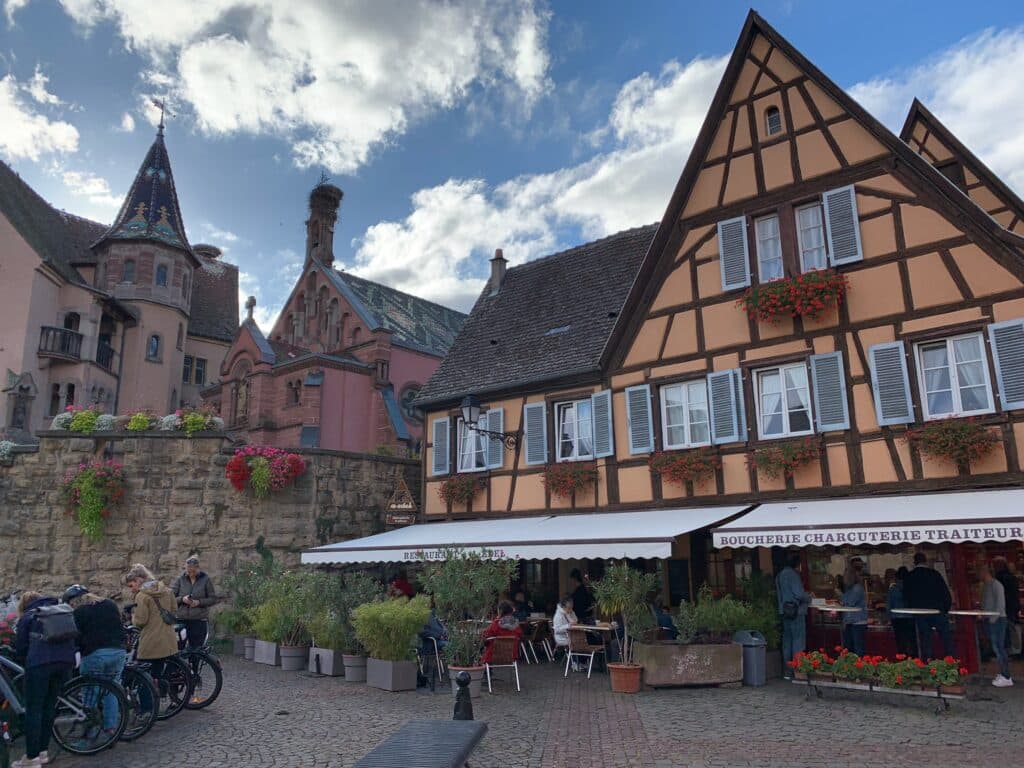
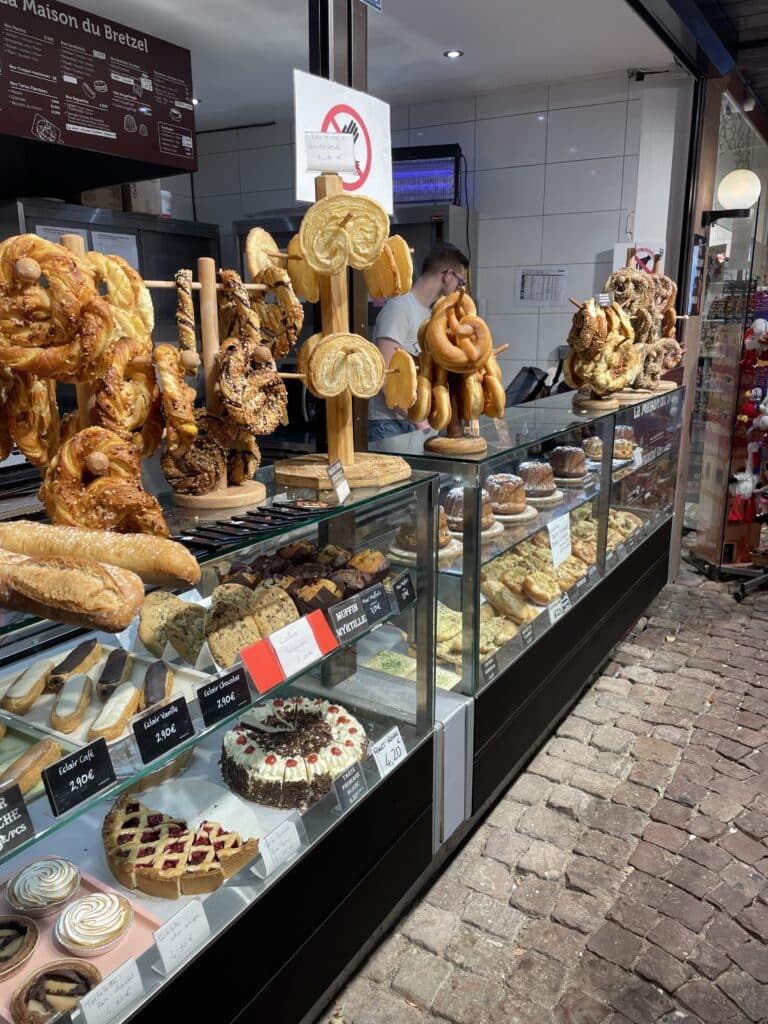
Cafe in Alsace.

Defined by terroir – winemaking in Alsace

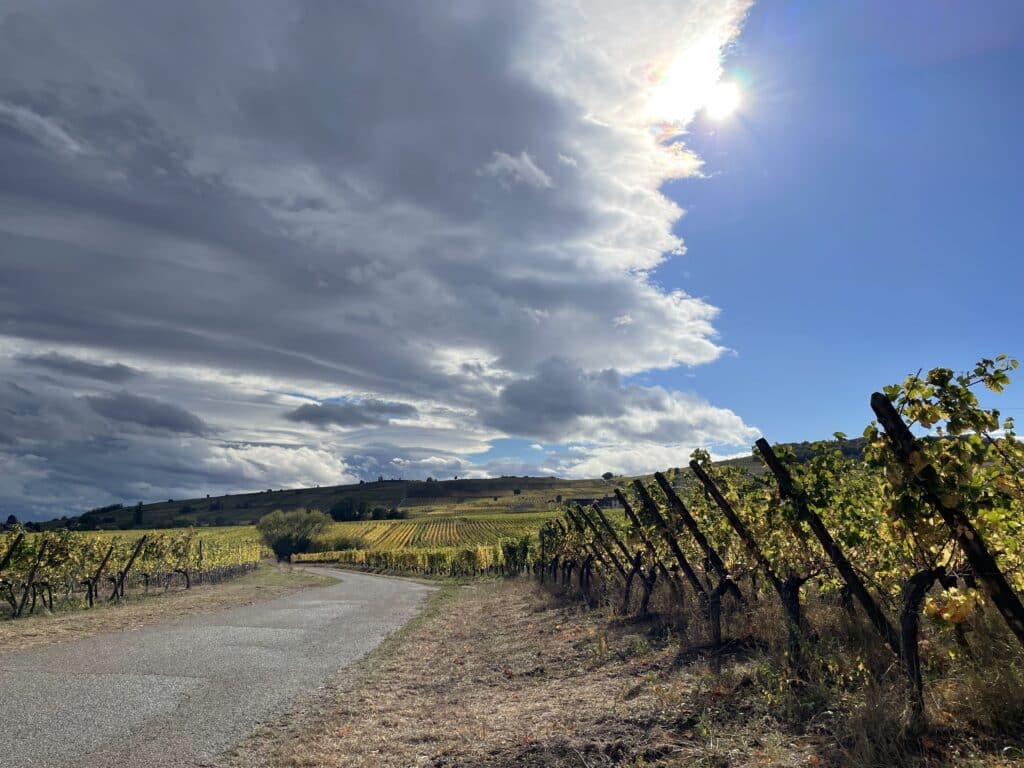
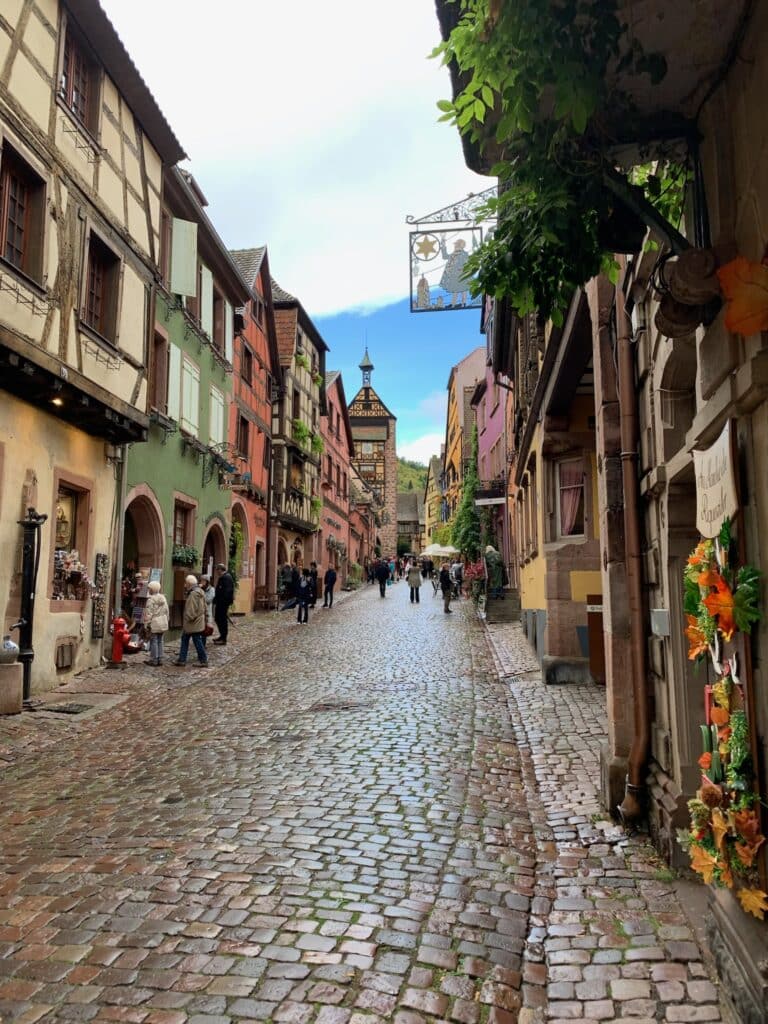
As I drove towards Alsace from the east, the view unfolding before me was exactly as the wine guidebooks described this French region. A sea of clouds nestled peacefully atop the Vosges mountains, creating a captivating horizon. Interestingly, Alsace is known as the driest part of France. Despite its northern location, the surrounding mountains bless Alsace with the most sunny days in the country, making it an ideal grape-growing region. Local vignerons (French for winemakers) certainly make the most of this advantage.

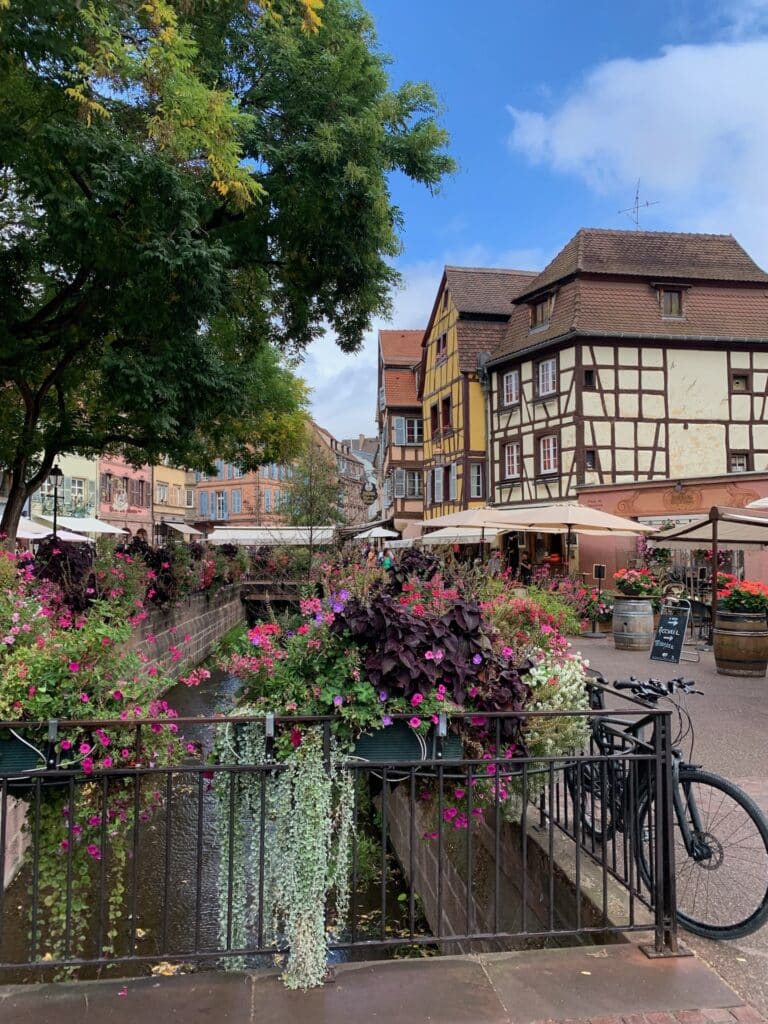
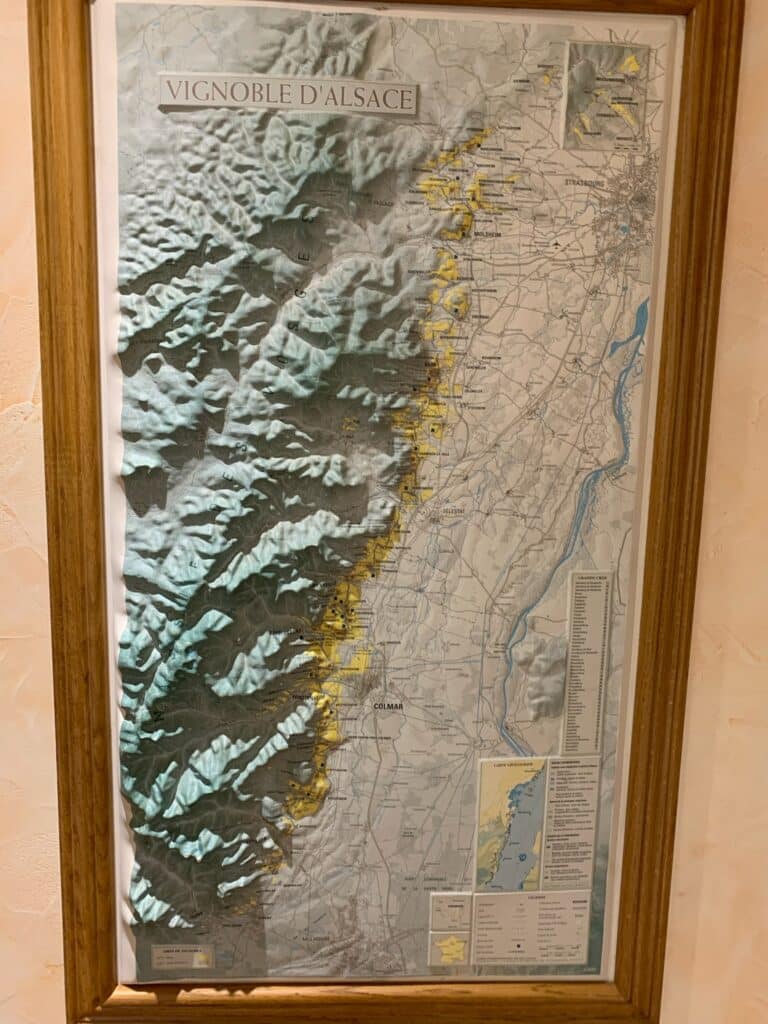
Crossing the German-French border around sundown, I was eager to delve into the complexities of this small yet intricate wine region. However, recalling my experience in Tuscany, I decided to start my exploration the next afternoon, as morning wine tastings are seldom a good idea. After a delightful lunch in our base town of Colmar, I discovered that Alsace was indeed everything the books and guides promised. Vineyards blanket every nook and cranny of the countryside, with large sections classified as Grand Cru – a designation for the highest quality of soil and environmental factors. The rolling hills, adorned with quaint mediaeval villages and towns, offered a picturesque, fairytale-like setting. The autumn palette of greens, yellows, and browns was simply breathtaking.

I had always regarded Tuscany as particularly notable for its abundance of vineyards and winemakers, but their sheer volume in the heart of Alsace was astounding. Along the Route des Vins d’Alsace (Alsace Wine Route), a winery appears nearly every hundred yards. This holds true for the towns as well. In Riquewihr, for instance, I discovered wineries in every other building, most offering casual, complimentary tastings. The maths was staggering: considering the average winery offers around 20 different bottles, the tasting possibilities seemed endless. I could easily spend a year here and only scratch the surface of this iceberg of wine.

But why so many different wines? This can be traced back to a specific winemaking philosophy ardently practised in Alsace. Here, a winemaker’s primary role is to subtly and naturally showcase the interplay between a grape variety and terroir.As a result, a single winery might produce several Rieslings, each from a different part of their estate. Local vignerons believe there are over 800 unique terroirs in Alsace, each significantly influencing the wine’s final character. Naturally, the most coveted plots are those within the Grand Cru vineyards.

Alsace is renowned for its white wines, which constitute 90% of its production. The main varieties include Riesling, Pinot Blanc, Gewürztraminer, and Pinot Gris, with Pinot Noir leading the red wine production. Striving for naturalness and a true reflection of the terroir, Alsacian winemakers minimise their intervention within the winery. This includes using wild yeast for fermentation and predominantly ageing wine in stainless steel tanks to avoid flavour alteration from wood. The wines, especially when young, are characterised by their pronounced acidity, lending themselves well to ageing – a trait more typical of red wines. Alsacian whites are usually very dry, pairing beautifully with the region’s German-influenced cuisine. However, producers have recently been experimenting with sugar content, particularly in Gewürztraminer and Pinot Blanc-based wines.

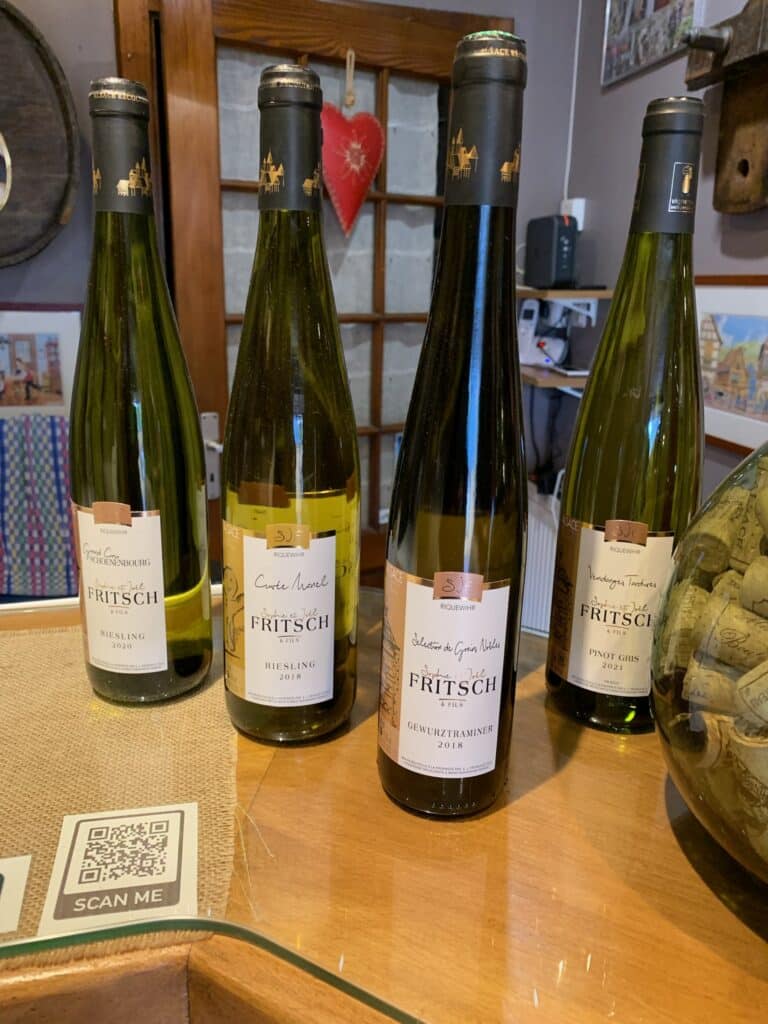
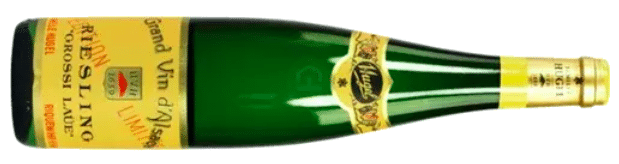
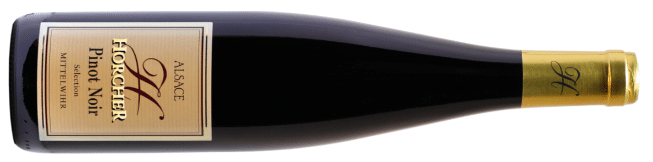
During my afternoon adventure, I visited three wine producers: Fritsch & Fils, Hugel, and Horcher. I chose a mix of small, family-run vineyards and the more renowned Hugel. Each tasting session provided a rich array of wines, with the Riesling category alone offering 3-6 different selections.

At Fritsch & Fils, who are on the smaller end of the spectrum, I tried their Pinot Gris, Pinot Blanc, and Gewürztraminer. The wines were a good representation of different grape varieties, though I initially found the high sugar content overpowering. These wines were approachable, but somewhat lacking in complexity. However, their affordability, with the most expensive bottle at just 10 €, was a plus.

At Hugel, a leading winery in both scale and recognition, I embarked on a deep Riesling exploration. Despite being a large-scale family business, Hugel has maintained its quality, exporting over a million bottles annually to more than a hundred countries. Their Riesling collection ranges from 17.20 € to 175 € per bottle.

Riesling Estate 2019 had a sweet aroma of honey and fresh flowers. It was a very dry wine. I could taste some further honey and pepper flavours. The wine was elegant, complex and with a long finish. Acidity was less pronounced than in a typical Riesling. The next one, Riesling Grand Cru 2014, reminded me more of a “classic” Riesling. Lemon, lime and green apple notes dominated. In this bottle, the crisp acidity played a major role creating a powerful and full-bodied wine. While the higher-priced wines were exquisite, I pondered whether their nuances justified the cost for the average wine enthusiast.

Horcher, a bit off the beaten path, offered an intriguing contrast with its two Pinot Noirs and two Crémant d’Alsace (local sparkling wines). The Tradition Pinot Noir was simpler and fruitier, while the Selection was richer and more nuanced. Their affordability made them great everyday reds. The Crémant d’Alsace and Rosé were spendid, buttery, and fruity, providing an excellent alternative to more expensive champagnes.

My days in Alsace were a magical immersion in a region that felt like a place plucked from a fairytale. The charming towns, delicious local fare, and, most importantly, the superb wines made it a memorable journey. Lost among the hills, I could only begin to fathom the hundreds of micro-terroirs that define this unique winemaking landscape…

Defined by terroir – winemaking in Alsace Read More »

Inside a bodega.

Sherry – the heritage of Andalusia

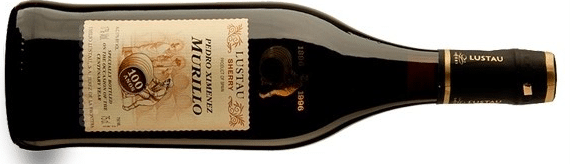
Dear wine lovers, let’s discuss sherry. Have you heard about it before? What comes to your mind when you think about it? Rather sweet, technically a wine, but more like a liqueur? At least in Poland, from the perspective of an average wine drinker sherry remains quite an obscure drink. In most local wine stores and mainstream supermarkets, usually the only sherry on offer is an odd bottle of Pedro Ximenez. This creates a rather misleading picture of sherry wine. The distinctive and diverse sherry microcosm is lost. Not many wine regions can boast such unique wine making traditions and truly diverse types of wine; unlike any other in the wine world.

Sherry is made in southern Andalusia, Spain. Three towns north of Cadiz are known to create the so-called “sherry triangle”. I was very lucky this autumn to spend a few weeks in the region and managed to visit two of these sherry towns: Jerez de la Frontera (Jerez = sherry, in Spanish) and El Puerto de Santa Maria. They are not the typical pueblos blancos associated with the Andalusian countryside. They are rather big, urban areas with small historic city centres. What was unique were the large bodegas (wineries where sherry is made) which are immediately visible to any visitor entering the town. Even today, the bodegas are situated in prime city locations taking up sizable portions of the total square footage of the sherry triangle cities.

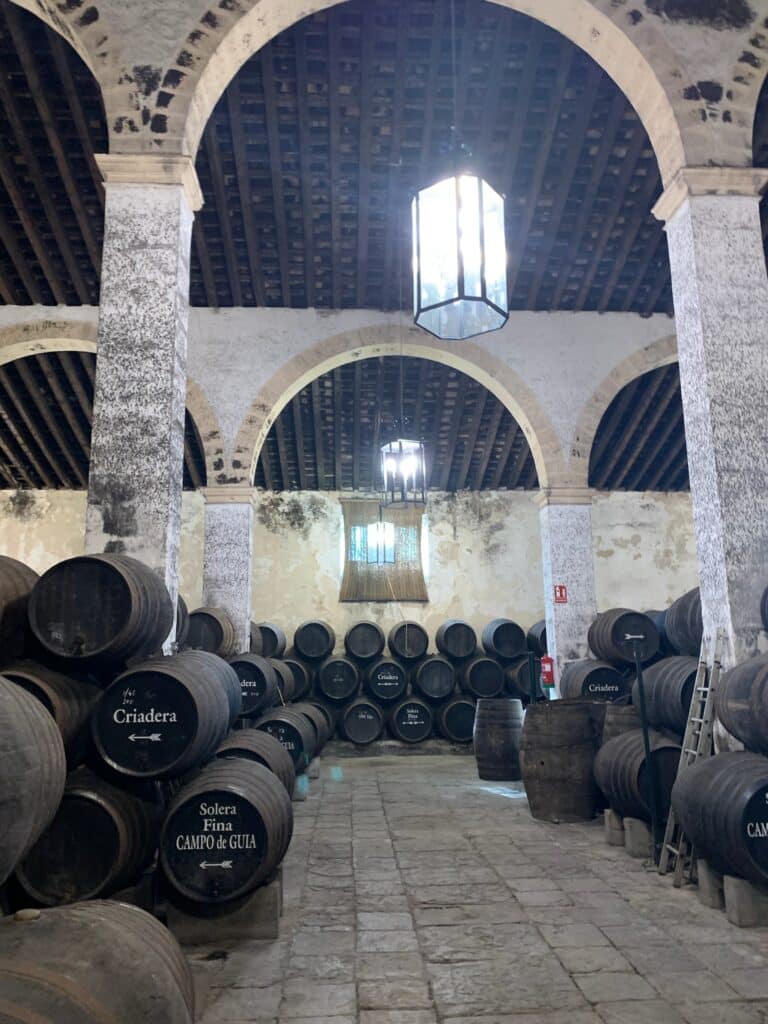
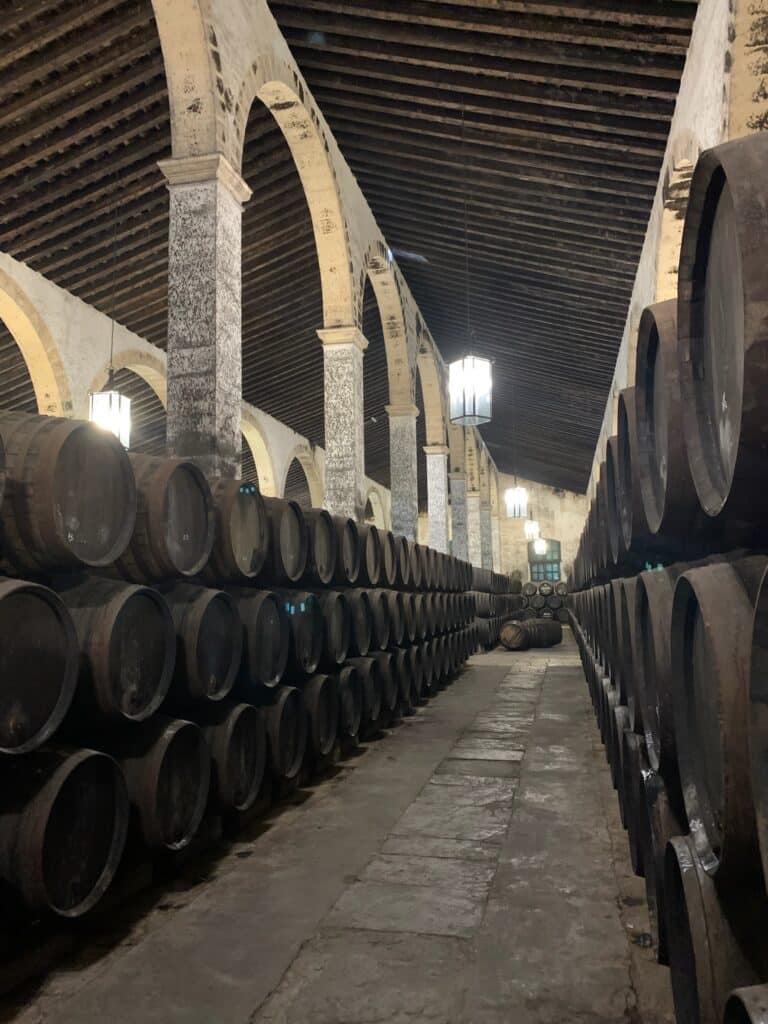
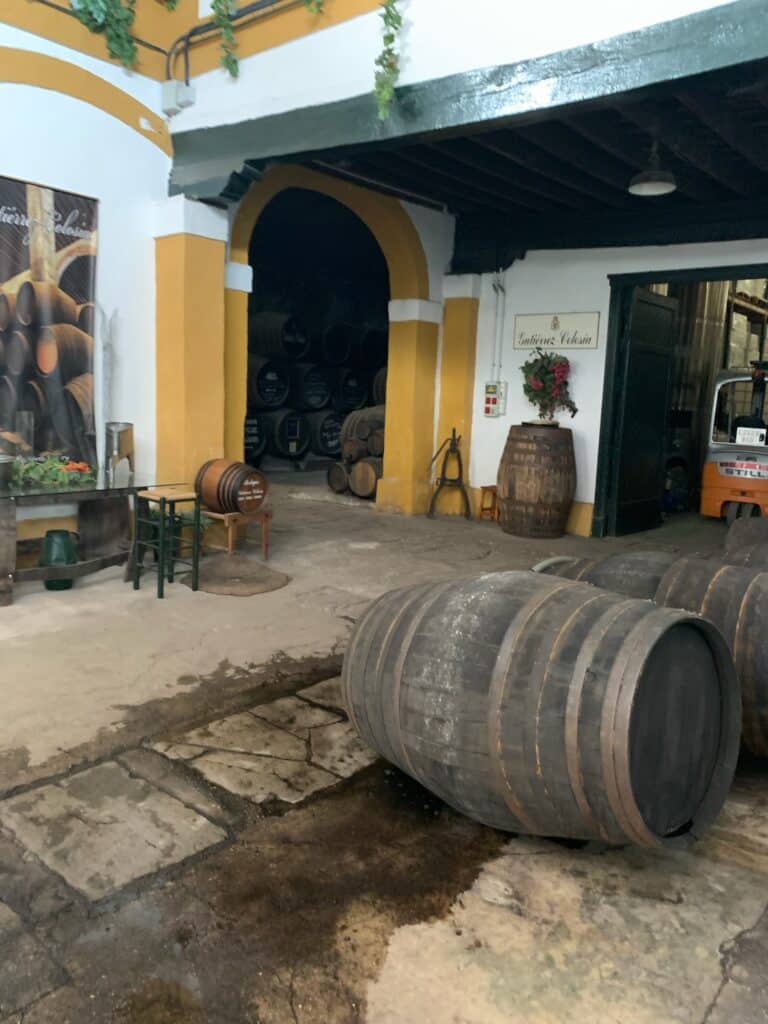
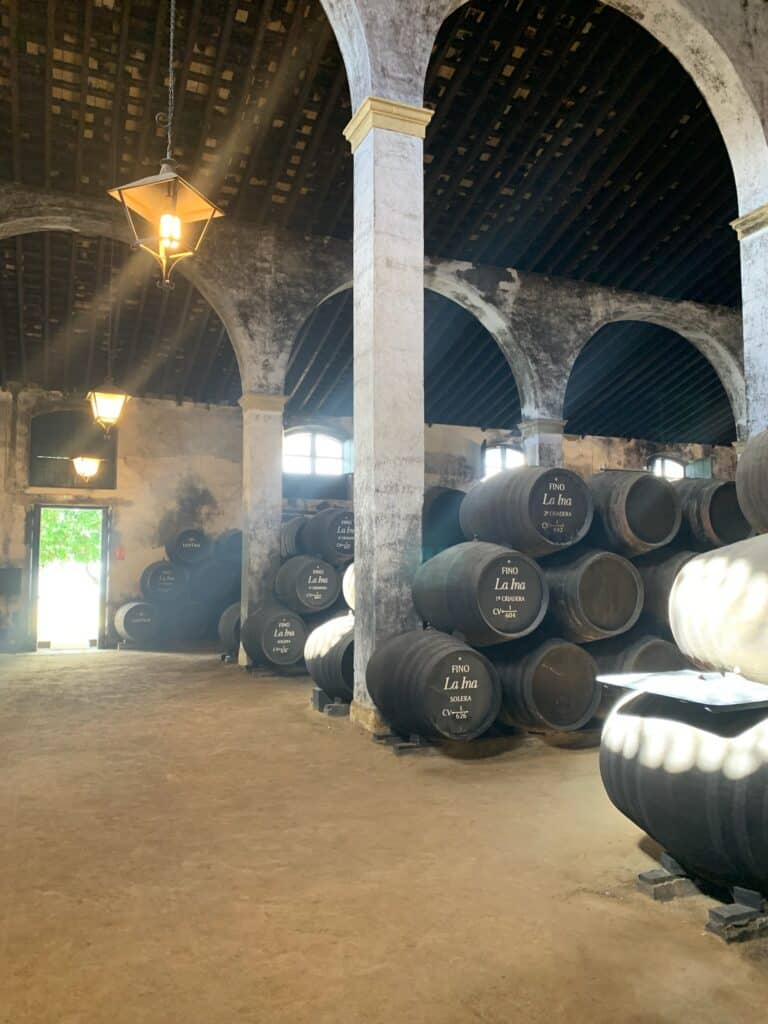
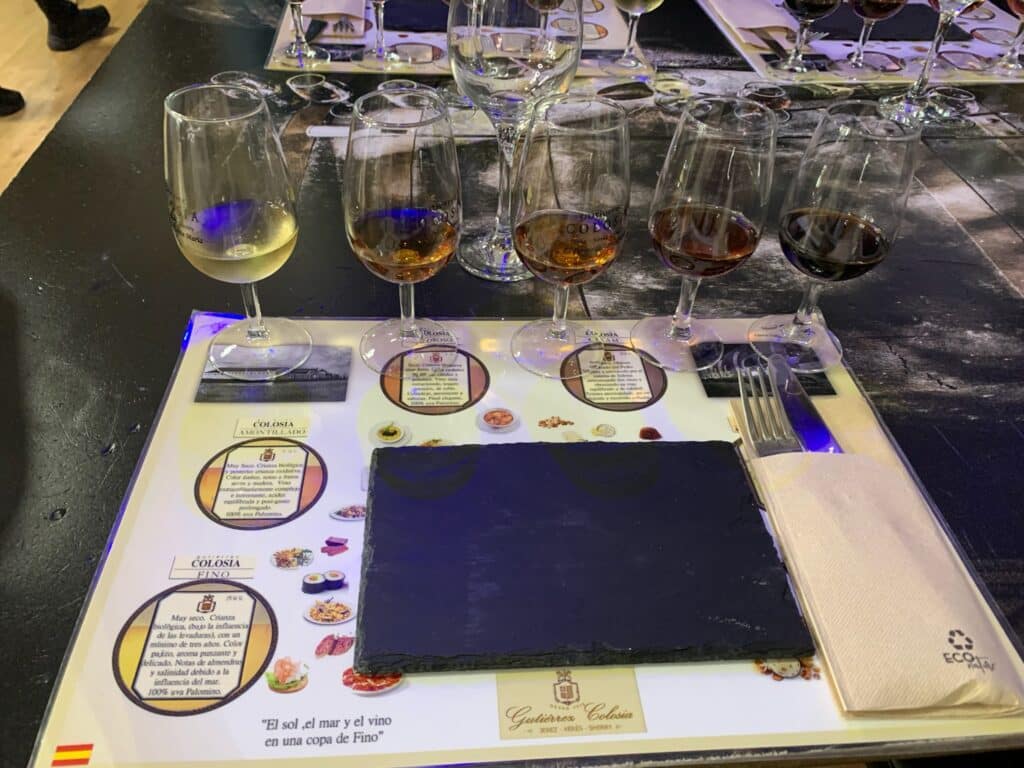
I visited two bodegas – Lustau in Jerez and Gutierrez-Colosía in El Puerto de Santa Maria. The former is a big, corporate operation while the latter, although of a decent size, is still a family business. In both places I opted for an extended guided tour and tasting. This way, I could fully admire the incredible interiors of the bodegas, often likened to cathedral churches thanks to their lofty architecture. This also allowed me to finally learn what sherry is really about! As I said before, sherry winemaking represents a very unusual approach, philosophy and history within the winemaking world and I learned quite a bit about it during my trip to Andalusia. That’s why I would like to share some of this sherry knowledge with you along with my take on it.

Sherry is made from two grape varieties – Palomino Fino and Pedro Ximenez. The first one is used to make dry wines, the second is used for dessert wines. All types of sherry from the Jerez region are fortified wines. It means that once the regular grape fermentation is done, the wine is supplemented with a distilled 40% grape spirit. Depending on the sherry kind, the final alcohol content is between 15-20%, while the sugar levels vary from tiny to mind-blowing 450g/l.

It was clear from my tour guides that the major part of the sherry making process takes place in the bodegas themselves. The grapes, fresh or already fermented, as well as the grape spirit are ordered by the bodegas from an external producer(s). Sherry makers practise their craft in the bodega, where common wine disappears and sherry comes to life. The art of making sherry lies in mixing of the vintages, ageing and resting the wine under very specific conditions. The origin and quality of the produce seems to be of secondary consideration. It’s not that it doesn’t matter, it’s just not really a part of the “official” sherry image and brand. This approach to winemaking is in stark contrast to the broader trends in the industry, where the importance of soil, climate, farming practices, etc. become more and more prominent. Many winemakers pride themselves in their minimal interference in the winery after the grapes are picked. They aim for the terroir (the complete natural environment in which a particular wine is produced) to speak through the grape. For example, this philosophy is ardently followed in Alsace (more details to follow in my next post).

A special method, the solera system, is used to produce sherry wine. Simply put, the solera refers to stacked up rows of wine barrels, usually three. The top row carries the youngest wine, while the bottom one the oldest. Every year, in order to bottle new sherry, some of the liquid from the bottom barrel is removed, but never more than 30%. To fill the gap in the ground barrel, some of the wine from the middle row is transferred down. Similarly, the top row refills the middle row while brand new wine is added to the uppermost level. As a result, the final sherry in the bottle is always a blend of different vintages. This is exactly what a sherry maker aims for – consistent and predictable taste. Vintage fluctuations caused by changing weather conditions and the multitude of other factors are smoothed out by constant mixing.

Most bodegas make all sherry varieties. Fino, amontillado, oloroso and palo cortado are the dry sherries. Palo cortado is an elusive type of sherry with a really mysterious origin story. It’s a bit far-fetched for my taste, so I won’t go there for now. There is also manzanilla, a type of fino, that can only be produced in the third town of the triangle – Sanlúcar de Barrameda. The dessert sherries are cream and Pedro Ximenez (PX). Recently, some local producers also started to make vermouth.

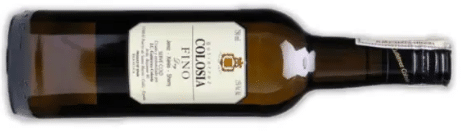
Fino is the youngest and freshest of the sherries. During the fermentation in the barrel, wild yeast forms a thick layer at the top called flor (flor, Spanish for flower). The yeast blooms like a flower. The flor blocks the oxygen from making contact with the wine. Hence fino doesn’t get oxidised and remains very pale, almost colourless. Wine makers leave the barrels only three quarters full to facilitate flor formation. Tasting in Lustau featured three different finos, each produced in a different town of the sherry triangle. Nevertheless, I enjoyed fino from Gutierrez-Colosía the most. It was the most elegant and understated, with prevailing citrus notes and sharp saltiness – very fresh, yet unique combination. Chamomile notes were also very pronounced. Now, a disclaimer: my very first encounter with fino was a shocking experience. I hadn’t tried anything like that before. It took me some time to get used to this style of wine and to actually be able to appreciate it.

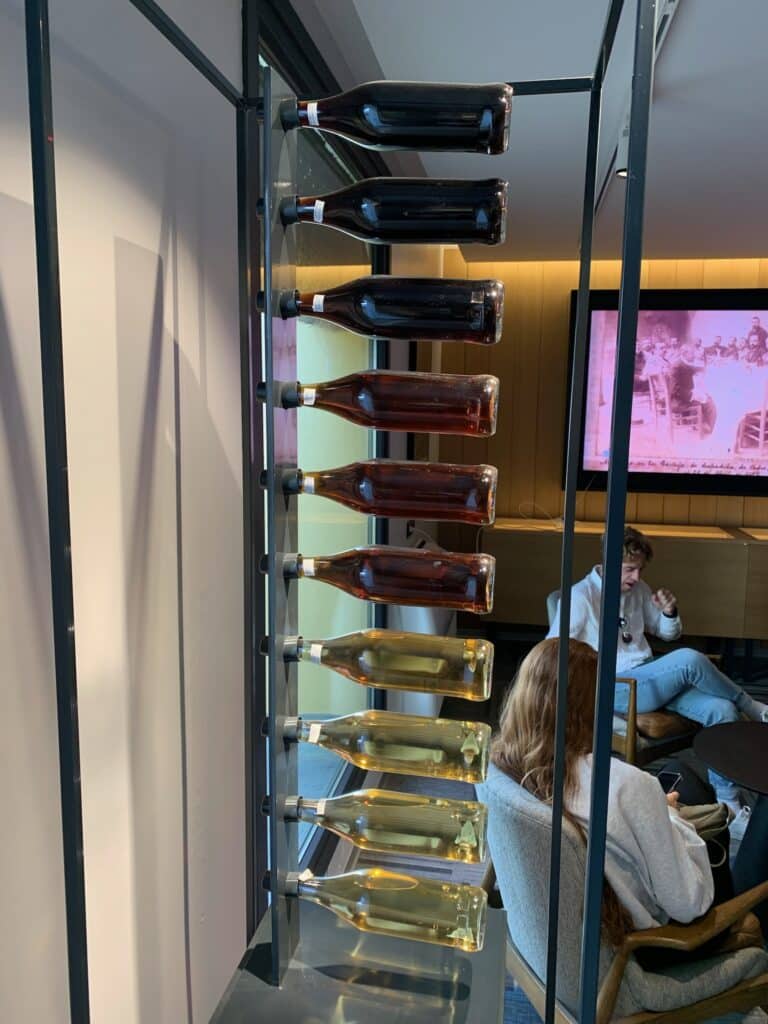
Amontillado and oloroso are aged for much longer and in a different manner. For these styles, oxidation is crucial. Amontillado starts the same as fino, however at some point the flor is removed to let the oxygen in. Oloroso does not age under the yeast layer at all. Due to the oxidation and longer time in the barrel, these wines are much darker than fino. Dry wines from Gutierrez-Colosía reach the market when the youngest wine in the blend is at least 8 years old. I even tried a Lustau sherry in which the youngest “part” was 30 years old! This type of wine even receives its own regulation VORS which stands for very old rare sherry.

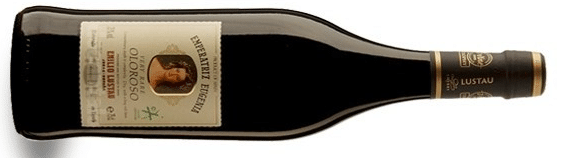
Sadly, amontillado and oloroso from Gutierrez-Colosía were not for me. They were quite acidic and lacked balance. The taste of pure alcohol was very strong as well. On the other hand, amontillado and oloroso Emperatriz Eugenia from Lustau are worth mentioning. Amontillado had a sweet aroma of caramel and nuts, but it was bone dry without a trace of sugar. Rather acidic and salty, it tasted of spices and mushrooms. Certainly, an acquired taste, but I was quite prepared this time after having tried a few finos. Oloroso Emperatriz Eugenia is 20 years old. Similarly sweet on the nose, there were clear orange, caramel and wet wood notes. Taste-wise, apart from lime and orange I also got a hint of dark chocolate. The wine was powerful, yet balanced nicely with a long finish. Beware, 20% alcohol content might pose a challenge for less seasoned drinkers.

Cream sherry is quite a sweet wine, but not always considered a dessert one. Cream from Gutierrez-Colosía is a 70%-30% mix of oloroso and PX. It gives notes of wet wood and tastes of raisins and dried fruit. Overall, this wine only hints on sweetness and is predominantly dry. I found it very intriguing.

There is no other dessert wine like Pedro Ximenez. Sugar content can spike up to 450 g/l, so even a small glass can give you a kick thanks to its overwhelming honey-like sweetness. Dried fruit, caramel and chocolate dominate. For my cellar at home, I selected a PX from Lustau, which wasn’t included in the tasting. But their wines showed good structure and quality across the range.

Last but not least, I would like to highlight red vermouth from Lustau. When tried for the first time, Martini and other such drinks come to mind. However, Lustau’s vermouth is far ahead of the mainstream mass producers in terms of its flavour balance and precision. It was a pleasure to enjoy a combination of extremely refreshing orange and spices that reminded me of Christmas and ginger cake. Truly, 10 out of 10 in the aperitif department. It was a perfect way to get ready for dinner. Especially in Spain, where dinner is often not served until 9pm which is a bit of a challenge for me. A glass (or two 😉) of vermouth with just a slice of orange and a large cube of ice was a mandatory  start to a tapas-filled evening.

Discovering the world of sherry was a big adventure for me. Perhaps my greatest wine adventure so far. Maybe even too exciting and unexpected to unWined. I tried everything: from teeth-gritting finos to molasses-like, super sweet Pedro Ximenez. The range of sherry wines is absolutely amazing and unique. Vermouth too, took me by surprise! An amazing experience for sure, but I decided not to bring too many dry sherries home. A bottle of fino, more as a souvenir, not to quietly enjoy and reminisce about my time in Spain. I really get it now how niche the sherry world is, what it offers, why more and more bodegas are shutting down and/or limiting their production. Most sherries are simply a challenge for an average wine drinker, who’s not accustomed to its unique flavour profile. Sherry is doing fine locally, thanks to the strong tradition and because it goes well with local cuisine. Fino is particularly great for the abundant local seafood dishes. Outside of Andalusia, it might lose some of its charms. Even more so for casual drinking. As always, I recommend the sherry triangle to everyone, but the more adventurous wine lovers in particular. Those feeling less brave: please, consider yourself warned!

Sherry – the heritage of Andalusia Read More »

Black bear from free domain.

Virginia, USA – wine in the black bear country

If only I paid more attention to what I was reading. ‘’Virginia is the third largest wine producing state in the US. Most of its wine is only available directly in the local wineries. It’s a really unique opportunity to check out the wine from the region, because it’s hard to come by outside of the state.” – I was earnestly trying to convince my friends during our trip to Washington DC and New York. In my head, a perfect day trip plan to unWined had been hatched already. The second fact turned out to be correct, but although Virginia places in the top ten with regard to wine production in the USA, it’s still a far cry from leading California or Washington State. Luckily, either my doubtful wine facts or just a convenient excuse to escape a boiling city during a scorching day have done their magic and everybody was on board with the idea. We jumped in a mini SUV (the smallest option in a rental place full of Monster Truck-like cars) and shortly after we were on our way to explore Virginian ‘’spring’’.

Certainly, it would be a stretch to compare Virginia to the likes of Tuscany or Bordeaux, but in fact it has a long wine-growing tradition dating back to 1607. Four centuries ago settlers from Europe brought with them the first vine plants and the local viticulture started. One of the esteemed Founding Fathers, Virginia-born Thomas Jefferson, helped to kickstart wine production in the region. Unfortunately, up untill the 1980s the industry struggled, mainly due to extreme weather events and vine diseases. The situation improved since international vine varieties were introduced, accompanied by some modern growing techniques. The interest of some big names like Donald Trump, who has a winery there, helped to put the area on the wine map as well. 60% of the wine produced in Virginia is sold directly at the vineyard door. Although it’s technically “most” of the wine, for some reason my dubious research had led me to believe it was closer to 80%. Chardonnay, Vidal Blanc, Viognier, Cabernet Franc, Cabernet Sauvignon and Merlot are the most popular varieties grown here. This should be interesting!

The added bonus was a scenic route we decided to take through Shenandoah National Park and its Skyline Drive. We were really excited to have a chance to spot a black bear, one of the Park’s inhabitants, and of course enjoy the panoramic views of the nearby Blue Ridge Mountains. Our destination was Monticello AVA – one of seven appellations in Virginia (more info about the American appellation system here). Shockingly, bears were nowhere to be seen at this quite busy car route in the middle of the day. The views – nice, but nothing special to write home about. Despite that, we were having a great time driving slowly through the hills with Take me Home, Country Roads on the speakers. John Denver might be reminiscing about the neighbouring state of West Virginia in that song, but that day was definitely not about keeping to hard facts! After close to two hours we arrived at our first stop, Hark Vineyards.

This winery is a small family business, beautifully situated in the middle of the Virginian countryside. On our way there, we passed a lot of typical, big, plywood American houses on large plots of land. No fences anywhere. All very neat and lushy green – a picture of a lovely May day. The tasting venue was quite informal: outdoor tables and benches overlooking precise rows of vines, a small wine kiosk for the staff and mobile toilets. Definitely, a cosy, small scale operation. We felt very rustic indeed, when we saw bewildered faces of the staff who couldn’t believe we were visiting all the way from Poland. They immediately started to “discreetly” chat behind the counter: “But why would they come here”? – we overheard them asking incredulously. When we said we are from Warsaw, I hoped they knew we did not mean a town in Indiana…Cultural observations aside, it was time to try some wine! The tasting menu comprised 7 wines with a typical in the region skew to white wines. Little tasting jugs turned out to be not so little, so we could really indulge. Sadly, the wines we tasted weren’t very compelling, but at least we could enjoy gorgeous views and sunny weather as a consolation.

The majority of white wines: Sauvignon Blanc, Fuse or Virginia Verde (both made from Vidal Blanc) were rather simple-structured with mainly citrus notes. The oldest wine on offer, 2019 Petit Manseng, was standing out slightly because of its interesting exotic fruit aromas, in particular a pineapple. Still, it was quite a straightforward wine. The reds, composed of Bordeaux blends, tasted disappointingly flat. These wines, for sure, are a nice option for the locals to stock up on some decent everyday bottles. But we were more impressed with the views of the hills and the sheer alcohol uptake rather than the craftsmanship. We said goodbye to the still surprised farmers and headed to our next stop.

We arrived at Moss Vineyards soon after. Unlike the previous place situated in the mostly flat terrain, Moss Vineyards is tucked away in the midst of the nearby hills. This truly picturesque location is stunning, which made us linger for a bit with a glass in hand after the tasting was over. Moss offered 5 wines and an apple cider in its tasting package. Except for 2018 Architettura Riserva made from a Bordeaux blend, the wines were similar to the ones we tried in Hark winery. 2017 and 2018 Viognier were simply abhorrent, while Rose and 100% Cabernet Sauvignon were just ok. The way the tasting was run was quite bizarre as well. We were asked to stand in a line in front of the bar inside with our backs turned to the beautiful panorama, although there were no other guests and tables and terrace were free. The young gentleman who was taking care of us was equally shocked to hear where we are from. He was filing our glasses with really large portions, each wine in turn with no spit bucket. Then, he was looking at us in silence until we managed to finish each glass. “Maybe he is new in the business?” – I thought.

We got restless and a bit bored after a couple of glasses and tried to enliven the atmosphere with some chat about the area and interesting places to visit. So, we asked our host if the road we had seen driving there is this famous “Route 66”. Maybe we showed our ignorance, but in the end we were tourists and only starting our USA adventure. “Famous 66 – never heard of it, what’s that?”, was his answer. Luckily, the tasting was done, we grabbed a glass of riserva and made our escape to the terrace, smiling a little. And people say that Poland is a backwater! We were just glad that this trip had some extra fun, because so far the wine was pretty disappointing.

We finished the day in Early Mountain Vineyards, a big complex with a large restaurant, wine bar and a few tasting rooms. The winery can be booked for wedding receptions as well. The vibe reminded me more of a visitor centre in a famous tourist spot more than any other tasting venue we had visited. The place was packed, probably thanks to wider recognition – tasting in this vineyard has been selected as the best one in the entire country! Professional staff managed to find a table for us and explained our options. Because we had not booked in advance they could only offer us wine by the glass plus some nibbles. Shame we missed the famous tasting, but we were happy to have a chance to try anything. The restaurant ran like clockwork: in the 5 minutes we spent inside, we talked to three different staff members, each with a different role designed to make your experience as smooth as possible. Everybody had a big smile on their faces and they treated us in a typical American outgoing and open way. This time, we focused on red wines: 100% Cabernet Franc i 100% Cabernet Sauvignon – both made in 2019. On top of that, we had 2020 Foothills, a blend of five varieties typically associated with Bordeaux. Finally, our efforts to find something exciting paid off! Every subsequent wine, not unlike the winery itself, was precise and represented the character of the variety well. We savoured the notes of red fruit, cherries and raspberries, intertwined with chocolate, vanilla and cloves. We also ordered a plate of local cheeses to go with these proper wines. My friends and I agreed that our venture in Virginia was a fun adventure, but in terms of wine, Early Mountain decidedly saved the day. Now, I am not that sorry that Virginian wine is hard to get outside of the state.

Time for some reflections. In summary, in the “typical” American countryside we were met by borderline rudeness, ignorance and general indifference. Virginia can be proud of its long wine growing history, however the wine it offers today is rather mediocre compared to other American regions and globally. The best experience and wines came from a fully commercial operation. Politeness of the staff felt forced and was definitely trained rather than genuine. A 30% tip was suggested…. Usually, I try to avoid such a corporate approach opting in for a smaller and more genuine type of business where you often get a chance to meet the owner. Unfortunately (or maybe rather luckily this time), the formal business approach to winemaking won this time, both in terms of tasting experience and definitely in terms of the quality of wine. Virginian small, famer-run wineries still need to learn a lot from the industry gurus like Early Mountain to be able to proudly compete with the best. In my previous visits to countries such as Italy, Spain or France, I observed the opposite trend. Small scale operations often distinguish themselves with craft, high quality products on the level or even superior to big players. I wonder if this might be a US thing? It’s definitely difficult to say after just one visit. I have very little data to make this kind of statement. But somehow I could not shake off that feeling during the long journey back to our remote motherland in Central and Eastern Europe…

Virginia, USA – wine in the black bear country Read More »

View from Montepulciano.

Tuscany – more than a cliché? – part 1

For a wine lover Tuscany is a true classic, sometimes to a point of inadvertently becoming a cliché. Mesmerising views, mediaeval villages and hoards of American tourists – everybody knows that! So, if you are looking for a detailed description of the region, suggestions for day trips or history of Tuscany, I am afraid you will need to search elsewhere. What I will offer though is a brief account of my idea of a certain way to unWined during Italian holidays. Arguably, there is no better activity (or rather slightly tipsy inactivity) to partake in , than a group visit to some local wineries while in the sunny Tuscany. In my case, it was a fun family group of twelve. What could go wrong, right? At least, the bigger the group, the better a chance to find a designated driver!

Our first stop was Poliziano winery near Montepulciano. Definitely an elegant place with a wide, cypress-lined driveway, manicured lawns and classy wine tasting venue. Similarly inside: a big reception desk, glass cabinets full of wine bottles and well dressed staff. They were very accommodating and even though we had not booked, we were offered a tasting option. It was 20 euros per person for three wines. We were to sit at a big table with white tablecloth, next to other guests who were quietly sipping their wine. Suddenly, there were some quiet murmurs in our ranks, some morose faces and finally we decided not to go through with the tasting. Maybe, because it was just too early (not even 11 am), but I had a feeling that the group did not like the vibe of the place. Although quite lovely, the winery seemed a bit stiff and pompous – the exact stigma which makes wine inaccessible for so many people. It just did not fit our bill for a fun and informal day. A shame, but we were not disheartened. I just hoped that the next place on my list would be more to our taste! Back to the car then.

We didn’t have to drive for long and after barely 10 minutes we found ourselves in I Cipressi Winery. Just off a narrow gravel round, there it was – a simple and inconspicuous winery building. Outside, an older gentleman welcomed us with a big smile and inviting gestures. His dark complexion and calloused hands gave him away. It was not hard to guess that he was a hardworking farmer. Although the winemaker, Luigi Frangiosa, didn’t speak much English, our “Vino, taste, taste” was easy enough to comprehend. “My son, 2 minutes, wait”, he said – it must be a family affair we deduced. After a short while twenty-something, English fluent Manuel appeared. He excused his sore throat blaming it on the weather (in August, in Tuscany, really?). This could’ve been the cause, but we shortly learned that the previous day Montepulciano had had its annual Bravìo delle Botti festivities. During this holiday, teams from different neighbourhoods of the town compete in an unusual race. They race each other to the top of the steep hill while rolling wine barrels. The wine is not only rolled up but also consumed in large quantities. Anyway, our aunt offered Manuel a lozenge and we could focus on why we were all here.

The tasting featured a whole range of wines produced in the winery – we went from rose, Rosso di Montepulciano, Vino Nobile di Montepulciano to Riserva and Supertuscan (10 euro per person). Of course, we were most eager to try Vino Nobile. The name of this flagship wine from the area is associated with nobility that used to have a particular taste for it. The quality and rigorous rules governing the production of Vino Nobile di Montepulciano are safeguarded by its DOCG appellation status. Everybody seemed to be quite excited and relaxed in this more rustic set up. We couldn’t wait to start our Vino Nobile adventure. Manuel was leading the way, but Luigi kept watch by the door the whole time, casting quick glances full of pride at his son.

First, we were offered an experimental 2021 Rosato (a rose wine) made wholly from the most important Tuscan grape, Sangiovese. Manuel explained that it was just a second vintage of this less typical (for Tuscany) wine. I don’t have this on record, but I can’t help but think that this was Manuel’s idea. His contribution to modernise and refresh the traditional family winery. Our party was pleasantly surprised with the rose. It was fresh and enjoyable. Everybody instantly thought about drinking it by the pool in our Airbnb. We detected notes of ripe peach. Quite acidic taste made it really refreshing.

Next, we moved to the three local stars. First came 2020 Rosso di Montepulciano, 95% Sangiovese, 5% two other local varieties. It was nice and simple – aged exclusively in stainless steel tanks to retain freshness and approachability. Notes of red fruit, cherry and cranberry, dominated. A sip revealed a good balance with smooth and lively tannins. Certainly a great starter wine to get a feel of what the region and Sangiovese is about.

It was time for 2018 Vino Nobile di Montepulciano – 100% Sangiovese. This wine was aged for 2 years in slavonian (region in Croatia) barrels. Quite complex on the nose, with hints of leather, tobacco and blackberries. It was quite fresh, tasting strongly of plums and ripe cherries, with a hint of chocolate. Fairly tannic and acidic, it will surely improve in a few years. Satisfying finish lingered for quite a while.

Finally, the bottle of the most anticipated 2018 Vino Nobile di Montepulciano Riserva appeared. As in the case of the previous wine, it was 100% Sangiovese, but this time aged for longer. More complex ageing starts with 3 years in slavonian oak barrels, followed by 6 months of aging in bottle. The nose was full of tobacco, black pepper and spices. The wine was multilayered, mouth-filling with a very long finish. Flavours of prunes, tobacco and even coffee were detectable. My sister-in-law, who just recently started her wine journey, suddenly had a huge grin on her face. For the first time she tried a wine of this calibre, but she had no difficulty appreciating how well-built it was. Especially, when compared to some easier and fresher wines that we had tried in the past. We kept complimenting the wine in Polish, but Luigi seemed to understand us perfectly well and knew which wine we liked the most. He glanced at his son with that unmistakable: “I told you so” look. Have we been witnessing a quiet generation clash? The youth championing unconventional methods and experimenting versus the wisdom and traditional ways of the previous generation?

The younger winemaker peppered the tasting with tidbits of their family history. We learned that the Frangiosa family moved here from the South in the sixties, acquired some land and started to grow grapes for sale to other wineries. Later they decided to start making their own wine and market it under their own brand. Every now and then, Manuel was asking us some questions: how had we found them, where were we staying, etc. This showed that besides being a wine producer, he had a keen, business-oriented mindset that grasped how important it is to know your customers’ behaviour and create a certain experience for them. It was important for him to make his guests happy to make sure they would leave the tasting with positive reviews, write something online and tell their friends about the amazing time they had.

To finish things off we tried a Supertuscan, 2020 IGT Toscana, a blend of Sangiovese, Cabernet Sauvignon and Merlot. It was not too bad, pretty fresh and fruity. Regardless, I must confess I am not the biggest fan of Supertuscans. Why use international grape varieties in Italy, a country that boasts hundreds of indigenous ones?!

After we packed the cars with cases of wine we wanted to take home, everybody gathered on a terrace to soak up the view for a few more minutes: I Cipressi grape vines, rolling hills and dramatic clouds. My thoughts were coming back to the contrast between the two wineries we had visited that day. In the present experience economy, it’s a challenge to find the balance to be professional and authentic at the same time. The businesses opting for a high end and sophisticated look might suffer from being superficial and lacking substance (often being overpriced at the same time). On the other hand, if a business owner forgets that their customers are expecting a certain experience, that the winemaker is not just selling a product, but a story and a certain feeling, visitors might feel neglected and will not come back again! I Cipressi seemed to strike a really good balance.

It was only early afternoon so I finished my musings and looked ahead to the next stop of our classic Italian holidays. Andiamo!

Tuscany – more than a cliché? – part 1 Read More »

Dwór Kombornia.

Carpathian Wine Bar

We’ll make our start in a place that’s probably totally alien to many people and definitely not associated with wine, i.e. a Sub-Carpathian region in Poland! One summer day, we found ourselves in a city called Krosno in Lower Beskid in Southern Poland. From Krosno, we made our way to a nearby village of Kombornia with an 18th century manor house at its centre. The surrounding area can actually boast quite a few of those, which isn’t always the case in this strange country wrecked by two world wars and 50 years of communism. There was a certain serenity in this idyllic countryside setting. Although the house had been renovated and the exterior presented itself quite well, inside the effects of refurbishment were slowly fading away. It felt dated and not necessarily in a nice way. However, Kombornia Manor has one little gem hidden away inside a small hill on the estate’s grounds. This is where we found the Carpathian Wine Bar (or Salon, own translation; original Salon Win Karpackich).

The Salon is actually a large cellar. We immediately felt the temperature drop as we entered. Interior was definitely cooler and more humid than outside. Upon entry, we were welcomed by rows of wine bottles, which can be purchased later if anything catches the visitor’s eye. At the end of the corridor, we spotted a huge map illustrating the concept behind this Salon. Carpathian mountains were snaking through 8 countries in Eastern and Central Europe. We didn’t have the time to linger as Ryszard Skotniczny saw us to our places around the corner where the usual tasting set up of wine glasses and spitters was waiting for us. Ryszard created the Salon and incidentally also owns the whole place! He quickly gauged the collective wine experience and knowledge of the group and took us on a crazy wine journey through the Carpathian region.

We flew through Slovakia, Moldova, Romania and Hungary. We sometimes made a quick jump back to our home country, Poland. “Fly” seems like an appropriate term since we tasted 14 wines in less than an hour! The variety of wines was mind-blowing. We tried quite revolting attempts at a proper red wine from nearby wineries, way too sweet Romanian juice-like concoctions, but also delightfully complex aged white wines from Slovakia. We experienced some classics from Eger with rounded tannins and earthy notes that showed a great promise. “It’s not my goal for you to like every wine you taste today” Ryszard cheerfully explained. “After all, you all have different preferences and tastes, which makes it an impossible job. However, what I can do instead is to demonstrate the variety of what you can find in this wonderful region”. I really start to appreciate this approach given that quality is a relative concept, and it definitely helps to try wines made more skilfully and those which were given less attention by the winemaker. This is how we build up our mental library of flavours and likes, that ultimately helps us find and refine what we enjoy most. It’s also quite a refreshing and honest approach. Whenever I visit a winemaker directly, they will never admit that they have given a mediocre flavour to some of their wines on purpose in order to squeeze out as much as they can from their harvest and offer the wine at a budget price.

After the tasting, our sommelier and host was very generous with his time. We lingered on and chatted about decent local wineries and exchanged ideas for future wine trips to Hungary. Although we liked quite a few wines, we left the Salon with just two bottles. After a recent trip to Tuscany (watch this space for more details!) storage at home remains a bit of a challenge so I needed to be reasonable this time around.

The first bottle is a white wine, a 2016 Quercus Lipovina by Chateau Grand Bari from Slovakian Tokaji. Slovakian Tokaji? You might be wondering if I accidentally mixed up some countries. Definitely not! We learn that while Tokaji is a historical region that’s mostly associated with Hungary, its northern edge is actually part of today’s Slovakia. The wine itself is delightful and has aged very gracefully. It has a rich nose dominated by a lime tree honey with a hint of petrol. The wine is definitely full-bodied, well-balanced and complex. I detect honey, a bit of citrus fruits and even some pineapple. The finish is long and satisfying. It’s available for just 55 zł (c. £10).

The second one is a red wine, a 2016 Varvedo Cuvee by Toth Ferenc from Eger, Hungary. During the tasting we tried a Kekfrankos from the same winemaker but unfortunately that one was out of stock so I took a risk and went for Varvedo Cuvee. The bet definitely payd off! This classic Bordeaux blend (Cabernet Sauvignon, Cabernet Franc and Merlot) is a very pleasant medium bodied wine. I smell strong earthy notes supplemented by red fruits. On the palate chocolate and oaky notes dominate, but I can also taste some plums and blackberries. It definitely benefits from decanting it for 30 minutes or so. This one comes at 100 zł (c. £18).

The Salon is definitely a very interesting place and a thought-provoking idea. Rather than focus on a single country, the idea is to present the variety of wines and winemakers united by a mountain range spanning numerous countries. Although they produce different wines and are separated by national borders, in a way, they probably have more in common with each other than some winemakers from France or Italy or even winemakers from their home countries which do not feel the influence of the mountains. The Salon allows its guests to explore quite niche wines. Many of them are quite basic but every now and then we can find a real treat at a very reasonable price. We explored a true variety of wines, but for me it worked quite well because of the uniting concept behind the selection. What a contrast to some introductory tastings where we are asked to try a white from New Zealand, then a red from Chile and go back to the old good Bordeaux again. We might taste some wines but we learn very little. We also enjoyed the format of the tasting – it was a snappy, sensory experience with limited theoretical lectures. I believe anybody could enjoy it regardless of their “wine experience”. I definitely recommend it to anybody who finds themselves in this region!

Let’s also mention that the area, especially the city of Krosno, is famous for glass making. The local museum is a great way to learn more about the history of this craft and industry, but also purchase some unique hand-made goods. I also recommend an outlet shop from Krosno company (confusingly named exactly the same as the city!), where high quality wine glasses, decanters, and other glass items can be purchased at very reasonable prices. The boot of my car was definitely full of wine glasses as we all know there’s never enough of them. I wonder, what will fill them in the future? Cheers!

Carpathian Wine Bar Read More »

×